
Integrating human microbiome profiling into precision medicine for disease prevention

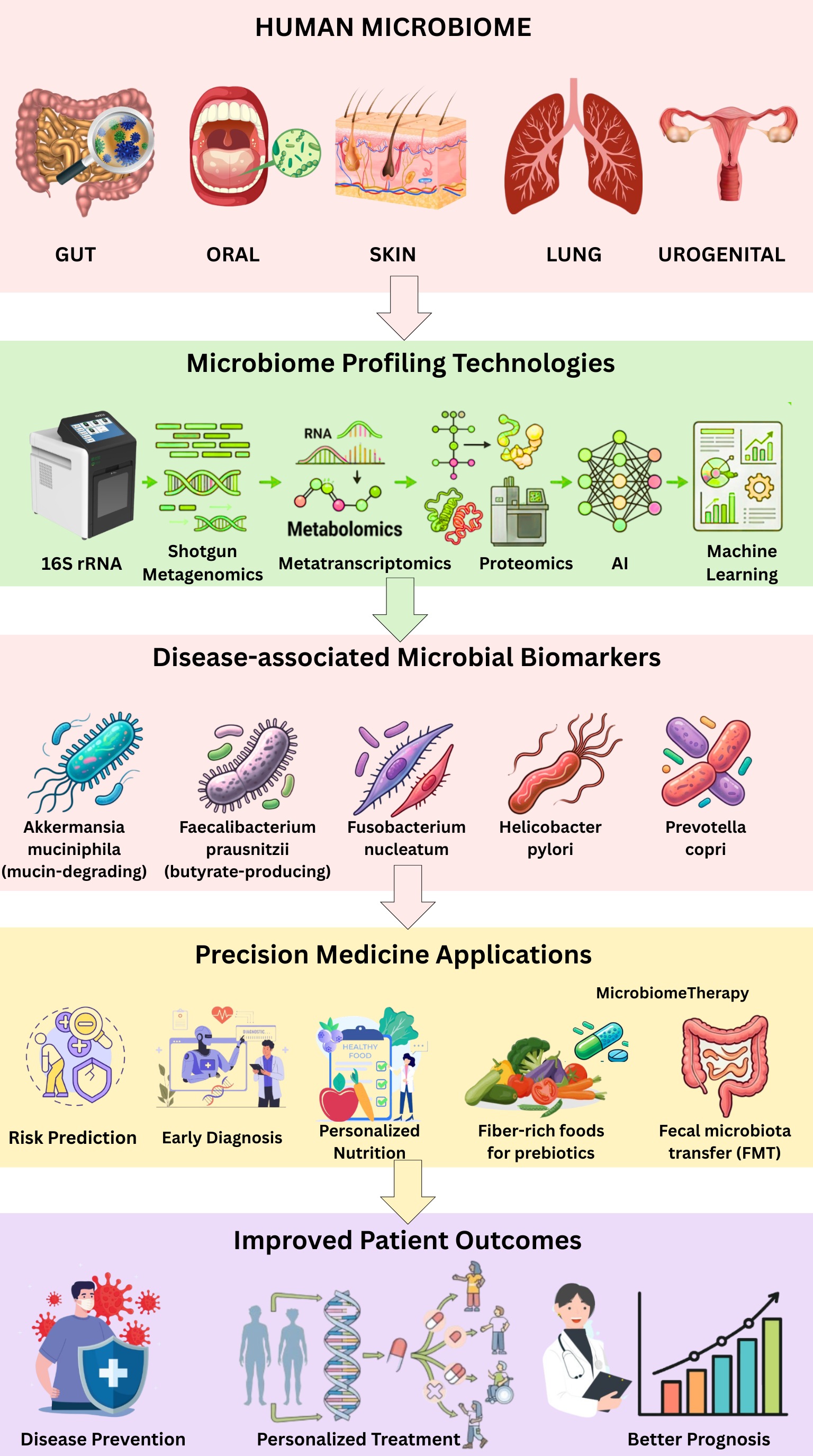
The human microbiome is a diverse and dynamic microbial community composed of trillions of microorganisms that inhabiting various body sites, such as the gut, skin, oral cavity, respiratory tract, and urogenital system. These microbial communities sustain the host’s physiological functions and health through interactions with immune, metabolic, and neurobiological processes. The microbiome has been extensively studied due to recent advancements in high-throughput genome sequencing and multi-omics technologies, which also demonstrated associations between microbial dysbiosis and a variety of metabolic, neurological, immune-mediated, cardiovascular, and infectious disorders. Simultaneously, precision medicine incorporates routine, environmental, and genetic variables to provide personalized solutions to disease prevention and treatment. The integration of microbiome research and precision medicine provide potential opportunities in early detection of diseases, risk stratification, and personalized therapeutic interventions. This narrative review identifies relevant literature from PubMed, Web of Science, and Scopus using terms like “human microbiome,” “precision medicine,” “microbiome profiling,” “artificial intelligence,” and “disease biomarkers,” with emphasis on current English-language publications. The review study the diversity, structure, and functional roles of the human microbiome, and the current profiling technologies and their potential clinical uses. It also examines microbiome-directed approaches, including personalized nutrition, probiotics, and fecal microbiota transplantation. Moreover, the document addresses ethical considerations, clinical challenges, artificial intelligence, and multi-omics integration. While microbiome profiling has significant potential in precision and preventive medicine, most applications are still investigational and need more validation before being implemented in clinical practice.
- Human Microbiome Project Consortium. Structure, function and diversity of the healthy human microbiome. Nature. 2012;486(7402):207-214. doi: 10.1038/nature11234
- Hussain MS, Bahl G, Mishra R, et al. Introduction to microbiome. In: Gut Microbiome and Environmental Toxicants. Boca Raton, FL, USA: CRC Press; 2025:23-40. doi: 10.1201/9781003489221-2
- Vieira BM, Silva GNdMe, Silva MI. Nutritional elements I: nutrients, proteins, carbohydrates, and lipids. In: Fundamentals of Drug and Non-Drug Interactions: Physiopathological Perspectives and Clinical Approaches. Cham: Springer; 2025:35-56. doi: 10.1007/978-3-031-80107-5_2
- Astó E, Méndez I, Audivert S, Farran-Codina A, Espadaler J. The efficacy of probiotics, prebiotic inulin-type fructans, and synbiotics in human ulcerative colitis: a systematic review and meta-analysis. Nutrients. 2019;11(2):293. doi: 10.3390/nu11020293
- Li Z, Samui S, Liu J, et al. Gut microbiome and metabolic health: mechanisms and precision interventions. Gut Microbes. 2026;18(1):2644677. doi: 10.1080/19490976.2026.2644677
- Pandit NK, Sharma P, Sharma P, et al. Valorizing agro-food waste for microbial B vitamin biosynthesis: impacts on gut microbiota dynamics and microbial communication. Rev Environ Sci Biotechnol. 2026;25(1):1-24. doi: 10.1007/s11157-025-09753-3
- Kim S, Ndwandwe C, Devotta H, et al. Role of the microbiome in regulation of the immune system. Allergol Int. 2025;74(2):187-196. doi: 10.1016/j.alit.2024.12.006
- Graham DB, Xavier RJ. Conditioning of the immune system by the microbiome. Trends Immunol. 2023;44(7):499-511. doi: 10.1016/j.it.2023.05.002
- Dogra SK, Kwong Chung C, Wang D, et al. Nurturing the early life gut microbiome and immune maturation for long term health. Microorganisms. 2021;9(10):2110. doi: 10.3390/microorganisms9102110
- Brodin P. Immune-microbe interactions early in life: a determinant of health and disease long term. Science. 2022;376(6596):945-950. doi: 10.1126/science.abk2189
- Loh JS, Mak WQ, Tan LKS, et al. Microbiota-gut-brain axis and its therapeutic applications in neurodegenerative diseases. Signal Transduct Target Ther. 2024;9(1):37. doi: 10.1038/s41392-024-01743-1
- Shukla V, Singh S, Verma S, et al. Targeting the microbiome to improve human health with the approach of personalized medicine: latest aspects and current updates. Clin Nutr ESPEN. 2024;63:813-820. doi: 10.1016/j.clnesp.2024.08.005
- Kumar A, Singh D. Evolution of traditional healthcare to modern healthcare—benefits, opportunities and challenges. In: Artificial Intelligence in Modern Healthcare System. Cham: Springer; 2025:303-325. doi: 10.1007/978-981-96-6703-1_13
- Ratiner K, Ciocan D, Abdeen SK, et al. Utilization of the microbiome in personalized medicine. Nat Rev Microbiol. 2024;22(5):291-308. doi: 10.1038/s41579-023-00998-9
- Kamel M, Aleya S, Alsubih M, et al. Microbiome dynamics: a paradigm shift in combatting infectious diseases. J Pers Med. 2024;14(2):217. doi: 10.3390/jpm14020217
- Cuevas-Sierra A, Tomé-Carneiro J, Marques da Silva MM, et al. Inflammation and chronic disease: the Mediterranean diet in precision and personalized nutrition. Ann Nutr Metab. 2026;80(2):1-12. doi: 10.1159/000551530
- Hou K, Wu ZX, Chen XY, et al. Microbiota in health and diseases. Signal Transduct Target Ther. 2022;7(1):135. doi: 10.1038/s41392-022-00974-4
- Schmidt TSB, Raes J, Bork P. The human gut microbiome: from association to modulation. Cell. 2018;172(6):1198-1215. doi: 10.1016/j.cell.2018.02.044
- Holmes S. Successful strategies for human microbiome data generation, storage and analyses. J Biosci. 2019;44(5):117. doi: 10.1007/s12038-019-9934-y
- Tegegne HA, Savidge TC. Leveraging human microbiomes for disease prediction and treatment. Trends Pharmacol Sci. 2025;46(1):32-44. doi: 10.1016/j.tips.2024.11.007
- Hacioglu O. Microbiota and microbiome. In: Microbial World: Bacteria and Archaea. Cham: Springer; 2026:307-331. doi: 10.1007/978-3-032-11438-9_9
- Jarjees RM, Aladeeb M. The human microbiome: a comprehensive review of its role in health and disease. Glob Multidiscip Perspect J. 2026;3(1):23-32. Accessed May 14, 2026. https://zenodo.org/records/18471905
- O’Riordan KJ, Moloney GM, Keane L, et al. The gut microbiota-immune-brain axis: therapeutic implications. Cell Rep Med. 2025;6(3):101982. doi: 10.1016/j.xcrm.2025.101982
- Bamford NC, MacPhee CE, Stanley-Wall NR. Microbial primer: an introduction to biofilms—what they are, why they form and their impact on built and natural environments. Microbiology. 2023;169(8):001338. doi: 10.1099/mic.0.001338
- Carmona-Cruz S, Orozco-Covarrubias L, Sáez-de-Ocariz M. The human skin microbiome in selected cutaneous diseases. Front Cell Infect Microbiol. 2022;12:834135. doi: 10.3389/fcimb.2022.834135
- Wakabayashi J, Kimura K, Kawauchi T. The intestinal barrier: a multilayered gatekeeper against systemic disease. Int J Microbiol. 2026;2026:2828137. doi: 10.1155/ijm/2828137
- Pérez-Cobas AE, Rodríguez-Beltrán J, Baquero F, Coque TM. Ecology of the respiratory tract microbiome. Trends Microbiol. 2023;31(9):972-984. doi: 10.1016/j.tim.2023.04.006
- Dekaboruah E, Suryavanshi MV, Chettri D, Verma AK. Human microbiome: an academic update on human body site specific surveillance and its possible role. Arch Microbiol. 2020;202(8):2147-2167. doi: 10.1007/s00203-020-01931-x
- Lozupone CA, Stombaugh JI, Gordon JI, Jansson JK, Knight R. Diversity, stability and resilience of the human gut microbiota. Nature. 2012;489(7415):220-230. doi: 10.1038/nature11550
- Govender P, Ghai M. Population-specific differences in the human microbiome: factors defining the diversity. Gene. 2025;933:148923. doi: 10.1016/j.gene.2024.148923
- Suri H, Suri H, Nagda N, et al. Current perspectives on the human skin microbiome: functional insights and strategies for therapeutic modulation. Biomed Pharmacother. 2025;193:118655. doi: 10.1016/j.biopha.2025.118655
- Chee WJY, Chew SY, Than LTL. Vaginal microbiota and the potential of Lactobacillus derivatives in maintaining vaginal health. Microb Cell Fact. 2020;19(1):203. doi: 10.1186/s12934-020-01464-4
- Spochacz-Santoro M, Szeliga A, Durda-Masny M, et al. Higher BMI is associated with vaginal microbiome alterations in women with PCOS. Reprod Fertil. 2026;7(2):RAF260051. doi: 10.1530/RAF-26-0051
- Zeng J, He Z, Wang G, et al. Interaction between microbiota and immunity: molecular mechanisms, biological functions, diseases, and new therapeutic opportunities. MedComm. 2025;6(7):e70265. doi: 10.1002/mco2.70265
- Lee H, Song J, Lee B, et al. Food carbohydrates in the gut: structural diversity, microbial utilization, and analytical strategies. Food Sci Biotechnol. 2024;33(9):2123-2140. doi: 10.1007/s10068-024-01648-3
- Wang R, Lan C, Benlagha K, et al. The interaction of innate immune and adaptive immune system. MedComm. 2024;5(10):e714. doi: 10.1002/mco2.714
- Buret AG, Motta JP, Allain T, Ferraz J, Wallace JL. Pathobiont release from dysbiotic gut microbiota biofilms in intestinal inflammatory diseases: a role for iron? J Biomed Sci. 2019;26(1):1. doi: 10.1186/s12929-018-0495-4
- Bonanno S, Joshi NS. Engineering microbes to modulate innate immune signaling: strategies for host-microbe interactions. Curr Opin Microbiol. 2026;89:102695. doi: 10.1016/j.mib.2025.102695
- Tan Y, Huang J, Liu Y, Lai X. Progress in the detection of gut microbiota based on microfluidic technology. Interdiscip Med. 2026;4(1):e70069. doi: 10.1002/inmd.70069
- Arbefeville SS, Timbrook TT, Garner CD. Evolving strategies in microbe identification—a comprehensive review of biochemical, MALDI-TOF MS and molecular testing methods. J Antimicrob Chemother. 2024;79(Supplement_1):i2-i8. doi: 10.1093/jac/dkae275
- Nath S. Integration of microbial proteins into traditional food systems: innovations, challenges, and future perspectives. Food Rev Int. 2026;42(3):1532-1557. doi: 10.1080/87559129.2025.2520453
- Kurniawan FD, Alia D, Shiraishi M, et al. A systematic algorithm using 16S ribosomal RNA for accurate diagnosis of pneumonia pathogens. Sci Rep. 2025;15(1):29253. doi: 10.1038/s41598-025-14841-z
- Knight R, Vrbanac A, Taylor BC, et al. Best practices for analysing microbiomes. Nat Rev Microbiol. 2018;16(7):410-422. doi: 10.1038/s41579-018-0029-9
- Kuczynski J, Lauber CL, Walters WA, et al. Experimental and analytical tools for studying the human microbiome. Nat Rev Genet. 2011;13(1):47-58. doi: 10.1038/nrg3129
- Jovel J, Patterson J, Wang W, et al. Characterization of the gut microbiome using 16S or shotgun metagenomics. Front Microbiol. 2016;7:459. doi: 10.3389/fmicb.2016.00459
- Zhang Y, Thompson KN, Branck T, et al. Metatranscriptomics for the human microbiome and microbial community functional profiling. Annu Rev Biomed Data Sci. 2021;4:279-311. doi: 10.1146/annurev-biodatasci-031121-103035
- Wang Y, Zhou Y, Xiao X, Zheng J, Zhou H. Metaproteomics: a strategy to study the taxonomy and functionality of the gut microbiota. J Proteomics. 2020;219:103737. doi: 10.1016/j.jprot.2020.103737
- Zhang X, Li L, Butcher J, Stintzi A, Figeys D. Advancing functional and translational microbiome research using meta-omics approaches. Microbiome. 2019;7(1):154. doi: 10.1186/s40168-019-0767-6
- Nam N, Do H, Loan Trinh K, Lee N. Metagenomics: an effective approach for exploring microbial diversity and functions. Foods. 2023;12(11):2140. doi: 10.3390/foods12112140
- Jan R, Hussain A, Assad A, Khurshid S, Macha MA. Challenges with multi-omics data integration. In: Multi-omics Technology in Human Health and Diseases. Amsterdam, Netherlands: Elsevier; 2025:223-242. doi: 10.1016/B978-0-443-13595-8.00010-6
- Valdés-Mas R, Leshem A, Zheng D, et al. Metagenome-informed metaproteomics of the human gut microbiome, host, and dietary exposome uncovers signatures of health and inflammatory bowel disease. Cell. 2025;188(4):1062-1083.e36. doi: 10.1016/j.cell.2024.12.016
- Chen H, Kong J, Du P, et al. Functional metabolomics: unlocking the role of small molecular metabolites. Front Mol Biosci. 2025;12:1542100. doi: 10.3389/fmolb.2025.1542100
- Dakal TC, Xu C, Kumar A. Advanced computational tools, artificial intelligence and machine-learning approaches in gut microbiota and biomarker identification. Front Med Technol. 2024;6:1434799. doi: 10.3389/fmedt.2024.1434799
- Wang XW, Wang T, Liu YY. Artificial intelligence for microbiology and microbiome research. Cell Syst. 2026;17(2):101531. doi: 10.1016/j.cels.2026.101531
- Topol EJ. High-performance medicine: the convergence of human and artificial intelligence. Nat Med. 2019;25(1):44-56. doi: 10.1038/s41591-018-0300-7
- Marcos-Zambrano LJ, Karaduzovic-Hadziabdic K, Loncar Turukalo T, et al. Applications of machine learning in human microbiome studies: a review on feature selection, biomarker identification, disease prediction and treatment. Front Microbiol. 2021;12:634511. doi: 10.3389/fmicb.2021.634511
- Wang Q, Wang K, Wu W, Giannoulatou E, Ho JWK, Li L. Host and microbiome multi-omics integration: applications and methodologies. Biophys Rev. 2019;11(1):55-65. doi: 10.1007/s12551-018-0491-7
- Caminero A, Tropini C, Valles-Colomer M, et al. Credible inferences in microbiome research: ensuring rigour, reproducibility and relevance in the era of AI. Nat Rev Gastroenterol Hepatol. 2025;22(11):788-803. doi: 10.1038/s41575-025-01100-9
- Fischbach MA. Microbiome: focus on causation and mechanism. Cell. 2018;174(4):785-790. doi: 10.1016/j.cell.2018.07.038
- Shabani M, Mohammadi M, Norouzi S, et al. The relationship between gut microbiome and human diseases: mechanisms, predisposing factors and potential intervention. Front Cell Infect Microbiol. 2025;15:1516010. doi: 10.3389/fcimb.2025.1516010
- Gacesa R, Kurilshikov A, Vich Vila A, et al. Environmental factors shaping the gut microbiome in a Dutch population. Nature. 2022;604(7907):732-739. doi: 10.1038/s41586-022-04567-7
- Hernández-Rodríguez D, Contreras A, Melgar Lalanne G, et al. Fecal microbiota composition concerning body mass index and early-life factors in Mexican preschool-aged children: a cross-sectional study. PeerJ. 2026;14:e21253. doi: 10.7717/peerj.21253
- Fusco W, Adolph T, Cammarota G, et al. Gut microbiota and atherosclerosis. Gut. 2026;75(5):1067-1077. doi: 10.1136/gutjnl-2025-335610
- Thomas MS, Fernandez ML. Trimethylamine N-oxide (TMAO), diet and cardiovascular disease. Curr Atheroscler Rep. 2021;23(4):12. doi: 10.1007/s11883-021-00910-x
- Depommier C, Everard A, Druart C, et al. Supplementation with Akkermansia muciniphila in overweight and obese human volunteers: a proof-of-concept exploratory study. Nat Med. 2019;25(7):1096-1103. doi: 10.1038/s41591-019-0495-2
- Lin W, Pu L, Qian X, et al. Exercise-induced modulation of gut microbiota in individuals with obesity and type 2 diabetes: a systematic review and meta-analysis. Front Microbiol. 2025;16:1671975. doi: 10.3389/fmicb.2025.1671975
- Wang N, Fang JY. Fusobacterium nucleatum, a key pathogenic factor and microbial biomarker for colorectal cancer. Trends Microbiol. 2023;31(2):159-172. doi: 10.1016/j.tim.2022.08.010
- Cubillos-Ruiz A, Guo T, Sokolovska A, et al. Engineering living therapeutics with synthetic biology. Nat Rev Drug Discov. 2021;20(12):941-960. doi: 10.1038/s41573-021-00285-3
- Rynikova M, Bojcukova V, Demeckova V. One therapy, many targets: redefining ulcerative colitis treatment through fecal microbiota transplantation. Ther Adv Gastroenterol. 2026;19:17562848261437918. doi: 10.1177/17562848261437918
- Bertin L, Facchin S, Barberio B, et al. Diet and gut microbiota in inflammatory bowel disease: a clinical and nutritional perspective. Pharmaceuticals. 2026;19(2):318. doi: 10.3390/ph19020318
- Wu X, Mu B, Li G, et al. Gut microbial composition, oxidative stress, and immunity in metabolic disease: toward personalized interventions. Antioxidants. 2026;15(2):175. doi: 10.3390/antiox15020175
- Liu S, Sanaie S, Abdollahi H, et al. The role of human microbiota in autoimmune diseases: exploring dysbiosis and mechanisms. APMIS. 2026;134(2):e70159. doi: 10.1111/apm.70159
- Rutter JW, Dekker L, Owen KA, Barnes CP. Microbiome engineering: engineered live biotherapeutic products for treating human disease. Front Bioeng Biotechnol. 2022;10:1000873. doi: 10.3389/fbioe.2022.1000873
- Nii T, Maeda Y, Motooka D, et al. Genomic repertoires linked with pathogenic potency of arthritogenic Prevotella copri isolated from the gut of patients with rheumatoid arthritis. Ann Rheum Dis. 2023;82(5):621-629. doi: 10.1136/ard-2022-222881
- Martín R, Rios-Covian D, Huillet E, et al. Faecalibacterium: a bacterial genus with promising human health applications. FEMS Microbiol Rev. 2023;47(4):fuad039. doi: 10.1093/femsre/fuad039
- Akif A, Islam MR. The microbiota-gut-brain axis in the pathophysiology of major depressive disorder: a mechanistic review. Compr Physiol. 2026;16(1):e70100. doi: 10.1002/cph4.70100
- Tingler AM, Figuereo YF, Engevik KA, et al. Children with autism spectrum disorder and chronic gastrointestinal symptoms have alterations in intestinal neurotransmitter pathways. Dig Dis Sci. 2026;71(6):2413-2431. doi: 10.1007/s10620-026-09667-2
- Wang R. Clostridioides difficile infection: microbe-microbe interactions and live biotherapeutics. Front Microbiol. 2023;14:1182612. doi: 10.3389/fmicb.2023.1182612
- Gilbert JA, Azad MB, Bäckhed F, et al. Clinical translation of microbiome research. Nat Med. 2025;31(4):1099-1113. doi: 10.1038/s41591-025-03615-9
- Malik S, Bharali R, Barbhuyan HSA, et al. Function of gut microbiota in longevity as a futuristic approach of personalised nutrition. In: Microbial Approaches to Personalized Nutrition. Hershey, PA, USA: IGI Global; 2026:303-332. doi: 10.4018/979-8-3373-4382-2.ch010
- Mathrani A, Yip W, Sequeira-Bisson IR, et al. Effect of a 12-week polyphenol rutin intervention on markers of pancreatic β-cell function and gut microbiota in adults with overweight without diabetes. Nutrients. 2023;15(15):3360. doi: 10.3390/nu15153360
- Gavanji S, Suhail M, Bencurova E, et al. Recent advances and clinical relevance of microbiome dynamics in health and disease. Gut Microbes. 2026;18(1):2679197. doi: 10.1080/19490976.2026.2679197
- Guarner F, Sanders ME, Szajewska H, et al. World Gastroenterology Organisation global guidelines: probiotics and prebiotics. J Clin Gastroenterol. 2024;58(6):533-553. doi: 10.1097/MCG.0000000000002002
- Swanson KS, Gibson GR, Hutkins R, et al. The International Scientific Association for Probiotics and Prebiotics (ISAPP) consensus statement on the definition and scope of synbiotics. Nat Rev Gastroenterol Hepatol. 2020;17(11):687-701. doi: 10.1038/s41575-020-0344-2
- Kelly CR, Feuerstadt P. Diagnosis and management of Clostridioides difficile. Am J Gastroenterol. 2026;121(3):628-634. doi: 10.14309/ajg.0000000000003844
- Kandiyal B, Gupta M, Das B. Live biotherapeutics: emerging trends and future directions in microbial therapy. Prog Mol Biol Transl Sci. 2026;220:1-35. doi: 10.1016/bs.pmbts.2025.12.001
- Dera N, Kosińska-Kaczyńska K, Żeber-Lubecka N, et al. Impact of early-life microbiota on immune system development and allergic disorders. Biomedicines. 2025;13(1):121. doi: 10.3390/biomedicines13010121
- Huttenhower C, Finn RD, McHardy AC. Challenges and opportunities in sharing microbiome data and analyses. Nat Microbiol. 2023;8(11):1960-1970. doi: 10.1038/s41564-023-01484-x
- Choudhury A, Ortiz P, Scano C. Machine learning and multi-omics integration approaches for human microbiome data. In: Springer Handbook of Chem- and Bioinformatics. Cham: Springer; 2026:169-185. doi: 10.1007/978-3-031-81728-1_8
- Isali I, Wong TR, Tian S. Best practice guidelines for collecting microbiome samples in research studies. Eur Urol Focus. 2024;10(6):909-913. doi: 10.1016/j.euf.2024.12.007
- Khan SS, Greenland P, Allen NB, et al. Criteria to assess the predictive and clinical utility of novel models, biomarkers, and tools for risk of cardiovascular disease: a scientific statement from the American Heart Association. Circulation. 2026;153(11):e953-e970. doi: 10.1161/CIR.0000000000001401
- Tu JB, Liao WJ, Long SP, et al. Construction and validation of a machine learning model for the diagnosis of juvenile idiopathic arthritis based on fecal microbiota. Front Cell Infect Microbiol. 2024;14:1371371. doi: 10.3389/fcimb.2024.1371371
- Chetty A, Blekhman R. Multi-omic approaches for host-microbiome data integration. Gut Microbes. 2024;16(1):2297860. doi: 10.1080/19490976.2023.2297860
- Kumar R, Nagraik R, Lakhanpal S, et al. Artificial intelligence in gut microbiome research: toward predictive diagnostics for neurodegenerative disorders. Acta Microbiol Immunol Hung. 2025;72(4):296-312. doi: 10.1556/030.2025.02725
- Heavey MK, Durmusoglu D, Crook N, Anselmo AC. Discovery and delivery strategies for engineered live biotherapeutic products. Trends Biotechnol. 2022;40(3):354-369. doi: 10.1016/j.tibtech.2021.08.002
- Arif SJ, Graham SP, Abdill RJ, Blekhman R. Analyzing human gut microbiome data from global populations: challenges and resources. Trends Microbiol. 2025;33(11):1212-1223. doi: 10.1016/j.tim.2025.05.008