
Probiotics as sustainable tools for mitigating antimicrobial resistance in aquaculture: A narrative review

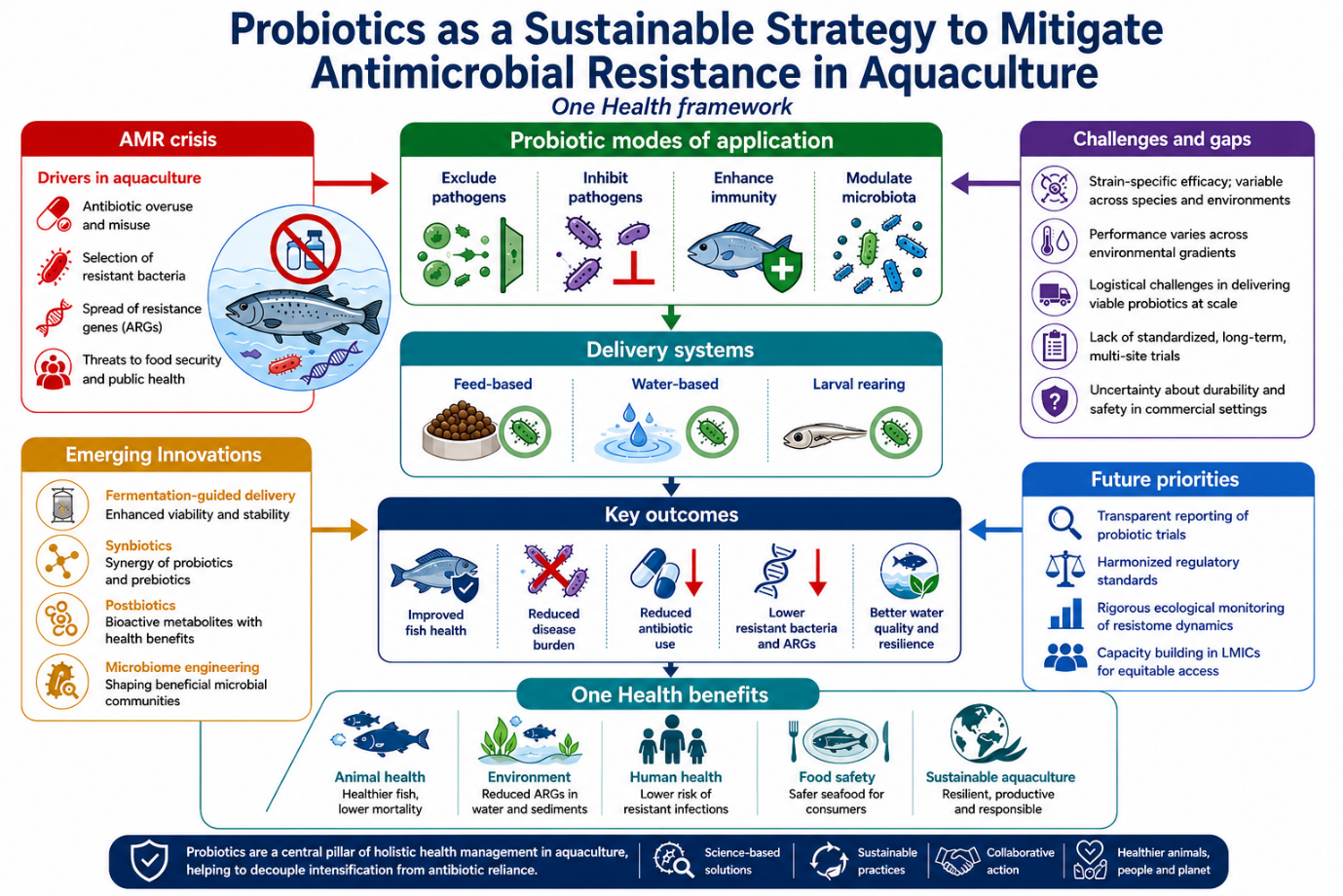
The rising crisis of antimicrobial resistance (AMR) in global aquaculture threatens food security and public health, calling for a shift away from prophylactic antibiotic use. Probiotics offer a potentially viable and sustainable alternative through competitive exclusion, pathogen suppression, and immunomodulation, thereby helping to reduce disease burden. This review integrates current evidence on the application of probiotics to mitigate AMR within a One Health framework, examining their use across feed-based, water-based, and larval-rearing systems. Across diverse species and production contexts, probiotics may help decouple aquaculture intensification from reliance on antibiotics. However, widespread adoption is hindered by strain-specific efficacy, variable performance across environmental conditions, and logistical challenges associated with maintaining and delivering viable organisms. The field also suffers from a paucity of standardized, long-term, multisite trials, which creates uncertainty about efficacy, durability, and safety under commercial conditions. To address these gaps, emerging innovations such as fermentation-based delivery approaches, synbiotics, postbiotics, and microbiome engineering show promise for enhancing probiotic stability and shaping favorable microbial communities. Probiotics should therefore be viewed as an important component of holistic health management, with the potential to influence resistome dynamics while complementing vaccination and biosecurity measures. Realizing these benefits requires transparent reporting, rigorous ecological monitoring, harmonized regulatory standards, and targeted capacity building, particularly in low- and middle-income countries, to promote equitable access.
- Asche F, Smith MD. Induced innovation in fisheries and aquaculture. Food Policy. 2018;76:1-7. doi: 10.1016/j.foodpol.2018.02.002
- Maulu S, Hasimuna OJ, Haambiya LH, et al. Climate change effects on aquaculture production: sustainability implications, mitigation, and adaptations. Front Sustain Food Syst. 2021;5:609097. doi: 10.3389/fsufs.2021.609097
- Ahmed N, Thompson S, Glaser M. Global aquaculture productivity, environmental sustainability, and climate change adaptability. Environ Manag. 2019;63(2):159-172. doi: 10.1007/s00267-018-1117-3
- Serwecińska L. Antimicrobials and antibiotic-resistant bacteria: a risk to the environment and to public health. Water. 2020;12(12):3313. doi: 10.3390/w12123313
- Singh A, Pratap SG, Raj A. Occurrence and dissemination of antibiotics and antibiotic resistance in aquatic environment and its ecological implications: a review. Environ Sci Pollut Res. 2024;31(35):47505-47529. doi: 10.1007/s11356-024-34355-x
- Lajqi Berisha N, Poceva Panovska A, Hajrulai-Musliu Z. Antibiotic resistance and aquatic systems: Importance in public health. Water. 2024;16(17):2362. doi: 10.3390/w16172362
- Yuan X, Lv Z, Zhang Z, Han Y, Liu Z, Zhang H. A review of antibiotics, antibiotic resistant bacteria, and resistance genes in aquaculture: Occurrence, contamination, and transmission. Toxics. 2023;11(5):420. doi: 10.3390/toxics11050420
- Motlhalamme T, Paul L, Singh V. Environmental reservoirs, genomic epidemiology, and mobile genetic elements. In: Soni V, Akhade AS, eds. Antimicrobial Resistance: Factors to Findings. Cham: Springer; 2024. doi: 10.1007/978-3-031-65986-7_7
- Sassi A, Basher NS, Kirat H, et al. The role of the environment (Water, Air, Soil) in the emergence and dissemination of antimicrobial resistance: A one health perspective. Antibiotics. 2025;14(8):764. doi: 10.3390/antibiotics14080764
- Ali MM, Hossain D, Adesola RO, et al. Integrating one health to mitigate the emergence and spread of antimicrobial resistance in livestock and aquaculture. Anim Res One Health. 2026. doi: 10.1002/aro2.70064
- Oliveira M, Antunes W, Mota S, Madureira-Carvalho Á, Dinis-Oliveira RJ, Dias da Silva D. An overview of the recent advances in antimicrobial resistance. Microorganisms. 2024;12(9):1920. doi: 10.3390/microorganisms12091920
- Gomes MP. The convergence of antibiotic contamination, resistance, and climate dynamics in freshwater ecosystems. Water. 2024;16(18):2606. doi: 10.3390/w16182606
- Soltani M, Ghosh K, Hoseinifar SH, et al. Genus Bacillus, promising probiotics in aquaculture: aquatic animal origin, bio-active components, bioremediation and efficacy in fish and shellfish. Rev Fish Sci Aquac. 2019;27(3):331-379. doi: 10.1080/23308249.2019.1597010
- Vulla KE, Mmanda FP, Nyangoko BP, Makule EE. Unlocking potential benefits on applications of probiotics in inland aquaculture industry: A review. Aquac Fish Fish. 2024;4(6):e70027. doi: 10.1002/aff2.70027
- Aghamohammad S, Rohani M. Antibiotic resistance and the alternatives to conventional antibiotics: The role of probiotics and microbiota in combating antimicrobial resistance. Microbiol Res. 2023;267:127275. doi: 10.1016/j.micres.2022.127275
- Abavisani M, Khoshroo N, Tafti P, Moghadam MA, Kesharwani P, Sahebkar A. Exploring regional variations in probiotics: implications for efficacy and application. Microb Pathog. 2025:107963. doi: 10.1016/j.micpath.2025.107963
- Lulijwa R, Rupia EJ, Alfaro AC. Antibiotic use in aquaculture, policies and regulation, health and environmental risks: a review of the top 15 major producers. Rev Aquac. 2020;12(2):640-663. doi: 10.1111/raq.12344
- Simbo EB, Ma Z, Fang L, Morgan S, et al. Occurrence, dominance, and combined use of antibiotics in aquaculture ponds. Toxics. 2025;13(10):892. doi: 10.3390/toxics13100892
- Liu H, Wang S, Cai Y, et al. Dietary administration of Bacillus subtilis HAINUP40 enhances growth, digestive enzyme activities, innate immune responses and disease resistance of tilapia, Oreochromis niloticus. Fish shellfish immunol. 2017;60:326-333. doi: 10.1016/j.fsi.2016.12.003
- James R, Hardefeldt LY, Ierano C, et al. Antimicrobial stewardship from a One Health perspective. Nat Rev Microbiol. 2026;24(2):146-162. doi: 10.1038/s41579-025-01233-3
- Singh M, Singh P. Drugs and chemicals applied in aquaculture industry: A review of commercial availability, recommended dosage and mode of application. J Entomol Zool Stud. 6(6):903-907. https://www.entomoljournal.com/archives/?year=2018&vol=6&issue=6&ArticleId=4556
- Hossain A, Habibullah-Al-Mamun M, Nagano I, Masunaga S, Kitazawa D, Matsuda H. Antibiotics, antibiotic-resistant bacteria, and resistance genes in aquaculture: risks, current concern, and future thinking. Environ Sci Pollut Res. 2022;29(8):11054-11075. doi: 10.1007/s11356-021-17825-4
- Cabello FC. Heavy use of prophylactic antibiotics in aquaculture: a growing problem for human and animal health and for the environment. Environmental microbiology. Environ Microbiol. 2006;8(7):1137-1144. doi: 10.1111/j.1462-2920.2006.01054.x
- Ljubojević Pelić D, Radosavljević V, Pelić M, et al. Antibiotic residues in cultured fish: Implications for food safety and regulatory concerns. Fishes. 2024;9(12):484. doi: 10.3390/fishes9120484
- Allegra S, Loi G, Garrido Gamarro E. Analysis of food safety import notifications and relevant standards and regulations for aquaculture products with a focus on antimicrobial residues and use. Aquac Res. 2024;2024(1):9427435. doi: 10.1155/2024/9427435
- Defoirdt T, Sorgeloos P, Bossier P. Alternatives to antibiotics for the control of bacterial disease in aquaculture. Curr Opin Microbiol. 2011;14(3):251-258. doi: 10.1016/j.mib.2011.03.004
- Ferri G, Lauteri C, Vergara A. Antibiotic resistance in the finfish aquaculture industry: a review. Antibiotics. 2022;11(11):1574. doi: 10.3390/antibiotics11111574
- Storoni C, Preziuso S, Attili AR, Yubao L, Cuteri V. Bacterial bovine respiratory disease: A comprehensive review of etiology, pathogenesis, and management strategies. Microbiol Res. 2026;17(1):18. doi: 10.3390/microbiolres17010018
- Tegegne BA, Kebede B. Probiotics, their prophylactic and therapeutic applications in human health development: A review of the literature. Heliyon. 2022;8(6). doi: 10.1016/j.Heliyon.2022.e09725
- Ugoala E. Antimicrobial drug resistance: A systematic review and assessment of resistant pathogen infection prevention and control. Trends Med Res. 2023;18(1):36-57. doi: 10.3923/tmr.2023.36.57
- Nayan S, Kolay A, Chauhan SB, et al. Navigating global regulatory divergence in over-the-counter drugs: addressing emerging risks and harmonization challenges. Curr Drug Res Rev. 2026;18(2):195-209. doi: 10.2174/0125899775370402250622155744
- Porter G, Kotwani A, Bhullar L, et al. Over-the-counter sales of antibiotics for human use in India: the challenges and opportunities for regulation. Med Law Int. 2021;21(2):147-173. doi: 10.1177/09685332211020786
- Hinchliffe S, Butcher A, Rahman MM. The AMR problem: demanding economies, biological margins, and co-producing alternative strategies. Palgrave Commun. 2018;4(1). doi: 10.1057/s41599-018-0195-4
- Jarvis LS, Valdes-Donoso P. A selective review of the economic analysis of animal health management. J Agric Econ. 2018;69(1):201-225. doi: 10.1111/1477-9552.12131
- Kayode-Afolayan SD, Ahuekwe EF, Nwinyi OC. Impacts of pharmaceutical effluents on aquatic ecosystems. Sci Afr. 2022;17: e01288. doi: 10.1016/j.sciaf.2022.e01288
- Sharma P, Rani L, Grewal AS, Srivastav AL. Impact of pharmaceuticals and antibiotics waste on the river ecosystem: a growing threat. In: Ecological Significance of River Ecosystems. Elsevier; 2022:15-36. doi: 10.1016/B978-0-323-85045-2.00015-7
- Wu Z, Shao X, Wang Q. Antibiotics and antibiotic resistance genes in the environment: dissemination, ecological risks, and remediation approaches. Microorganisms. 2025;13(8):1763. doi: 10.3390/microorganisms13081763
- Rose M. Pollutants, residues and other contaminants in foods obtained from marine and fresh water. In: Present Knowledge in Food Safety. Elsevier; 2023:128-141. doi: 10.1016/B978-0-12-819470-6.00040-8
- Akhter S, Bhat MA, Ahmed S, Siddiqui WA. Antibiotic residue contamination in the aquatic environment, sources and associated potential health risks. Environ Geochem Health. 2024;46(10):387. doi: 10.1007/s10653-024-02146-5
- Brepoels P, De Wit G, Lories B, Belpaire TE, Steenackers HP. Selective pressures for public antibiotic resistance. Crit Rev Microbiol. 2025;51(3):417-426. doi: 10.1080/1040841X.2024.2367666
- Santos L, Ramos F. Antimicrobial resistance in aquaculture: current knowledge and alternatives to tackle the problem. Int J Antimicrob Agents. 2018;52(2):135-143. doi: 10.1016/j.ijantimicag.2018.03.010
- Díaz-Palafox G, Tamayo-Ordoñez YDJ, Bello-López JM, et al. Regulation transcriptional of antibiotic resistance genes (ARGs) in bacteria isolated from WWTP. Curr Microbiol. 2023;80(10):338. doi: 10.1007/s00284-023-03449-z
- Stelmaszyk L, Stange C, Hügler M, Sidhu JP, Horn H, Tiehm A. Quantification of β-lactamase producing bacteria in German surface waters with subsequent MALDI-TOF MS-based identification and β-lactamase activity assay. Heliyon. 2024;10(5):e27384. doi: 10.1016/j.heliyon.2024.e27384
- Stokes HW, Gillings MR. Gene flow, mobile genetic elements and the recruitment of antibiotic resistance genes into Gram-negative pathogens. FEMS Microbiol Rev. 2011;35(5):790-819. doi: 10.1111/j.1574-6976.2011.00273.x
- Camacho-Méndez K, Cortés LJ, Parás-Silva J, et al. Antibiotic use in Chilean salmon aquaculture: antimicrobial resistance, sustainability, and One Health implications. Front Microbiol. 2026; 17:1810226. doi: 10.3389/fmicb.2026.1810226
- Cooper RM, Tsimring L, Hasty J. Inter-species population dynamics enhance microbial horizontal gene transfer and spread of antibiotic resistance. eLife. 2017;6: e25950. doi: 10.7554/eLife.25950
- Vinayamohan P, Joseph D, Viju LS, et al. Efficacy of probiotics in reducing pathogenic potential of infectious agents. Fermentation. 2024;10(12):599. doi: 10.3390/fermentation10120599
- Karampatakis T, Tsergouli K, Behzadi P. Carbapenem-resistant Pseudomonas aeruginosa’s resistome: pan-genomic plasticity, the impact of transposable elements and jumping genes. Antibiotics. 2025;14(4):353. doi: 10.3390/antibiotics14040353
- Partridge SR, Kwong SM, Firth N, Jensen SO. Mobile genetic elements associated with antimicrobial resistance. Clin Microbiol Rev. 2018;31(4): e00088-17. doi: 10.1128/CMR.00088-17
- Michaelis C, Grohmann E. Horizontal gene transfer of antibiotic resistance genes in biofilms. Antibiotics. 2023;12(2):328. doi: 10.3390/antibiotics12020328
- Bowler P, Murphy C, Wolcott R. Biofilm exacerbates antibiotic resistance: is this a current oversight in antimicrobial stewardship? Antimicrob Resist Infect Control. 2020;9(1):162. doi: 10.1186/s13756-020-00830-6
- Gutiérrez-Pacheco MM, Gracia-Valenzuela MH, Ortega-Ramirez LA, et al. Joining forces against antibiotic resistance in aquaculture: the synergism between natural compounds and antibiotics. Antibiotics. 2026;15(1):95. doi: 10.3390/antibiotics15010095
- Pathoor NN, Chandrakala N, Eswari J, et al. Biofilm microorganisms in aquaculture. In: Aquatic Ecosystems and Microbial Biofilms: Significance, Dynamics, Prevention and Control. 2024:264-281.. doi: 10.1201/9781003487203-15
- Bhattacharjee A, Chatterjee D, Sengupta T. Biofilms and their increasing trend in AMR patterns in integrated farming systems. In: Biofilm Associated Livestock Diseases and Their Management. Singapore: Springer Nature Singapore; 2025:393-446. doi: 10.1007/978-981-96-1885-9_18
- Colombo S, Arioli S, Neri E, et al. Viromes as genetic reservoir for the microbial communities in aquatic environments: a focus on antimicrobial-resistance genes. Front Microbiol. 2017;8:1095. doi: 10.3389/fmicb.2017.01095
- Quillaguaman J, Guzmán D, Campero M, et al. The microbiome of a polluted urban lake harbors pathogens with diverse antimicrobial resistance and virulence genes. Environ Pollut. 2021;273:116488. doi: 10.1016/j.envpol.2021.116488
- Gillieatt BF, Coleman NV. Unravelling the mechanisms of antibiotic and heavy metal resistance co-selection in environmental bacteria. FEMS Microbiol Rev. 2024;48(4):fuae017. doi: 10.1093/femsre/fuae017
- Milijasevic M, Veskovic-Moracanin S, Babic Milijasevic J, et al. Antimicrobial resistance in aquaculture: risk mitigation within the One Health context. Foods. 2024;13(15):2448. doi: 10.3390/foods13152448
- Bondad-Reantaso MG, MacKinnon B, Karunasagar I, et al. Review of alternatives to antibiotic use in aquaculture. Rev Aquac. 2023;15(4):1421-1451. doi: 10.1111/raq.12786
- Wright A, Li X, Yang X, Soto E, Gross J. Disease prevention and mitigation in US finfish aquaculture: a review of current approaches and new strategies. Rev Aquac. 2023;15(4):1638-1653. doi: 10.1111/raq.12807
- Caputo A, Bondad-Reantaso MG, Karunasagar I, et al. Antimicrobial resistance in aquaculture: a global analysis of literature and national action plans. Rev Aquac. 2023;15(2):568-578. doi: 10.1111/raq.12741
- Mok JS, Cho SR, Park YJ, et al. Distribution and antimicrobial resistance of Vibrio parahaemolyticus isolated from fish and shrimp aquaculture farms along the Korean coast. Mar Pollut Bull. 2021; 171:112785. doi: 10.1016/j.marpolbul.2021.112785
- Jeamsripong S, Odoi JO, Shahi MK, et al. Global spread and antimicrobial resistance of Aeromonas hydrophila in aquatic food animals: a systematic review and meta-analysis. Sci Rep. 2025;15:28441. doi: 10.1038/s41598-025-14498-8
- Hemamalini N, Shanmugam SA, Kathirvelpandian A, Deepak A, Kaliyamurthi V, Suresh E. A critical review on the antimicrobial resistance, antibiotic residue and metagenomics-assisted antimicrobial resistance gene detection in freshwater aquaculture environment. Aquac Res. 2022;53(2):344-366. doi: 10.1111/are.15601
- Deekshit VK, Maiti B, Krishna Kumar B, et al. Antimicrobial resistance in fish pathogens and alternative risk mitigation strategies. Rev Aquac. 2023;15(1):261-273. doi: 10.1111/raq.12715
- Okeke ES, Chukwudozie KI, Nyaruaba R, et al. Antibiotic resistance in aquaculture and aquatic organisms: a review of current nanotechnology applications for sustainable management. Environ Sci Pollut Res Int. 2022;29(46):69241-69274. doi: 10.1007/s11356-022-22319-y
- Al-Khalaifah H, Rahman MH, Al-Surrayai T, Al-Dhumair A, Al-Hasan M. A One Health perspective of antimicrobial resistance (AMR): human, animals and environmental health. Life (Basel). 2025;15(10):1598. doi: 10.3390/life15101598
- Ifedinezi OV, Nnaji ND, Anumudu CK, et al. Environmental antimicrobial resistance: implications for food safety and public health. Antibiotics. 2024;13(11):1087. doi: 10.3390/antibiotics13111087
- Popoola BM, Adeyemi OA, Samson OJ. Antibiotic-resistant bacteria in tropical freshwater ecosystems: a review of occurrence, distribution and environmental implications. The Microbe 2025.8:100457. doi: 10.1016/j.microb.2025.100457
- Standen BT, Rawling MD, Davies SJ, et al. Probiotic Pediococcus acidilactici modulates both localised intestinal- and peripheral-immunity in tilapia (Oreochromis niloticus). Fish Shellfish Immunol. 2013;35(4):1097-1104. doi: 10.1016/j.fsi.2013.07.018
- Majumder MA, Rahman S, Cohall D, Bharatha A, Singh K, Haque M, Gittens-St Hilaire M. Antimicrobial stewardship: fighting antimicrobial resistance and protecting global public health. Infect Drug Resist. 2020:4713-4738. doi: 10.2147/IDR.S290835
- Vulla KE, Mmanda FP, Makule E. Potential application of linear programming method and solid-state fermentation in improving the quality of fish feed and profits of small-scale Nile tilapia (Oreochromis niloticus) farming in Tanzania. Aquac Fish Fish. 2026;6(1):e70182. doi: 10.1002/aff2.70182
- Fenster K, Freeburg B, Hollard C, et al. The production and delivery of probiotics: a review of a practical approach. Microorganisms. 2019;7(3):83. doi: 10.3390/microorganisms7030083
- Mustafa K, Wang F, Zhang A, et al. Biowaste to biohydrogen by top three isolated strains of Bacillus: individual strains outperformed the generalist consortia. J Environ Chem Eng. 2026;14(2):121413. doi: 10.1016/j.jece.2026.121413
- Yasin ISM, Mohamad A, Azzam-Sayuti M. Control of fish diseases using antibiotics and other antimicrobial agents. In: Recent Advances in Aquaculture Microbial Technology. Academic Press; 2023:127-152. doi: 10.1016/B978-0-323-90261-8.00010-9
- Xavier R, Severino R, Silva SM. Signatures of dysbiosis in fish microbiomes in the context of aquaculture. Rev Aquac. 2024;16(2):706-731. doi: 10.1111/raq.12862
- Chen H, Liu S, Xu XR, et al. Tissue distribution, bioaccumulation characteristics and health risk of antibiotics in cultured fish from a typical aquaculture area. J Hazard Mater. 2018;343:140-148. doi: 10.1016/j.jhazmat.2017.09.017
- Sionek B, Szydłowska A, Jaworska D, Kołożyn-Krajewska D. Benefits of probiotics—biodetoxification. Appl Sci. 2025;15(10):5297. doi: 10.3390/app15105297
- Zielińska D, Sionek B, Kołożyn-Krajewska D. Safety of probiotics. In: Diet, Microbiome and Health. Academic Press; 2018:131-161. doi: 10.1016/B978-0-12-811440-7.00006-5
- Hoseinifar SH, Ashouri G, Marisaldi L, et al. Reducing the use of antibiotics in European aquaculture with vaccines, functional feed additives and optimization of the gut microbiota. J Mar Sci Eng. 2024;12(2):204. doi: 10.3390/jmse12020204
- Bebell LM, Muiru AN. Antibiotic use and emerging resistance: how can resource-limited countries turn the tide? Glob Heart. 2014;9(3):347-358. doi: 10.1016/j.gheart.2014.08.009
- Mariom, Hossain MS, Rifa RJ, Mondal C, Ahamed MI, Sudipta AP. Lactic acid bacteria (LAB) in aquaculture: current insights, research gaps, and future directions for sustainability. Arch Microbiol. 2026;208(1):72. doi: 10.1007/s00203-025-04625-4
- Foysal MJ, Fotedar R, Siddik MA, et al. Lactobacillus acidophilus and L. plantarum improve health status, modulate gut microbiota and innate immune response of marron (Cherax cainii). Sci Rep. 2020;10(1):5916. doi: 10.1038/s41598-020-62655-y
- Romanova E, Spirina E, Romanov V, et al. Effects of Bacillus subtilis and Bacillus licheniformis on catfish in industrial aquaculture. E3S Web Conf. 2020;175:02013. doi: 10.1051/e3sconf/202017502013
- Olmos J, Acosta M, Mendoza G, et al. Bacillus subtilis, an ideal probiotic bacterium to shrimp and fish aquaculture that increase feed digestibility, prevent microbial diseases, and avoid water pollution. Arch Microbiol. 2020;202(3):427-435. doi: 10.1007/s00203-019-01757-2
- Omar AA, Gado MS, Kandel HE, et al. Probiotic efficacy in aquaculture: the role of Technospore® (Bacillus coagulans) in improving Nile tilapia (Oreochromis niloticus) performance and disease resistance: a study on gut health, immunological response, and gene expression. Probiotics Antimicrob Proteins. 2025;17(5):3284-3301. doi: 10.1007/s12602-024-10279-3
- Zokaeifar H, Balcázar JL, Saad CR, et al. Effects of Bacillus subtilis on the growth performance, digestive enzymes, immune gene expression and disease resistance of white shrimp, Litopenaeus vannamei. Fish Shellfish Immunol. 2012;33(4):683-689. doi: 10.1016/j.fsi.2012.05.027
- Atef S, Ahmed OM, Said MM, Abo-Al-Ela HG. Dietary Bacillus species modulate lipid metabolism-related parameters, growth, water quality, and bacterial load in Nile tilapia (Oreochromis niloticus). Anim Feed Sci Technol. 2024; 310:115943. doi: 10.1016/j.anifeedsci.2024.115943
- Alishahi M, Dezfuly ZT, Mesbah M, Mohammadian T. Effects of two probiotics, Lactobacillus plantarum and Lactobacillus bulgaricus, on growth performance and intestinal lactic acid bacteria of Cyprinus carpio. Iran J Vet Med. 2018;12(3):207–218. doi: 10.22059/ijvm.2018.235444.1004816
- Naiel MA, Farag MR, Gewida AG, et al. Using lactic acid bacteria as immunostimulants in cultured shrimp with special reference to Lactobacillus spp. Aquac Int. 2021;29(1):219-231. doi: 10.1007/s10499-020-00620-2
- Hamdan AM, El-Sayed AFM, Mahmoud MM. Effects of a novel marine probiotic, Lactobacillus plantarum AH 78, on growth performance and immune response of Nile tilapia (Oreochromis niloticus). J Appl Microbiol. 2016;120(4):1061-1073. doi: 10.1111/jam.13081
- Nobakht F, Mohabatkar H, Behbahani M. An experimental study of the effects of Lactobacillus acidophilus and Lactobacillus plantarum probiotic bacteria on the immune system, growth factors, and disease resistance in the rainbow trout. Biological Journal of Microorganism. 2021;10(40):115-126. doi: 10.22108/bjm.2021.128192.1381
- Al-Dohail MA, Hashim R, Aliyu-Paiko M. Effects of the probiotic, Lactobacillus acidophilus, on the growth performance, haematology parameters and immunoglobulin concentration in African catfish (Clarias gariepinus, Burchell 1822) fingerling. Aquac Res. 2009;40(14):1642-1652. doi: 10.1111/j.1365-2109.2009.02265.x
- Popovic NT, Strunjak-Perovic I, Sauerborn-Klobucar R, et al. The effects of diet supplemented with Lactobacillus rhamnosus on tissue parameters of rainbow trout, Oncorhynchus mykiss (Walbaum). Aquac Res. 2017;48(5):2388-2401. doi: 10.1111/are.13074
- Van Doan H, Lumsangkul C, Jaturasitha S, Meidong R, Hoseinifar SH, Dawood MA. Modulation of growth, skin mucus and serum immunities, and disease resistance of Nile tilapia fed host-associated probiotic (Lactobacillus paracasei L61-27B). Aquac Nutr. 2021;27:3-12. doi: 10.1111/anu.13314
- Wu YS, Chu YT, Chen YY, et al. Effects of dietary Lactobacillus reuteri and Pediococcus acidilactici on the cultured water qualities, the growth and non-specific immune responses of Penaeus vannamei. Fish Shellfish Immunol. 2022;127:176-186. doi: 10.1016/j.fsi.2022.06.004
- Jastaniah SD, Alaidaroos BA, Shafi ME, et al. Dietary Pediococcus acidilactici improved the growth performance, feed utilization, gut microbiota, and disease resistance against Fusarium solani in Pacific white shrimp, Litopenaeus vannamei. Aquac Int. 2024;32(3):3195-3215. doi: 10.1007/s10499-023-01318-x
- Tachibana L, Telli GS, de Carla Dias D, et al. Effect of feeding strategy of probiotic Enterococcus faecium on growth performance, hematologic, biochemical parameters and non-specific immune response of Nile tilapia. Aquac Rep. 2020; 16:100277. doi: 10.1016/j.aqrep.2020.100277
- Paray BA, Bhat EA, Bello IO, et al. Dietary Saccharomyces cerevisiae enhanced growth performance, short-chain fatty acids, and reduced the susceptibility of African catfish, Clarias gariepinus, to Aeromonas hydrophila infection. Trop Anim Health Prod. 2026;58(3):221. doi: 10.1007/s11250-026-05024-7
- Cacot G, Davis DA, LaFrentz BR, et al. Assessment of dietary yeast-based additives for cultured catfish and tilapia health. J Fish Dis. 2024;47(11):e14008. doi: 10.1111/jfd.14008
- Teles A, Alvarez-González CA, Llera-Herrera R, et al. Debaryomyces hansenii CBS 8339 promotes larval development in Seriola rivoliana. Aquaculture. 2023;560:738587. doi: 10.1016/j.aquaculture.2022.738587
- Gram L, Melchiorsen J, Spanggaard B, et al. Inhibition of Vibrio anguillarum by Pseudomonas fluorescens AH2, a possible probiotic treatment of fish. Appl Environ Microbiol. 1999;65(3):969-973. doi: 10.1128/AEM.65.3.969-973.1999
- Tran NT, Li Z, Ma H, et al. Clostridium butyricum: a promising probiotic confers positive health benefits in aquatic animals. Rev Aquac. 2020;12(4):2573-2589. doi: 10.1111/raq.12459
- Patil PK, Antony L, Avunje S, et al. Bioaugmentation with nitrifying and denitrifying microbial consortia for mitigation of nitrogenous metabolites in shrimp ponds. Aquaculture. 2021; 541:736819. doi: 10.1016/j.aquaculture.2021.736819
- Setiawan D, Prayogo, Rahardja BS. Utilization of Nitrosomonas sp. and Nitrobacter sp. probiotic towards nitrite and nitrate level in Nile tilapia (Oreochromis niloticus) using aquaponic system. IOP Conf Ser Earth Environ Sci. 2021;718(1):012098. doi: 10.1088/1755-1315/718/1/012098
- Chumpol S, Kantachote D, Nitoda T, Kanzaki H. The roles of probiotic purple nonsulfur bacteria to control water quality and prevent acute hepatopancreatic necrosis disease (AHPND) for enhancement growth with higher survival in white shrimp (Litopenaeus vannamei) during cultivation. Aquaculture. 2017;473:327-336. doi: 10.1016/j.aquaculture.2017.02.033
- Jurado J, Villasanta-González A, Tapia-Paniagua ST, et al. Dietary administration of the probiotic Shewanella putrefaciens Pdp11 promotes transcriptional changes of genes involved in growth and immunity in Solea senegalensis larvae. Fish Shellfish Immunol. 2018;77:350-363. doi: 10.1016/j.fsi.2018.04.018
- Wanka KM, Damerau T, Costas B, Krueger A, Schulz C, Wuertz S. Isolation and characterization of native probiotics for fish farming. BMC Microbiol. 2018;18(1). doi: 10.1186/s12866-018-1260-2
- Maxwell R, Ma J, LaFrentz BR, Swearingen S, Cain K. Viability of probiotic C6-6 in fish feed and ability to inhibit columnaris-causing bacteria in rainbow trout Oncorhynchus mykiss. Dis Aquat Organ. 2026;166:1-11. doi: 10.3354/dao03916
- Jahangiri L, Esteban MÁ. Administration of probiotics in the water in finfish aquaculture systems: a review. Fishes. 2018;3(3):33. doi: 10.3390/fishes3030033
- El-Sayed HS, Ghanem SF, Barakat KM. Role of recent feeding protocols, rearing water systems and microbial trends in improving marine larviculture: insights into water quality and larval performance. Int Aquat Res. 2024;16(3):213–232. doi: 10.22034/iar.2024.2008550.1645
- Li K, Lopez AG, Gonzalez AV, et al. Boosting hatchery success: effective live feed and microdiet protocols for larval rearing efficiency. Aquac Int. 2025;33(6):469. doi: 10.1007/s10499-025-02144-z
- Amenyogbe E. Application of probiotics for sustainable and environment-friendly aquaculture management: a review. Cogent Food Agric. 2023;9(1):2226425. doi: 10.1080/23311932.2023.2226425
- Borges N, Keller-Costa T, Sanches-Fernandes GMM, Louvado A, Gomes NCM, Costa R. Bacteriome structure, function, and probiotics in fish larviculture: the good, the bad, and the gaps. Annu Rev Anim Biosci. 2021;9:423-452. doi: 10.1146/annurev-animal-062920-113114
- Ramirez M, Domínguez-Borbor C, Salazar L, et al. The probiotics Vibrio diabolicus (Ili), Vibrio hepatarius (P62), and Bacillus cereus sensu stricto (P64) colonize internal and external surfaces of Penaeus vannamei shrimp larvae and protect it against Vibrio parahaemolyticus. Aquaculture. 2021;549:737826. doi: 10.1016/j.aquaculture.2021.737826
- Domínguez-Borbor C, Ardiles V, Bermeo M, et al. The marine symbiont Pseudovibrio denitrificans is effective to control pathogenic Vibrio spp. in shrimp aquaculture. Aquaculture. 2019;508:127-136. doi: 10.1016/j.aquaculture.2019.04.077
- Sam-On MFS, Mustafa S, Hashim AM, et al. Mining the genome of Bacillus velezensis FS26 for probiotic markers and secondary metabolites with antimicrobial properties against aquaculture pathogens. Microb Pathog. 2023;181:106161. doi: 10.1016/j.micpath.2023.106161
- Yousuf S, Tyagi A, Singh R. Probiotic supplementation as an emerging alternative to chemical therapeutics in finfish aquaculture: a review. Probiotics Antimicrob Proteins. 2023;15(5):1151-1168. doi: 10.1007/s12602-022-09971-z
- Merenstein D, Pot B, Leyer G, et al. Emerging issues in probiotic safety: 2023 perspectives. Gut Microbes. 2023;15(1):2185034. doi: 10.1080/19490976.2023.2185034
- Chen SW, Liu CH, Hu SY. Dietary administration of probiotic Paenibacillus ehimensis NPUST1 with bacteriocin-like activity improves growth performance and immunity against Aeromonas hydrophila and Streptococcus iniae in Nile tilapia (Oreochromis niloticus). Fish Shellfish Immunol. 2019;84:695-703. doi: 10.1016/j.fsi.2018.10.059
- Pereira WA, Piazentin ACM, de Oliveira RC, et al. Bacteriocinogenic probiotic bacteria isolated from an aquatic environment inhibit the growth of food and fish pathogens. Sci Rep. 2022;12(1):5530. doi: 10.1038/s41598-022-09263-0
- Blum S, Haller D, Pfeifer A, Schiffrin EJ. Probiotics and immune response. Clin Rev Allergy Immunol. 2002;22(3):287-309. doi: 10.1007/s12016-002-0013-y
- Kuebutornye FK, Wang Z, Lu Y, et al. Effects of three host-associated Bacillus species on mucosal immunity and gut health of Nile tilapia, Oreochromis niloticus, and its resistance against Aeromonas hydrophila infection. Fish Shellfish Immunol. 2020;97:83-95. doi: 10.1016/j.fsi.2019.12.046
- Asaduzzaman M, Iehata S, Akter S, et al. Effects of host gut-derived probiotic bacteria on gut morphology, microbiota composition and volatile short chain fatty acids production of Malaysian mahseer Tor tambroides. Aquac Rep. 2018;9:53-61. doi: 10.1016/j.aqrep.2017.12.003
- Ding F, Zhou N, Luo Y, et al. Probiotic Pediococcus pentosaceus restored gossypol-induced intestinal barrier injury by increasing propionate content in Nile tilapia. J Anim Sci Biotechnol. 2024;15(1):54. doi: 10.1186/s40104-024-01011-w
- Adeoye AA, Yomla R, Jaramillo-Torres A, Rodiles A, Merrifield DL, Davies SJ. Combined effects of exogenous enzymes and probiotic on Nile tilapia (Oreochromis niloticus) growth, intestinal morphology and microbiome. Aquaculture. 2016;463:61-70. doi: 10.1016/j.aquaculture.2016.05.028
- Liu C, Ma N, Feng Y, et al. From probiotics to postbiotics: concepts and applications. Anim Res One Health. 2023;1(1):92-114. doi: 10.1002/aro2.7
- Fachri M, Amoah K, Huang Y, et al. Probiotics and paraprobiotics in aquaculture: a sustainable strategy for enhancing fish growth, health and disease prevention—a review. Front Mar Sci. 2024;11:1499228. doi: 10.3389/fmars.2024.1499228
- Schmidt V, Gomez-Chiarri M, Roy C, Smith K, Amaral-Zettler L. Subtle microbiome manipulation using probiotics reduces antibiotic-associated mortality in fish. mSystems. 2017;2(6):e00133-17. doi: 10.1128/mSystems.00133-17
- Ringø E, Hoseinifar SH, Ghosh K, et al. Lactic acid bacteria in finfish—an update. Front Microbiol. 2018;9:1818. doi: 10.3389/fmicb.2018.01818
- Rwezawula P, Nakavuma J, Agoe C, et al. Local probiotic bacteria positively influence production parameters and resistance against Providencia infections in Nile tilapia (Oreochromis niloticus). Aquac Rep. 2025;45:103259. doi: 10.1016/j.aqrep.2025.103259
- Vinayamohan PG, Pellissery AJ, Venkitanarayanan K. Role of horizontal gene transfer in the dissemination of antimicrobial resistance in food animal production. Curr Opin Food Sci. 2022;47:100882. doi: 10.1016/j.cofs.2022.100882
- Gu Y, Xu K, Chen Z, Lu Y, Fang S, Hu K, Ju X, Li L, Chen Z. Evaluation of antibiotic-sensitive Bacillus strain as a potential probiotic for enhanced growth in Penaeus vannamei. Curr Microbiol. 2025;82(3):115. doi: 10.1007/s00284-025-04092-6
- Yu J, Wu C, Dong P, Chen C, Chen H, Chen J, Liu X, Wang K, Wang K, Zhang D. Risk assessment of shrimp-derived probiotics on culture performance and environmental biosafety in shrimp larvae rearing system. Front Mar Sci. 2025;12:1683189. doi: 10.3389/fmars.2025.1683189
- Qin G, Wang D, Luo K, Liu Y, Xie Y, Wang M, Li C, Fan R, Tian X. Evaluation of probiotic properties and safety of a Bacillus strain for shrimp farming: Integrating in vitro testing, genomic analysis and in vivo validation. Microbiol Res. 2025;297:128179. doi: 10.1016/j.micres.2025.128179
- Radovanovic M, Kekic D, Gajic I, Kabic J, Jovicevic M, Kekic N, Opavski N, Ranin L. Potential influence of antimicrobial resistance gene content in probiotic bacteria on the gut resistome ecosystems. Front Nutr. 2023;10:1054555. doi: 10.3389/fnut.2023.1054555
- Rossi F, Rizzotti L, Felis GE, Torriani S. Horizontal gene transfer among microorganisms in food: current knowledge and future perspectives. Food Microbiol. 2014;42:232-243. doi: 10.1016/j.fm.2014.04.004
- Veedu AK, Thomas J. Probiotics and prebiotics as alternatives to antibiotics in aquaculture: a systematic and bibliometric review of antimicrobial and antioxidant mechanisms. Front Microbiol. 2026;17:1784036. doi: 10.3389/fmicb.2026.1784036
- Aly SM, Ahmed YA, Ghareeb AA, Mohamed MF. Studies on Bacillus subtilis and Lactobacillus acidophilus, as potential probiotics, on the immune response and resistance of Tilapia nilotica (Oreochromis niloticus) to challenge infections. Fish Shellfish Immunol. 2008;25(1-2):128-136. doi: 10.1016/j.fsi.2008.03.013
- Won S, Hamidoghli A, Choi W, Park Y, Jang WJ, Kong IS, Bai SC. Effects of Bacillus subtilis WB60 and Lactococcus lactis on growth, immune responses, histology and gene expression in Nile tilapia, Oreochromis niloticus. Microorganisms. 2020;8(1):67. doi: 10.3390/microorganisms8010067
- Pirarat N, Pinpimai K, Endo M, Katagiri T, Ponpornpisit A, Chansue N, Maita M. Modulation of intestinal morphology and immunity in Nile tilapia (Oreochromis niloticus) by Lactobacillus rhamnosus GG. Res Vet Sci. 2011;91(3):e92-e97. doi: 10.1016/j.rvsc.2011.02.014
- Fečkaninová A, Koščová J, Franc A, Mudroňová D, Popelka P. Surviving of production probiotic strains in a selected application form. Čes Slov Farm. 2022;71(1):27-33. doi: 10.5817/CSF2022-1-27
- Brunt J, Newaj-Fyzul A, Austin B. The development of probiotics for the control of multiple bacterial diseases of rainbow trout, Oncorhynchus mykiss (Walbaum). J Fish Dis. 2007;30(10):573-579. doi: 10.1111/j.1365-2761.2007.00836.x
- Choi W, Hamidoghli A, Won S, Park Y, Jang WJ, Kong IS, Bai SC. Evaluation of three fish-derived probiotic bacteria replacing antibiotics on growth, immunity, gut morphology, and disease resistance in juvenile olive flounder Paralichthys olivaceus fed reduced fishmeal diets. Front Nutr. 2025;12:1519140. doi: 10.3389/fnut.2025.1519140
- Rhee C, Kim H, Emmanuel SA, Kim HG, Won S, Bae J, Bai SC, Koh SC. Probiotic effects of mixture of Groenewaldozyma salmanticensis and Gluconacetobacter liquefaciens on growth and immune responses in Paralichthys olivaceus. Lett Appl Microbiol. 2020;70(6):431-439. doi: 10.1111/lam.13282
- Azhar A, Muin H, Tang SS, Arshad NM. Expanding horizons in phage therapy: addressing antibiotic resistance in aquaculture. Aquac Fish Fish. 2026;6(1):e70171. doi: 10.1002/aff2.70171
- Allahverdi M, Dadmehr M. Probiotic innovation: from next-generation strains and advanced encapsulation strategies to probiotic engineering. J Food Compos Anal. 2026:108917. doi: 10.1016/j.jfca.2026.108917
- Loo JS, Oslan SNH, Mokshin NAS, Othman R, Amin Z, Dejtisakdi W, Prihanto AA, Tan JS. Comprehensive review of strategies for lactic acid bacteria production and metabolite enhancement in probiotic cultures: multifunctional applications in functional foods. Fermentation. 2025;11(5):241. doi: 10.3390/fermentation11050241
- Markowiak P, Śliżewska K. The role of probiotics, prebiotics and synbiotics in animal nutrition. Gut Pathog. 2018;10:21. doi: 10.1186/s13099-018-0250-0
- Toledo N, Ferrer J, Bórquez R. Drying and storage stability of a probiotic strain incorporated into a fish feed formulation. Drying Technology. 2010;28(4):508–516. doi: 10.1080/07373931003618444
- Cusumano G, Flores GA, Venanzoni R, Angelini P. The impact of antibiotic therapy on intestinal microbiota: dysbiosis, antibiotic resistance, and restoration strategies. Antibiotics. 2025;14(4):371. doi: 10.3390/antibiotics14040371
- Balakrishna K, Naveena G, Kingston JJ. Postbiotics at the interface of microbial biotechnology and therapeutics: industrial production, functional mechanisms, and clinical potentials. Arch Microbiol. 2026;208(2):123. doi: 10.1007/s00203-025-04701-9
- Mokashe NU, Talkal R, Tokdar P. Postbiotics: definitions, manufacturing, analytical characterization, and clinical evidence for human and animal health. Curr Microbiol. 2026;83(5):278. doi: 10.1007/s00284-026-04865-7
- Vonaesch P, Garneau JR, Dominguez-Bello MG. From global to local: rethinking the design of probiotic intervention strategies. Trends Microbiol. 2026;34(4):390-405. doi: 10.1016/j.tim.2025.11.009
- Rodriguez G, Fernández Godoy E, Chaple Gil A, et al. Probiotic supplementation and dental caries prevention in children and adolescents: a systematic review of strain-specific and context-dependent effects. Clin Oral Investig. 2026;30(2):82. doi: 10.1007/s00784-026-06752-8
- Cano RDJ, García Menéndez G. Why clinical trials of microbiome-targeted interventions often fail to support health claims: a commentary on probiotics and translational design. Microorganisms. 2026;14(2):470. doi: 10.3390/microorganisms14020470
- Ordanel AM, Nuevaespaña JAA, Ramos IIF, Almarza PJD, Caipang CMA. Recent advances and challenges in the industrial-scale production of probiotics in aquaculture. Int J Aquat Biol. 2025;13(2):118-139. https://www.sid.ir/paper/1696005/en
- Tayyab M, Zhao Y, Zhang Y. Microbiome engineering to enhance disease resistance in aquaculture: current strategies and future directions. Front Microbiol. 2025;16:1625265. doi: 10.3389/fmicb.2025.1625265
- Elsegeny SR, Radwan FS, Elshamy YM, et al. A comprehensive overview of probiotics in aquaculture: from efficacy evaluation to diverse applications. Ann Microbiol. 2025;75(1):35. doi: 10.1186/s13213-025-01825-7
- Vine NG, Leukes WD, Kaiser H. Probiotics in marine larviculture. FEMS Microbiol Rev. 2006;30(3):404-427. doi: 10.1111/j.1574-6976.2006.00017.x
- Al Azawei A, Loughrey K, Surim K, Connolly ME, Naughton BD. The management of good manufacturing practice (GMP) inspections: a scoping review of the evidence. Front Med. 2025;12:1687864. doi: 10.3389/fmed.2025.1687864