
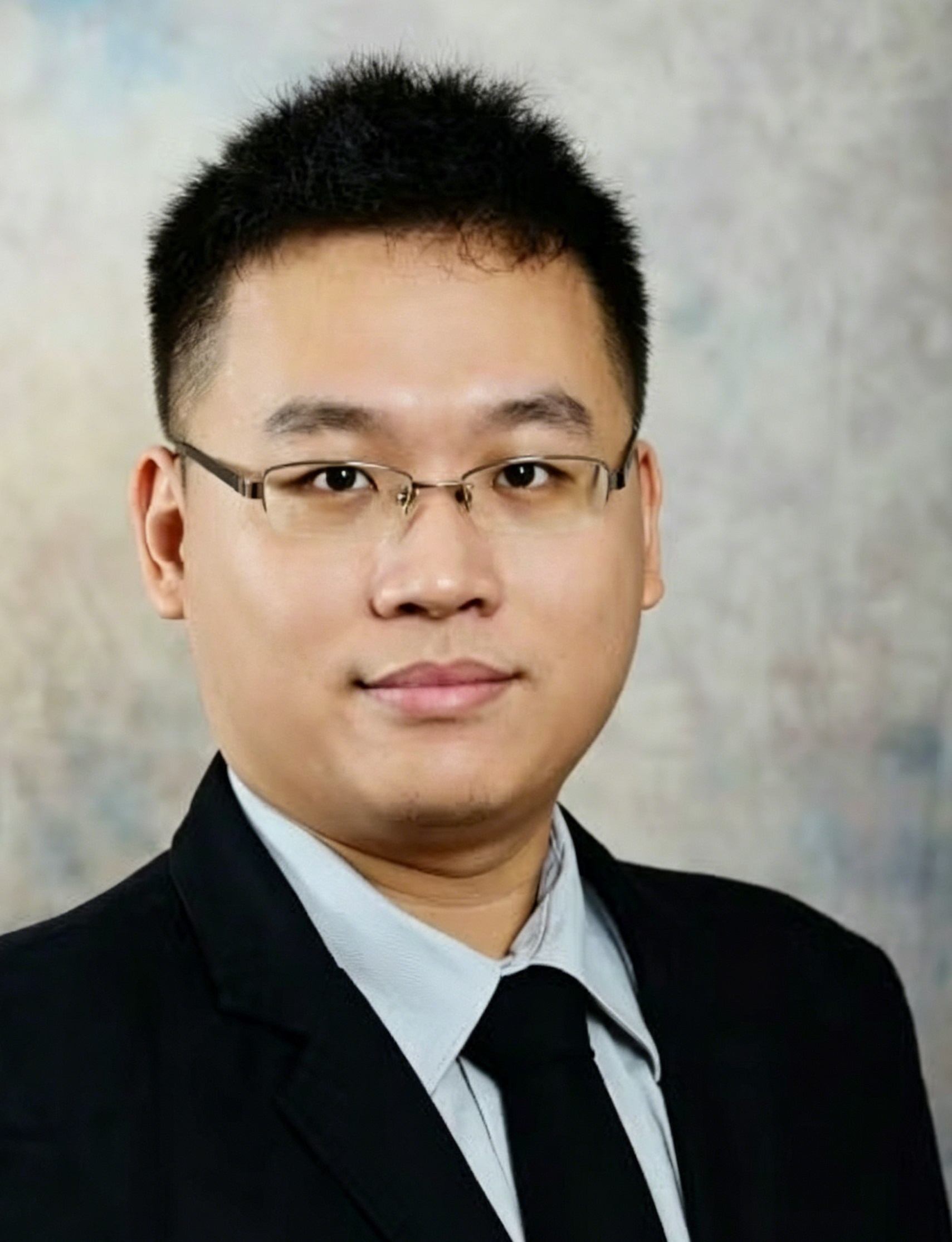
Department of Mechanical Engineering, National University of Singapore, Singapore, SingaporeAdditive manufacturing; 3D printing; 3D bioprinting; Artificial Intelligence; Machine learning
Dr Sing Swee Leong joined the Department of Mechanical Engineering, NUS, as an Assistant Professor in August 2021. Prior to joining NUS, he was a Presidential Postdoctoral Fellow at the School of Mechanical and Aerospace Engineering and Singapore Centre for 3D Printing, Nanyang Technological University, Singapore, after receiving the prestigious fellowship in 2020. Swee Leong was named a Highly Cited Researcher by Clarivate in 2024, 2023, and 2022. In 2022, he was also awarded the Young Professional Award by ASTM International for his work in additive manufacturing and contributions to standard development for the field. As a scientist and innovator, Swee Leong’s interest is in enabling material development and creating strategic and sustainable values for Industry 4.0 and beyond through the use and integration of advanced manufacturing. He is actively involved in interdisciplinary research.

School of Mechanical Engineering, Korea University, Seoul, KoreaHeat transfer; 3D printing; Energy harvesting; Multifunctional materials
Wonjoon Choi is a Professor in the School of Mechanical Engineering at Korea University. He earned his Ph.D. in Mechanical Engineering from the Massachusetts Institute of Technology (MIT) in 2012 and his B.S. in Mechanical & Aerospace Engineering from Seoul National University in 2003. Before joining Korea University as an Assistant Professor in 2012, he worked as a Postdoctoral Associate in MIT's Department of Chemical Engineering. He also has prior industry experience as an Assistant Engineer at KEBTechnology Co., Ltd. and as an Engineer at CyberCVS Co., Ltd.

School of Materials Science and Engineering, Northwestern Polytechnical University, Xi’an, ChinaMetal additive manufacturing; Multi-material additive manufacturing; Hybrid manufacturing
Dr. Wei Fan is a Professor at Northwestern Polytechnical University (NPU), where he focuses on multi-material additive manufacturing and hybrid manufacturing based on additive processes. He received his Ph.D., Master’s, and Bachelor’s degrees in Materials Science and Engineering from NPU between 2009 and 2021. From 2022 to 2024, he conducted postdoctoral research at Nanyang Technological University, Singapore.
Dr. Fan is a member of the Additive Manufacturing and Innovative Design team led by Professors Xin Lin and Weidong Huang. The team hosts several national and international research platforms, including the International Joint Research Center for Aerospace Material-Structure Integrated Design and Additive Manufacturing Equipment Technology, and the Key Laboratory of High-Performance Metal Additive Manufacturing and Innovative Design, Ministry of Industry and Information Technology of China. They have also established the NPU-Airbus Joint Laboratory for Additive Manufacturing in collaboration with Airbus Europe.
The team conducts cutting-edge research in areas such as additive manufacturing and innovative design, precision solidification theory and technologies, and multiscale thermo-mechanical-microstructural modeling and simulation of materials processing. To date, they have published over 500 academic papers and hold more than 50 invention patents related to additive manufacturing. Their technologies serve over 100 industrial partners across sectors such as aerospace, aviation, power, and energy. Research outcomes have been successfully applied to major national programs including the C919 aircraft and the Tianwen-1 Mars mission. The team’s industrial spin-off, BLT (Bright Laser Technologies), became the first 3D printing company listed on China’s STAR Market and is now among the global leaders in the field.

Institute of Health Care Engineering with European Testing Center of Medical Devices, Graz University of Technology (TU Graz), 8010 Graz, AustriaMolecular self-assembly; Synthetic peptide biomaterials; Novel inhibitor compounds for neurodegenerative diseases; Regenerative therapies; 3D bioprinting
Charlotte A.E. Hauser was a Professor of Bioscience and the Chair of the Bioengineering Program at King Abdullah University of Science and Technology (KAUST), Thuwal, Saudi Arabia. Before joining KAUST, she was a Principal Investigator at the Institute of Bioengineering and Nanotechnology, A*Star, Singapore, and Adjunct Professor at Nanyang Technological University, Singapore. Trained as a chemist, she did her Ph.D. in Molecular Biology at the Massachusetts Institute of Technology (MIT) and the University of Cologne, Germany, then joined INSERM in Paris, and later the Max-Planck-Institute of Psychiatry in Munich, Germany. She was a Founder and Managing Director of Octagene in Munich/Martinsried, Germany. There, she developed the first fourth generation human recombinant coagulation factor VIII (hFVIII). This recombinant human clotting factor NUWIQ® is the newest hFVIII replacement and since 2014 on the market. She is a Fellow of the American Institute for Medical and Biological Engineers (AIMBE) and since 2015 a Fellow of the US National Academy of Inventors (NAI). In 2016, she started the KAUST spin-off company PepPrint. Her research includes molecular self-assembly, synthetic peptide biomaterials, novel inhibitor compounds for neurodegenerative diseases, and regenerative therapies as well as 3D bioprinting.

Department of Materials and Optoelectronic Science, National Sun Yat-sen University, TaiwanAdditive manufacturing; Amorphous alloys; Advanced alloys
Experience:
Associate Professor, Feb. 2024 to present
Assistant Professor, Aug. 2021 to Jan. 2024
Department of Materials and Optoelectronic Science, National Sun Yat-sen University
Assistant Professor, Sep. 2017 to Jul. 2021
High Performance Materials Institute for xD Printing,
Department of Bioinformatics and Medical Engineering, Asia University
Associate Engineer, Dec. 2013 to Aug. 2017
Electron Beam Additive Manufacturing Lab.,
Casting Technology Section, Metal Processing R&D Department,
Metal Industries Research & Development Centre (MIRDC)

Department of Mechanical and Aerospace Engineering, Missouri University of Science and Technology, Rolla, United StatesInnovative, smart, and additive manufacturing
Dr. Ming C. Leu is the Keith and Pat Bailey Distinguished Professor and Curator’s Distinguished Professor in the Department of Mechanical and Aerospace Engineering, Missouri University of Science and Technology. He founded Missouri S&T’s Center for Aerospace Manufacturing Technologies in 2004 and has been serving as its director until 2016.
He also served as the Director of Intelligent Systems Center, 2003-2020. Prior to joining Missouri S&T, he was a Program Director at the National Science Foundation, 1996-1999, the State Chair Professor in Manufacturing Productivity at the New Jersey Institute of Technology, 1987-1996, and a faculty member at Cornell University, 1981-1987. Professor Leu obtained his Ph.D. degree in 1981 from the University of California at Berkeley, his M.S. degree in 1977 from the Pennsylvania State University, and his B.S. degree in 1972 from the National Taiwan University, all in Mechanical Engineering.
His research interests include additive manufacturing, 3D printing, smart manufacturing, intelligent robotics, and cyber-physical systems. He has published over 500 refereed papers in professional journals and conference proceedings, as well as one e-book, 11 book chapters, and 5 granted U.S. patents.
Dr. Leu has received numerous professional awards including, among others, the ISC/MST Distinguished Investigator Award (2022), International Freeform and Additive Manufacturing Excellence (FAME) Award (2020), ASME Milton C. Shaw Manufacturing Research Medal (2018), University of Missouri President’s Leadership Award (2017), ASME Blackall Machine Tool and Gage Award (2014), ISFA Hideo Hanafusa Outstanding Investigator Award (2008), ASME Dedicated Service Award (2004), SME University Lead Award (1994), NJIT Harlan J. Perlis Research Award (1993), NSF Presidential Young Investigator Award (1985), SAE Ralph R. Teetor Education Award (1985), FPRS Wood Award (1981), and best paper recognition from multiple professional conferences.
He was elected to SME Fellow in 2018, CIRP Fellow in 2008, and ASME Fellow in 1993, and is a member of Sigma Xi, Tau Beta Pi, and Phi Kappa Phi honor societies.

School of Metallic Materials and Advanced Manufacturing, Soochow University, Suzhou, China1. Nano-medium-assisted microstructure control in laser AM of high-performance structural materials. 2. Strengthening-toughening and stress corrosion of laser AM light alloys. 3. Integrated microstructure-property control in solid-state AM lightweight materials.
Ph.D

Department of Mechanical and Aerospace Engineering, Hong Kong University of Science and Technology, Hong Kong, ChinaComputer-aided design and manufacturing (CAD / CAM); Fault diagnosis; Machine learning; Multidisciplinary design and optimization; Multiscale simulations

Department of Mechanical Engineering, College of Engineering, Iowa State University, Ames, IA, United States3D printing; Additive manufacturing; Advanced materials; Computational modeling; Digital thread/Digital twin; Machine leaning and deep learning; Manufacturing processes; Welding

Faculdade de Ciências e Tecnologia da Universidade Nova de Lisboa, Caparica, PortugalWelding; Additive manufacturing; Synchrotron X-ray diffraction; Mechanical behavior of materials; High entropy alloys; Shape memory alloys
Professor João Pedro Oliveira is a Full Professor in the Department of Materials Science (DCM) and a researcher at CENIMAT-i3N – Centro de Investigação de Materiais, part of the I3N Associated Laboratory. He previously served as an Associate Professor in the same department, as an Invited Assistant Professor in the Department of Mechanical and Industrial Engineering (DEMI), and as a researcher at UNIDEMI – the Research and Development Unit in Mechanical and Industrial Engineering.

Queen Mary University of London, London, UKAdditive manufacturing; Computational materials; Digital manufacturing; Digital twins; Data-centric engineering; Machine learning; Mechanics of materials and structures; Physics-based and data-driven modelling
After graduating from University of Birmingham, Panwisawas has joined the Centre for Advanced Simulation and Modelling (CASiM2) programme within Partnership for Research in Simulation of Manufacturing and Materials (PRISM2) research group as a Research Fellow at Rolls-Royce University Technology Centre, University of Birmingham from June 2013 to May 2018. In June 2018, he has awarded EPSRC UKRI Innovation Fellowship to conduct his project on additive manufacturability, at University of Oxford and he became Senior Fellow and now an Academic Visitor at Department of Materials, University of Oxford. During the period of 2020 to 2022, Panwisawas worked as an Associate Professor in Digital Manufacturing and Associate Director of NISCO UK Research Centre at School of Engineering, University of Leicester.
In 2022, Panwisawas moved to London to take up a position as Senior lecturer (Associate professor) in Materials and Solid mechanics at Queen Mary University of London. He is a Visiting Associate Professorship at Next Generation Tatara Co-Creation Centre (NEXTA) at Shimane University, a MMRI Affiliated Professorship at Metallurgy and Materials Science Research Institute (MMRI), Chulalongkorn University, Visiting Associate Professor at Department of Materials Science and Engineering, Shanghai Jiao Tong University, and a Visiting Academic Collaborator Status at Department of Mechanical and Aerospace Engineering, University of California, Davis.
Panwisawas' research focused on multi-scale materials modelling of liquid/solid reactions, particularly in casting, fusion welding and additive manufacturing of high performance alloys using an integrated computational material engineering (ICME) framework. He is a computational materials scientist to use modelling and simulation to gain in-depth understanding of melt pool physics, formation of defects and microstructural phenomena during selective laser melting. or laser-based powder-bed fusion additive manufacturing. His work is done in collaboration with Rolls-Royce, neutron facilities such as ISIS Neutron and Muon Source and Oak Ridge National Laboratory, and X-rays synchrotron facility like Diamond Light Source, European Synchrotron Radiation Facility.

College of Engineering, Design & Physical Sciences, Brunel University London, Uxbridge, United KingdomAdditive manufacturing; 3D printing; 4D printing; Rapid prototyping; Rapid manufacturing; Functionally graded materials
Eujin was a Full Professor in Additive Manufacturing from September 2024 to November 2025. He served as Director of the BSc Product Design Engineering Programme from 2015 to October 2025. Eujin is a Chartered Engineer (CEng), Chartered Environmentalist (CEnv), and a Chartered Technological Product Designer (CTPD). He served as Associate Dean for the College of Engineering, Design and Physical Sciences (CEDPS) from 2021-2025, and was Director of Postgraduate Research from 2018-2021. Eujin is a Fellow of the Institution of Engineering Designers (FIED). As a Product Design Engineer during the early days of his career, he developed solutions for companies including Motorola, Inc., LM Ericsson, Sennheiser GmbH & Co. KG, and Rentokil Initial. These experiences inform his academic and professional pursuits, blending industry knowledge with cutting-edge research.

Department of Mechanics, Mathematics and Management, Polytechnic of Bari, Bari, Italy and Interdisciplinary Additive Manufacturing (IAM) Lab, TTEC Taranto Polytechnic, Polytechnic University of Bari, Taranto, ItalyManufacturing; 3D digitizing; 3D printing; Medicine
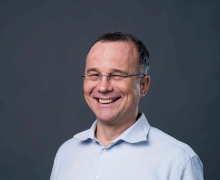
1. Future Energy and Innovation Laboratory, Central European Institute of Technology, Brno University of Technology, Brno, Czech Republic; 2. Faculty of Electrical Engineering and Computer Science, VSB – Technical University of Ostrava, Ostrava, Czech Republic University of Chemistry and Technology, Prague, Prague, Czech RepublicMachine intelligence; Quantum materials; Nanorobotics; Flexible electronics; 3D printing
Prof. Martin Pumera has broad interests in nanomaterials and microsystems, in the specific areas of electrochemistry and synthetic chemistry of 2D nanomaterials, nanotoxicity, micro and nanomachines, and 3D printing. Martin is “2017, 2018, 2019, 2020 and 2021 Highly Cited Researcher” by Clarivate Analytics. He published over 900 papers which received more than 80 000 citations. Martin's h-index is 131. Martin has supervised over 100 postdoctoral associates, 30 PhD students, 8 Master students and over 50 BSc students. Martin takes pride that 27 group members became faculty members at the Universities around the World, from Spain to Singapore. Total funding Martin received as PI is over 33 M EURO. Prof. Pumera is Editor-in-Chief of Appl. Mater. Today (IF 8.3) and member of Editorial Boards of ACS Nano, Small, Chem Eur J, Electrochem Commun, ChemElectroChem, Electroanalysis and other journals.

Department of Management and Production Engineering, Politecnico di Torino, Turin, ItalyAdvanced materials processing; Directed energy deposition (ded); Electron beam powder bed fusion; Laser powder bed fusion; Materials characterization; Materials engineering; Metal additive manufacturing; Metal matrix composites; Metallic materials
Awards and Honors
Top Reviewer Award in Materials Science in 2018 conferred by Publons (2018)
The Excellent Article Award in Acta Metallurgica Sinica (English Letters) conferred by Acta Metallurgica Sinica (English Letters) (2018)
Top Reviewer Award in Materials Science and cross-filed in 2019 conferred by Publons (2019)
2018 Outstanding Reviewer Award conferred by MDPI, Svizzera (2019)
The World's Top 2% Scientists in 2021 conferred by University of Stanford - Elsevier (2021)
Bernhard Gross Award conferred by Brazilian Materials Research Society (2021)
The World's Top 2% Scientists in 2022 conferred by University of Stanford - Elsevier (2022)
The World's Top 2% Scientists in 2023 conferred by University of Stanford - Elsevier (2023)
The Excellent Article Award in Acta Metallurgica Sinica (English Letters) in 2023 conferred by Acta Metallurgica Sinica (English Letters) (2023)
The World's Top 2% Scientists in 2024 conferred by University of Stanford - Elsevier (2024)
Top Scholar by ScholarGPS conferred by ScholarGPS®, an American company based in California, United States (2025)
Editor of Distinction Awards 2026 conferred by Springer Nature, Germany (2026)

Laboratory for Manufacturing Systems and Automation, Department of Mechanical and Engineering & Aeronautics, University of Patras, Rio, GreeceAdvanced manufacturing; Manufacturing processes; Process quality; Additive manufacturing; Welding; Sustainable manufacturing
Professor Panos Stavropoulos owns a BEng in Mechanical Engineering and an MSc in Advanced Mechanical Engineering from the University of Sussex-UK, a PhD in Engineering from the Dept. of Mechanical Engineering and Aeronautics, University of Patras-GREECE and a MBA from the HoU-GREECE.
He worked among others, as a Design Engineer (2000 - 2001) in Flowtronic Pumps Ltd – UK, a Research Engineer (2001-2007) & Research Project Manager (2007 – 2010) in Laboratory of Manufacturing Systems & Automation and as a WCP & Production Manager (2010-2014) at Crown Holdings Inc., Bevcan – Europe and Middle East Division improving company’s sustainability index. From 2014 – 2018 he was a Lecturer in Hellenic Air Force Academy, Dept. of Aeronautical Studies. Currently he is a Professor in the Dept. of Mechanical Engineering & Aeronautics, University of Patras, Vice President of the Dept. of Mechanical Engineering and Aeronautics, Director of the Postgraduate Studies Program and VC of the Advisory board for the European Knowledge and Innovation Community, EIT Manufacturing CLC South East.
His main research interests are with Manufacturing focused in the field of Manufacturing conventional/non-conventional/micro Manufacturing Processes, Sustainable Manufacturing & Circular Economy, Zero Defect Manufacturing, Quality Optimization, Lean Manufacturing and Management, CAD/RP/RM/AM systems, Machine Tool Design and Artificial Intelligence (AI). He speaks fluently English and German.
He is a Corporate Member of the International Academy for Production Research (CIRP), member of the: Institution of Mechanical Engineers-IMEchE (http://www.imeche.org/), registered as a Chartered Engineer (Reg. N.: 594894) in the Engineering Council (http://www.engc.org.uk/), the Virtual Research Laboratory for a Knowledge Community in Production – VRL-KciP since 2004, member of NATO AVT -258 “Future of manufacturing for military applications” and member of the Technical Chamber of Greece and the Technical Chamber of Mechanical and Electrical Engineers.
He is a reviewer for more than eighty (80) International Journals and International Conferences and member of the editorial board for six (6) International Journal. He has acted as a member of the organizing and program committees of ten (10) International Conferences. Since 2002 he has been involved in more than thirty (30) RTD projects funded by the EC and EIT, acting as a Research Engineer, Technical and/or Project Manager and Principle Investigator in the field of Manufacturing. He has more than 300 publications in international refereed scientific journals, National refereed scientific journals, book chapters and conference proceedings with review in the full paper. His scientific work has been acknowledged by the international scientific community as the total number of unique citations of his research publications is more 8000 (based on Scopus and Google Scholar citation indices).

Shandong Provincial Key Laboratory of Special Welding Technology, Harbin Institute of Technology at Weihai,
Weihai, ShandongTransition metal-nitrogen-carbon; Microstructure; Laser technology; Magnesium alloy; Fiber laser; Stainless steel; Mechanical property
Tan Caiwang is a Professor at Harbin Institute of Technology (HIT). He has been successively recognized as a HIT Young Top-Notch Talent (Professor), Shandong Province Young Talent, recipient of the Shandong Provincial May 4th Youth Medal, National High-Level Young Talent, and Academic Leader of the HIT Young Scientist Studio. He currently serves as a Standing Committee Member of the Youth Committee of Welding, Standing Editorial Board Member and Deputy Secretary-General of the First Youth Editorial Board of Welding Magazine, Deputy Secretary-General of the Ultrasonic Materials Science and Technology Branch of the Chinese Materials Research Society, Deputy Secretary-General of the Advanced Welding and Joining Committee of the Nonferrous Metals Society of China, Senior Member of the Laser Processing Committee of the Chinese Optical Society, and Committee Member of the Chinese Society for Optical Engineering.

Singapore Institute of Manufacturing Technology (SIMTech), Agency for Science, Technology and Research (A⁎STAR), 5 Cleantech Loop, 636732, SingaporeMetal additive manufacturing; Artificial intelligence; Phase transformation and deformation; Metallic powder; High-throughput microstructure analysis; Novel structure design and optimization; Grain boundary engineering
Pan Wang is a Senior Scientist II and Principal Investigator at the A*STAR Singapore Institute of Manufacturing Technology (SIMTech). He received his PhD from Osaka University, Japan. His research focuses on metal additive manufacturing, particularly electron beam and laser powder bed fusion, with an emphasis on process–structure–property relationships and industrial applications. He has led the development and translation of these technologies from fundamental research to real-world deployment, bridging fundamental understanding and industrial implementation to enable the fabrication of high-performance metal components, working closely with global industry partners in aerospace and energy sectors.

School of Materials Science and Engineering, Shanghai Jiao Tong University, Shanghai, ChinaLaser Additive Manufacturing; Laser Welding; Laser Cladding and Repair Technologies.
Hongze Wang is an Associate Professor in the School of Materials Science and Engineering at Shanghai Jiao Tong University, a position he has held since October 2019. He received his B.A. (2011) from Huazhong University of Science & Technology and his Ph.D. (2016) from Shanghai Jiao Tong University. Following his doctorate, he conducted postdoctoral research at Osaka University, Japan (2016–2018), and subsequently at the University of Toronto, Canada (2018–2019). His research focuses on innovative manufacturing processes, particularly laser additive and hybrid manufacturing, integrating advanced simulation, sensing, and control to elucidate the relationships among processing, microstructure, and product performance. He has published about 50 technical articles, including over 20 journal articles, 1 awarded patent. He has given over 20 invited talks.

Purdue University, West Lafayette, Indiana, North AmericaService to Societies:
Associate Editor, Metallurgical and Materials Transactions B, 2026-
Associate Editor, Metallurgical and Materials Transactions A, 2025-
Vice-Chair of TMS Composite Materials Committee, 2024-
Subject Editor, JOM, 2024-
Guest Editor, JOM special issue on Additive Manufacturing Using Composite Powders, 2022-2023
Member of TMS Honors & Professional Recognition Committee, 2019-
Chairman of TMS Early Career, Weertman, and Hume-Rothery Committee, 2018-2019
Member of TMS Early Career, Weertman, and Hume-Rothery Committee, 2017-2018
Member of Board of Review of Metallurgical and Materials Transactions B (Key Reader), 2018 –
Reviewer for GRFP of NSF, 2017-
Organizer, Symposia on Light Metal Technology, MS&T Conferences 2016 -2023
Member of Board of Review of Metallurgical and Materials Transactions A (Key Reader), 2016 –2025
Reviewer for Natural Sciences and Engineering Research Council of Canada (NSERC), 2016 –
Reviewer for National Science Foundation (NSF), 2015 –
Member of the Light Metal Committee of COM Canada, 2014-
Professor Wang's research is focusing on light metal technologies, such as die-casting and additive manufacturing.
2024 - , Professor, Purdue University, West Lafayette, Indiana, USA
2019 - 2024, Associate Professor, Purdue University, West Lafayette, Indiana, USA
2014 - 2019, Assistant Professor, Purdue University, West Lafayette, Indiana, USA
2013 - 2014, Visiting Assistant Professor, Purdue University, West Lafayette, Indiana, USA
2008 - 2012, Consultant, Hong Kong Productivity Council, Hong Kong
2006 - 2008, Engineer, K B Alloys Inc. Robards, Kentucky USA
2005 - 2006, Consultant, Hong Kong Productivity Council, Hong Kong
2002 - 2005, Postdoctoral Researcher, McGill University, Montréal, Québec, Canada
2001 - 2002, Research Scientist, Alcan International Ltd. Jonquière, Québec, Canada
2001, Research Associate, École Polytechnique Montréal, Montréal, Québec, Canada
1989 - 1992, Engineer, First Automobile Group Co., Changchun, China


School of Automation and Intelligent Manufacturing, Southern University of Science and Technology, Shenzhen, ChinaAdditive manufacturing of composites; Intelligent design and manufacturing; smart materials and structures
Dr. Yi Xiong is a Tenured Associate Professor and Vice Head of the School of Automation and Intelligent Manufacturing at the Southern University of Science and Technology (SUSTech). A recognized provincial and municipal high-level talent, he also serves as a dual-appointed PhD supervisor at Peng Cheng Laboratory. Dr. Xiong earned his PhD in Engineering Design and Manufacturing from Aalto University, Finland, in 2016. His professional trajectory includes roles as Tenured Engineer at Flanders Make in Belgium and Research Fellow II at the Digital Manufacturing and Design Centre of the Singapore University of Technology and Design (SUTD), where he contributed to the development of multiple industrial-grade additive manufacturing hardware and software systems.
Dr. Xiong’s research focuses on the intersection of intelligent additive manufacturing and mechanical optimization design. His current expertise spans intelligent design and manufacturing, composite additive manufacturing, Design for Additive Manufacturing (DfAM), and smart materials and structures. To date, he has led several prestigious research initiatives, including sub-projects of the National Key R&D Program of China, as well as General and Youth Programs of the National Natural Science Foundation of China (NSFC).
An accomplished scholar, Dr. Xiong has published nearly 60 papers as first or corresponding author in top-tier journals such as Nature Communications, Additive Manufacturing, and Composites Science and Technology, including two ESI highly cited or cover papers. He currently serves as an Associate Editor for the Journal of Intelligent Manufacturing and sits on the editorial boards of the Journal of Engineering Design and Proc. Inst. Mech. Eng. Part L. In addition to his role as a Visiting Professor at the Institute of High-Performance Computing (IHPC) in Singapore, he is a regular reviewer for the European Science Foundation (ESF) and the Belgian National Fund for Scientific Research.
Dr. Xiong holds several leadership positions in professional societies, including Secretary-General of the Composite Additive Manufacturing Committee of the China Society for Composite Materials. His honors include a second-class provincial-level science and technology award, an "Excellent Oral Presentation" award for NSFC project completion, and multiple Best Paper awards at international conferences.

School of Engineering, Newcastle University, Newcastle, UKDynamic behaviour of materials; Impact engineering; Experimental mechanics; Microstructure; Additive manufacturing; Plasticity; High-speed imaging
Dr. Yuan Xu is a Lecturer in Mechanical Engineering at the School of Engineering, Newcastle University. She received my PhD in Civil Engineering from Sichuan University, where she was trained intensively in experimental characterisation and multi-scale modelling of geomaterials subjected to impact loading. I then conducted exciting research as a Postdoctoral Research Associate at the Impact Engineering Laboratory, University of Oxford, in close collaboration with Rolls-Royce plc. There I designed and developed a novel impact-loading system for better understanding advanced aerospace materials and structures in extreme conditions.
She find myself always fascinated by the complex behaviours of a variety of materials and engineering structures. She uses both experimental and computational approaches to establish and enhance our understanding. As an adventurous researcher, she has collaborated with international academics on topics ranging from impact and shock mechanics, additive manufacturing, micro-seismic monitoring, natural geohazards, stability analysis of underground structures, biomechanics, etc.

Institute for Materials Research, Tohoku University, Sendai, JapanStructural materials; Additive manufacturing; Alloy design; Biomaterials; Thermomechanical processing; Titanium
Kenta Yamanaka is an Associate Professor at the Institute for Materials Research of Tohoku University, Japan. Currently, he serves as the principal investigator of the Deformation Processing Research Laboratory and also holds a joint appointment in the Department of Biomedical Engineering and Institute of Fluid Science at Tohoku University. Since 2023, he has been awarded the title of Distinguished Researcher by Tohoku University.
He earned his Ph.D. in Materials Science and Engineering from Tohoku University in 2013. Prior to this, he worked as a researcher in the Titanium Division at Kobe Steel, Ltd., Japan. Following his role as a JSPS Research Fellow, Dr. Yamanaka was appointed as an Assistant Professor in 2014 and promoted to Associate Professor in 2018 at the Institute for Materials Research, Tohoku University.
Dr. Yamanaka’s research encompasses various aspects of metallurgy and processing, including additive manufacturing, thermomechanical processing, and alloy design for metallic biomaterials, titanium alloys, steels, superalloys, high-entropy alloys, and multimaterials. He uses synchrotron and neutron diffraction techniques to quantify microstructural evolution and explore the processing-structure-property relationships. Furthermore, he is actively involved in the development of structural alloys and components for use in energy-related applications, including ammonia combustion and thermal energy storage.

Mechanical, Manufacturing and Biomedical Engineering, Trinity College Dublin, Dublin, IrelandAdditive manufacturing; Cold spraying; Selective laser melting; Surface engineering; Digital light processing
Dr. Shuo Yin is an Associate Professor and Principal Investigator in the Department of Mechanical, Manufacturing, and Biomedical Engineering. His research lies in additive manufacturing processes, with a focus on cold spraying, selective laser melting, digital light processing, and powder-sheet printing. His research primarily involves equipment design and manufacturing, microstructure characterization and analysis, in-situ process visualization, numerical modeling (CFD and FEA), and the exploration of mechanical and biomedical properties. Dr. Yin holds a B.Eng and a Ph.D from Dalian University of Technology. Following this, he conducted postdoctoral research at the University of Technology of Belfort-Montebiard in France and Wageningen University in the Netherlands before joining Trinity College Dublin. Dr. Yin has successfully secured approximately €10 million in research funding as a PI or Co-PI. Of this amount, €2 million has been allocated to his research group. The funding sources include the European Innovation Council (EIC), Marie Sklodowska-Curie Actions (MSCA), Science Foundation Ireland (SFI), Irish Research Council (IRC), Enterprise Ireland (EI), InterTradeIreland, and various industrial partners. Dr. Yin's outstanding contributions to research have earned him several awards, including the IRC Government of Ireland Postdoctoral Research Fellowship (GOIPD), SFI Frontiers for the Future Project award, IRC Research Ally Prize, Trinity Accelerated Advancement Award, and the Trinity Research Boost Award. Dr. Yin has published over 200 peer-reviewed papers. He has served as an international referee for ERC Advanced Grant, US, Canada, Singapore, Netherlands, Croatia, Switzerland, Humboldt Research Fellowship (Germany), China. Additionally, he holds the position of associate editor for Metals Advances, Journal of Manufacturing and Materials Processing and editorial board member for China Welding, Chinese Journal of Mechanical Engineering. Under his mentorship, 3 postdoc researchers, 5 Ph.D. students, 8 visiting Ph.D, 2 visisting researchers and 18 master students have completed their research in Trinity. Currently, Dr. Yin leads a dynamic research team comprising 1 MSCA research fellow, 2 postdoc, 7 PhD students. Beyond research, he is actively involved as the college tutor and coordinator of the Engineering with Management MAI class, while also delivering lectures for three undergraduate modules: 4B6/3MEMS5 Manufacturing Systems/Operations, 3B3 Mechanics of Solids, and 2MEMS11 Manufacturing Engineering Design.

Department of Mechanical Engineering, Molinaroli College of Engineering and Computing, University of South Carolina, Columbia, United StatesSolidification; Microstructure modelling; Defects; Additive manufacturing; Casting and remelting
Dr. Lang Yuan is an Associate Professor at the Department of Mechanical Engineering at the University of South Carolina (UofSC). He obtained his Bachelor’s and Master's degrees in Materials Processing and Engineering from the Department of Mechanical Engineering at Tsinghua University, China, and his PhD in Materials Science from the Department of Materials at Imperial College London, UK. He worked at GE Global Research, NY, as a lead research engineer before joining UofSC in 2018, driving and developing multiscale physics-based computational models in advanced manufacturing processes. Currently, he leads the Metal Additive Manufacturing (AM) Laboratory at UofSC and focuses on developing innovative materials and processes for AM, numerically and experimentally monitoring and controlling microstructures and defect formation during alloy solidification to achieve desired mechanical and/or functional properties.

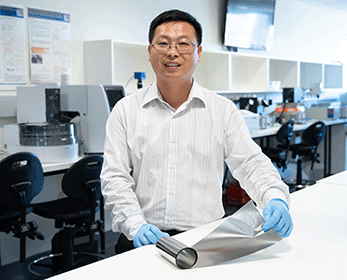
School of Engineering, Edith Cowan University, Perth, WA 6027, AustraliaMetal additive manufacturing (3D printing); Metallic biomaterials; Lightweight alloys and structures; High-strength alloys and composites
Professor Laichang Zhang is the Program Leader–Mechanical Engineering and the Head of Centre for Advanced Materials and Manufacturing in the School of Engineering at Edith Cowan University (ECU). After receiving his PhD at Institute of Metal Research, Chinese Academy of Sciences, Prof. Zhang had worked at The University of Western Australian, University of Wollongong, IFW Dresden and Technical University Darmstadt before joining ECU. Prof. Zhang is a Highly Cited Researcher in the field of Materials Science (Clarivate) with high-quality publication in Science, Progress in Materials Science, Materials Science and Engineering R: Reports. He is a leading researcher in metallic materials (3D-printing, metallic biomaterials, lightweight alloys & structures, and high-strength alloys and composites), with high expertise in processing, microstructure and performance (e.g. mechanical properties, fatigue, corrosion).
Recognition, Prizes, Honours and Awards (Selected)
2024 Advanced Materials Laureate, International Association of Advanced Materials (IAAM, Sweden)
2023 Highly Cited Researcher (Clarivate)
2022, 2023 Materials Science in Australia Leader Award, Research.com
2021 IAAM Scientist Medal (IAAM, Sweden)
2021 Outstanding Scientist Award (VDGOOD Professional Association, India)
2017 Top 10 Research Highlights of Amorphous in China
2005-2007 Alexander von Humboldt Fellowship (Germany)

Department of Mechanical Engineering, Clemson University, Clemson, USANanostructured materials; Electron microscopy; Micro/Nano mechanics; Physical metallurgy
Dr. Zhang’s research focuses on the processing, structure-property relationships, deformation mechanisms, and extreme environmental behaviors of nanostructured and heterostructured materials.

Department of Mechanical Engineering, McGill University, Montreal, CanadaDesign and manufacturing; Eco-design; Additive manufacturing; Sustainable manufacturing; Machine learning applications in design and manufacturing
Her research expertise lies in the general field of design and manufacturing including the exploration of new design methods, developing efficient numerical simulation method for additive manufacturing processes, manufacturing informatics, sustainable product development and intelligent manufacturing.
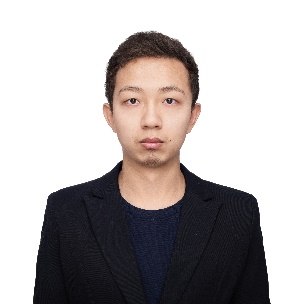
Institute of Advanced Materials and Technology, Guangdong University of Technology, Guangzhou, 510006, ChinaPolymer composites, additive manufacturing, composite structure, sandwich structure, carbon fibre recycling
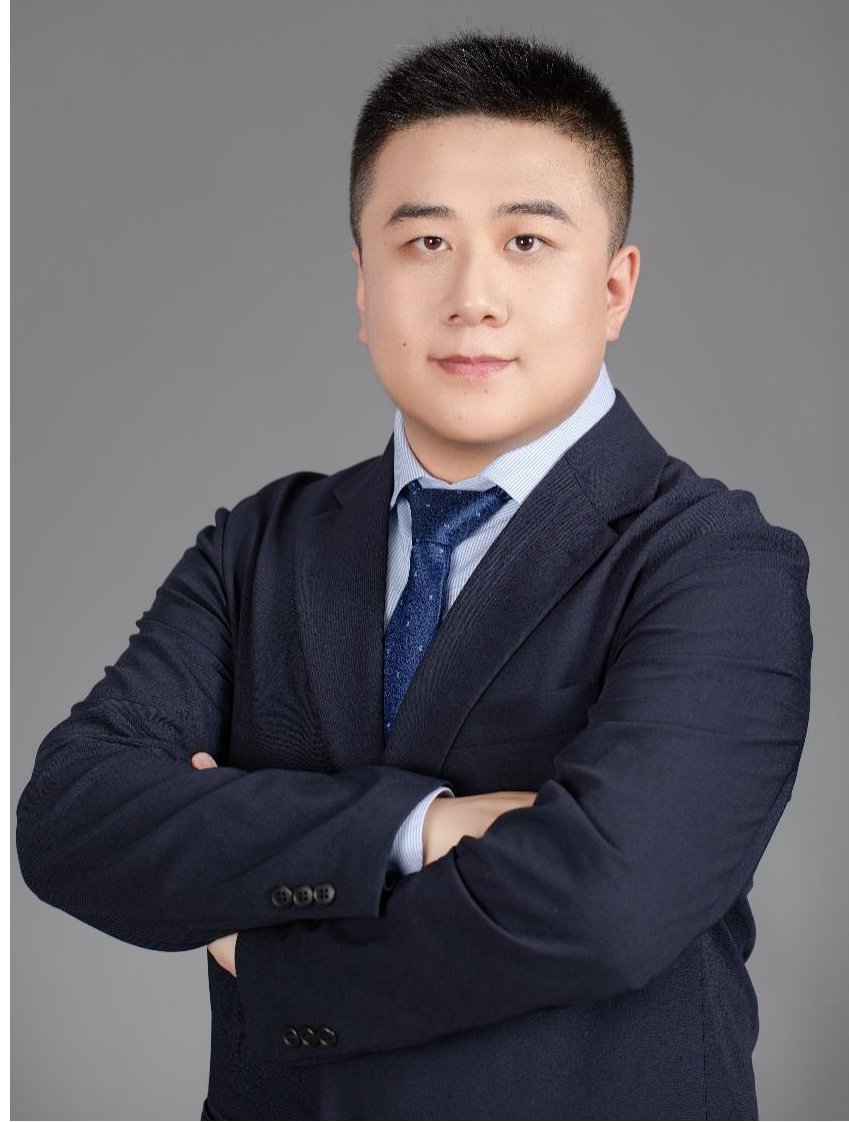
Harbin Institute of Technology, Harbin, ChinaLaser Welding and Additive Manufacturing, Joining of Metal and Resin Matrix Composite Materials, Welding of Resin Matrix Composite Materials, 3-D Printing of Resin Matrix Composite Materials, Welding of Dissimilar Metals