
Phytochemical constituents of Cymbopogon citratus and their antimicrobial, antioxidant, and cytoprotective effects: Mechanistic insights and biomedical relevance

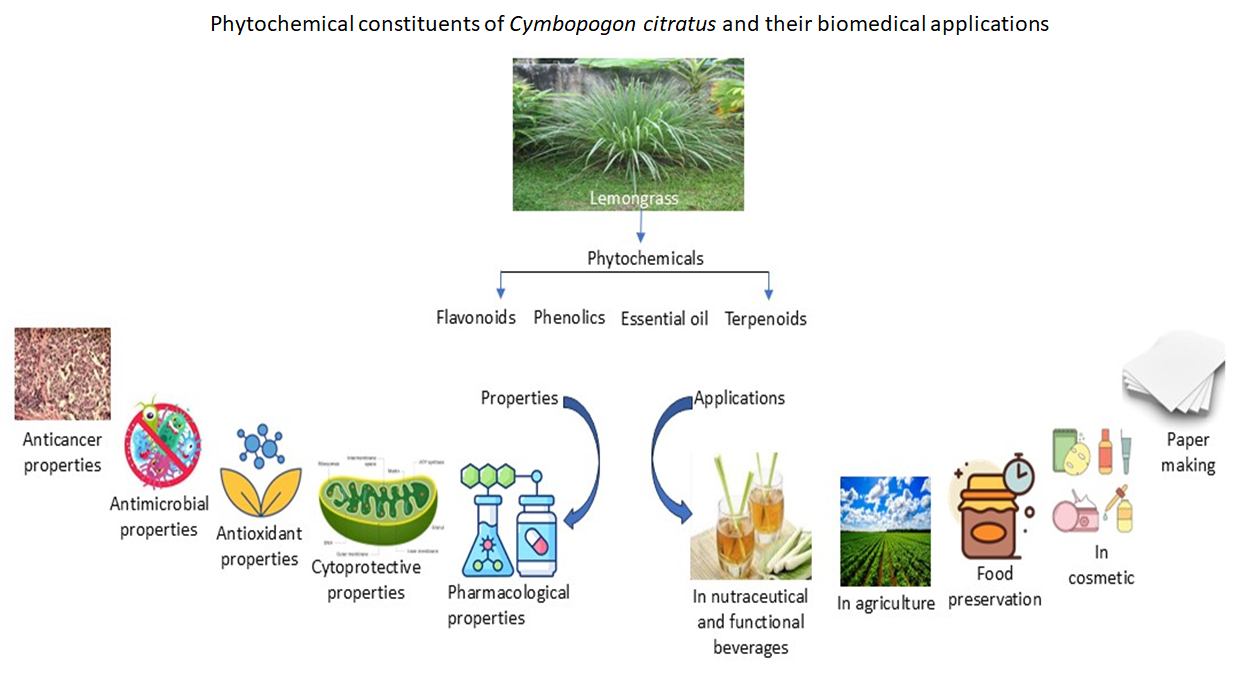
Cymbopogon citratus (lemongrass) is a widely utilized medicinal and aromatic plant with a long history of traditional applications across Asia, Africa, and South America. In recent decades, scientific attention has increasingly focused on elucidating its phytochemical composition and validating its therapeutic properties through experimental and molecular studies. The present review critically synthesizes current evidence on the phytochemical constituents of C. citratus and their antimicrobial, antioxidant, and cytoprotective effects, with particular emphasis on underlying biological mechanisms and emerging biomedical relevance. Major bioactive compounds, including citral, flavonoids, phenolic acids, terpenoids, and essential oils, are discussed in relation to their roles in inhibiting pathogenic microorganisms, neutralizing oxidative stress, and maintaining cellular integrity. The review further highlights mechanistic pathways such as membrane disruption, enzyme inhibition, reactive oxygen species modulation, mitochondrial protection, and anti-inflammatory signaling. Recent advances in nanotechnology-based formulations and functional therapeutic applications are also examined. Collectively, the evidence positions C. citratus as a promising natural source for the development of antimicrobial and cytoprotective agents, supporting further translational and clinical investigations. This review synthesizes evidence from experimental, mechanistic, and translational studies published over the last two decades.
- World Health Organization. Global antimicrobial resistance and use surveillance system (GLASS) report. Geneva: WHO; 2023. Available from: p2-20223-cde-relavra-d2-sesion-3- achievements-lessons-learned-glass-carmen-pessoa.pdf [Last accessed on].
- Murray CJL, Ikuta KS, Sharara F, et al. Global burden of bacterial antimicrobial resistance in 2019: a systematic analysis. Lancet. 2022;399(10325):629–655. doi: 10.1016/s0140-6736(21)02724-0
- Spriha A, Singh R, Kumar A. Lemongrass a wonder herb of Poaceae Family: An overview. Biol. Forum–An Int. J. 2021;13:298-308.
- Fathima Thasrin J, Anitha V. Nutritional and nutraceutical potentials of lemongrass (Cymbopogon citratus). Int J Curr Sci Res Rev. 2023:6(5):2881-2886. doi: 10.47191/ijcsrr/V6-i5-24
- Mukarram M, Choudhary S, Khan MA, et al. Lemongrass Essential Oil Components with Antimicrobial and Anticancer Activities. Antioxidants. 2021;11(1):20. doi: 10.3390/antiox11010020
- Atanasov AG, Zotchev SB, Dirsch VM, Supuran CT. Natural products in drug discovery: advances and opportunities. Nat Rev Drug Discov. 2021;20(3):200–216. doi: 10.1038/s41573-020-00114-z
- Tibenda JJ, Yi Q, Wang X, Zhao Q. Review of phytomedicine, phytochemistry, ethnopharmacology, toxicology, and pharmacological activities of Cymbopogon genus. Front Pharmacol. 2022;13:997918. doi: 10.3389/fphar.2022.997918
- Jaouad , A.T, Faouzi, E, Souad, M, Belkheir, H, Mustapha, T. Diversity and variability of biomolecules under material and environmental factors in Cymbopogon citratus L., traditional uses, antimicrobial properties, and recommendations for future research. Kuwait J Sci. 2025:52(4). doi: 10.1016/j.kjs.2025.100459
- Chen HZ, Li S, Li X, Wang J, Xu S. Electrospun food polysaccharides loaded with bioactive compounds: Fabrication, release, and applications. Polymers. 2023;15(10):2318. doi: 10.3390/polym15102318
- Gao S, Liu G, Li J, et al. Antimicrobial Activity of Lemongrass Essential Oil (Cymbopogon flexuosus) and Its Active Component Citral Against Dual-Species Biofilms of Staphylococcus aureus and Candida Species. Front Cell Infect Microbiol. 2020;10:603858. doi: 10.3389/fcimb.2020.603858
- Oladeji OS, Adelowo FE, Ayodele DT, Odelade KA. Phytochemistry and pharmacological activities of Cymbopogon citratus: a review. J Pharmacogn Phytother. 2019;11(2):15–27. doi: 10.1016/j.sciaf.2019.e00137
- Khanem A, Karim N, Ullah I, Younas F. Essential oils of Citrus limon, Cymbopogon citratus, and Lavandula officinalis disrupt E. coli biofilms by inducing cellular damage. Biol Futur. 2025;15:1-6. doi: 10.1007/s42977-025-00255-5
- Bidinotto LT, Costa CA, Salvadori DM, Costa M, Rodrigues MA, Barbisan LF. Protective effects of lemongrass (Cymbopogon citratus Stapf.) essential oil on DNA damage and carcinogenesis in female Balb/C mice. J Appl Toxicol. 2011;31(6):536-544. doi: 10.1002/jat.1593
- Forman HJ. Redox signaling: an evolution from free radicals to aging. Redox Biol. 2023;62:102684. doi: 10.1016/j.freeradbiomed.2016.07.003
- Geetha N, Geetha TS, Manonmani P, Thiyagarajan M. Green Synthesis of Silver Nanoparticles Using Cymbopogan Citratus (Dc) Stapf. Extract and Its Antibacterial Activity. Aust J Basic Appl Sci. 2014;8(3);324-331. Available from: https://ajbasweb.com/old/ajbas/2014/March/324-331.pdf [Last accessed on].
- Ulaş, F, Yüksel E, Dinçer D, Dababat A, İmren M. Recent Advances in Plant-Based Green Synthesis of Nanoparticles: A Sustainable Approach for Combating Plant-Parasitic Nematodes. Sustainability. 2025;17(9):4152. doi: 10.3390/su17094152
- Magar BB, Rai N, Shrestha MM, Shahi I, Bhatt BD. Phytochemical Analysis and Antibacterial Activities of Cymbopogon citratus from Banke, Nepal. Orchid Acad Siraha. 2024;3(1):105–116. doi: 10.3126/oas.v3i1.78109
- Forman HJ, Zhang H, Rinna A. Glutathione: overview of its protective roles. Mol Aspects Med. 2020;75:100843. doi: 10.1016/j.mam.2008.08.006
- Dwivedi M. Phytochemical characterization and biological evaluation of lemongrass (Cymbopogon citratus) extracts: A systematic experimental study. Int J Pharm Chem Anal. 2024;11(3):253-259. doi: 10.18231/j.ijpca.2024.036
- Pal B, Garg AP, Gupta D. Effect of Different Drying Methods on Phytochemicals and Antioxidant Potential of Cymbopogon citratus. Biosci Biotech Res Asia. 2025;22(4):1636-1653. doi: 10.13005/bbra/3466
- Valková, V, Ďúranová, H, Galovičová, L, Borotová, P, Vukovic, N.L, Vukic, M, Kačániová, M. Cymbopogon citratus Essential Oil: Its Application as an Antimicrobial Agent in Food Preservation. Agronomy. 2022;12(1):155. doi: 10.3390/agronomy12010155
- Swamy MK, Akhtar MS, Sinniah UR. Antimicrobial properties of plant essential oils against human pathogens and their mode of action: an updated review. Evid‐Based Complement Altern Med. 2016;2016(1):3012462. doi: 10.1155/2016/3012462
- Khameneh B, Iranshahy M, Soheili V, Fazly Bazzaz BS. Review on plant antimicrobials: a mechanistic viewpoint. Antimicrob Resist Infect Control. 2019;8(1):118. doi: 10.1186/s13756-019-0559-6
- Yap PS, Yiap BC, Ping HC, Lim SH. Essential oils, a new horizon in combating bacterial antibiotic resistance. Open Microbiol J. 2014;8:6. doi: 10.2174/1874285801408010006
- Ngogang MP, Ernest T, Kariuki J, et al. Microbial Contamination of Chicken Litter Manure and Antimicrobial Resistance Threat in an Urban Area Setting in Cameroon. Antibiotics. 2020;10(1):20. doi: 10.3390/antibiotics10010020
- Olukunle OF, Adenola OJ. Comparative antimicrobial activity of lemon grass (Cymbopogon citratus) and garlic (Allium sativum) extracts on Salmonella typhi. J Adv Med Pharm Sci. 2019;20(2):1-9. doi: 10.9734/jamps/2019/v20i230104
- Kouassi E, Coulibaly I, Rodica P, Pintea A, Ouattara S, Odagiu A. HPLC phenolic compounds analysis and antifungal activity of extract’s from Cymbopogon citratus (DC) Stapf against Fusarium graminearum and Fusarium oxysporum sp tulipae. J Sci Res Rep. 2017;14(5):1-1. doi: 10.9734/JSRR/2017/33810
- Alagawany M, El-Saadony MT, Elnesr SS, et al. Use of lemongrass essential oil as a feed additive in quail’s nutrition: its effect on growth, carcass, blood biochemistry, antioxidant and immunological indices, digestive enzymes and intestinal microbiota. Poult Sci. 2021;100(6):101172. doi: 10.1016/j.psj.2021.101172
- Kaludercic N, Deshwal S, Di Lisa F. Reactive oxygen species and redox compartmentalization. Front. Physiol. 2014;5:285. doi: 10.3389/fphys.2014.00285
- Ousaaid D, Laaroussi H, Bakour M, et al. Effect of a combination of Rosa canina fruits and apple cider vinegar against hydrogen peroxide‐induced toxicity in experimental animal models. J Food Quality. 2022;(1):7381378. doi: 10.1155/2022/7381378
- Fadli M, Pagès JM, Mezrioui NE, Abbad A, Hassani L. Artemisia herba-alba Asso and Cymbopogon citratus (DC.) Stapf essential oils and their capability to restore antibiotics efficacy. Ind Crops Prod. 2016;89:399-404. doi: 10.1016/j.indcrop.2016.05.039
- Qian W, Liu M, Fu Y, et al. Antimicrobial mechanism of luteolin against Staphylococcus aureus and Listeria monocytogenes and its antibiofilm properties. Microb Pathog. 2020;142:104056. doi: 10.1016/j.micpath.2020.104056
- Upadhyay P, Zubair M, Roopesh MS, Ullah A. An Overview of Advanced Antimicrobial Food Packaging: Emphasizing Antimicrobial Agents and Polymer-Based Films. Polymers. 2024;16(14):2007. doi: 10.3390/polym16142007
- Khashan AA, Taha SQ, Saad MJ. GC-MS Analysis and Antimicrobial Activity of Essential Oil from (Cymbopogon citratus) against pathogenic bacteria. Egypt J Hosp Med. 2023;90(1):971-976. doi: 10.22541/au.161410991.13834309/v1
- Nazzaro F, Fratianni F, De Martino L, Coppola R, De Feo V. Effect of essential oils on pathogenic bacteria. Pharmaceuticals. 2013;6(12):1451-1474. doi: 10.3390/ph6121451
- Sahal G, Woerdenbag HJ, Hinrichs WL, et al. Antifungal and biofilm inhibitory effect of Cymbopogon citratus (lemongrass) essential oil on biofilm forming by Candida tropicalis isolates; an in vitro study. J Ethnopharmacol. 2020;246:112188. doi: 10.1016/j.jep.2019.112188
- Afonso AC, Sousa M, Simões LC, Simões M. Phytochemicals against drug-resistant bacterial biofilms and use of green extraction solvents to increase their bioactivity. In: Advances in Experimental Medicine and Biology. Springer International Publishing; 2022:1-18. doi: 10.1007/5584_2022_723
- Evbuomwan IO, Alejolowo OO, Elebiyo TC, et al. In silico modeling revealed phytomolecules derived from Cymbopogon citratus (DC.) leaf extract as promising candidates for malaria therapy. J Biomol Struct Dyn. 2023;42:101-118. doi: 10.1080/07391102.2023.2192799
- Watuguly T, Bare Y, Ratih Tirto Sari D, Kustarini Samsuria I. In silico Study Phytosterol Cymbopogon citratus and Curcuma longa as Inhibitor Agent 3C-Like Protease SARS-CoV-2. Pak J Biol Sci. 2022;25(9):867-874. doi: 10.3923/pjbs.2022.867.874
- Liguori I, Russo G, Curcio F, et al. Oxidative stress, aging, and diseases. Clin Interv Aging. 2018;13:757-772. doi: 10.2147/CIA.S158513
- Forman HJ, Zhang H. Targeting oxidative stress in disease: promise and limitations of antioxidant therapy. Nat Rev Drug Discov. 2021;20(9):689-709. doi: 10.1038/s41573-021-00233-1
- Burgoyne JR, Eaton P. Cysteine-based redox sensors in the cardiovascular system: from identification to physiology and drug discovery. Physiol Rev. 2025;105(4):2033-2072. doi: 10.1152/physrev.00051.2024
- Martemucci G, Portincasa P, Centonze V, Mariano M, Khalil M, D’Alessandro AG. Prevention of Oxidative Stress and Diseases by Antioxidant Supplementation. Med Chem. 2023;19(6):509-537. doi: 10.2174/1573406419666221130162512
- Birben E, Sahiner UM, Sackesen C, Erzurum S, Kalayci O. Oxidative stress and antioxidant defense. World Allergy Org J. 2012;5(1):9-19. doi: 10.1097/wox.0b013e3182439613
- Nayki C, Nayki U, Keskin Cimen F, et al. The effect of rutin on ovarian ischemia-reperfusion injury in a rat model. Gynecol Endocrinol. 2018;34(9):809-814. doi: 10.1080/09513590.2018.1450378
- Ince E. The protective effect of quercetin in the alcohol-induced liver and lymphoid tissue injuries in newborns. Mol Biol Rep. 2020;47(1):451-459. doi: 10.1007/s11033-019-05148-0
- Feng H, Cao J, Zhang G, Wang Y. Kaempferol attenuates cardiac hypertrophy via regulation of ASK1/MAPK signaling pathway and oxidative stress. Planta Medica. 2017;83(10):837-845. doi: 10.1055/s-0043-103415
- Li L, Luo W, Qian Y, et al. Luteolin protects against diabetic cardiomyopathy by inhibiting NF-κB-mediated inflammation and activating the Nrf2-mediated antioxidant responses. Phytomedicine. 2019;59:152774. doi: 10.1016/j.phymed.2018.11.034
- Wu Q, Li W, Zhao J, et al. Apigenin ameliorates doxorubicin-induced renal injury via inhibition of oxidative stress and inflammation. Biomed Pharmacother. 2021;137:111308. doi: 10.1016/j.biopha.2021.111308
- Zhang L, Zhu XZ, Badamjav R, et al. Isoorientin protects lipopolysaccharide-induced acute lung injury in mice via modulating Keap1/Nrf2-HO-1 and NLRP3 inflammasome pathways. Eur J Pharmacol. 2022;917:174748. doi: 10.1016/j.ejphar.2022.174748
- Asaolu MF, Oyeyemi OA, Olanlokun JO. Chemical compositions, phytochemical constituents and in vitro biological activity of various extracts of Cymbopogon citratus. Pak J Nutr 2009;8(12):1920-1922. doi: 10.3923/pjn.2009.1920.1922
- Chen Y, Hamidu S, Yang X, et al. Dietary Supplements and Natural Products: An Update on Their Clinical Effectiveness and Molecular Mechanisms of Action During Accelerated Biological Aging. Front Genet. 2022;13:880421. doi: 10.3389/fgene.2022.880421
- Unuigbe C, Enahoro J, Erharuyi O, Okeri HA. Phytochemical analysis and antioxidant evaluation of lemon grass (Cymbopogon citratus DC.) Stapf leaves. J Appl Sci Environ Mangt. 2019;23(2):223-228. doi: 10.4314/jasem.v23i2.4
- Alzobaay AH, Kadhim HB. Phytochemical screening, chemical composition and antibacterial activity of lemongrass (Cymbopogon citratus) leaves extracts. Int J Nat Sci. 2018;9(51):15306-15315.
- Du X, Zhang M, Wang S, Li J, Zhang J, Liu D. Ethnopharmacology, chemical composition and functions of Cymbopogon citratus. Chin Herb Med. 2023;16(3):358- 374. doi: 10.1016/j.chmed.2023.07.002
- Newman DJ, Cragg GM. Natural products as sources of new drugs over the nearly four decades from 01/1981 to 09/2019. J Nat Prod. 2020;83(3):770-803. doi: 10.1021/acs.jnatprod.9b01285
- Atanasov AG, Zotchev SB, Dirsch VM, Supuran CT. Natural products in drug discovery: advances and opportunities. Nat Rrev Drug Disc. 2021;20(3):200-216. doi: 10.1038/s41573-020-00114-z
- Rakib-Uz-Zaman SM, Hoque Apu E, Muntasir MN, et al. Biosynthesis of Silver Nanoparticles from Cymbopogon citratus Leaf Extract and Evaluation of Their Antimicrobial Properties. Challenges. 2022;13(1):18. doi: 10.3390/challe13010018
- Ulaş, F, Yüksel E, Dinçer D, Dababat A, İmren M. Recent Advances in Plant-Based Green Synthesis of Nanoparticles: A Sustainable Approach for Combating Plant-Parasitic Nematodes. Sustainability. 2025:17(9):4152. doi: 10.3390/su17094152
- Loo YS, Yusoh NA, Lim WF, et al. Phytochemical-based nanosystems: recent advances and emerging application in antiviral photodynamic therapy. Nanomedicine. 2025;20(4):401-416. doi: 10.1080/17435889.2025.2452151
- Osaili TM, Dhanasekaran DK, Zeb F, et al. A Status Review on Health-Promoting Properties and Global Regulation of Essential Oils. Molecules. 2023;28(4):1809. doi: 10.3390/molecules28041809
- Sharifi-Rad J, Rodrigues CF, Stojanović-Radić, Z, et al. Probiotics: Versatile Bioactive Components in Promoting Human Health. Medicina. 2020;56(9):433. doi: 10.3390/medicina56090433
- Abd Rashed A, Rathi DN, Ahmad Nasir NA, Abd Rahman AZ. Antifungal properties of essential oils and their compounds for application in skin fungal infections: Conventional and nonconventional approaches. Molecules. 2021;26(4):1093. doi: 10.3390/molecules26041093
- Ismail L, Butnariu M. Chromatographic methods for the identification of flavonoids. J. Pharm Pharmacol Res. 2024;7(1):159. doi: 10.31579/2693-7247/159
- Delehanty JB, Johnson BJ, Hickey TE, Pons T, Ligler FS. Binding and neutralization of lipopolysaccharides by plant proanthocyanidins. J Nat Prod. 2007;70(11):1718-1724. doi: 10.1021/np0703601
- Garba HA, Mohammad A, Ibrahim MA, Shuaibu MN. Effect on lemongrass (Cymbopogon citratus stapf) tea is a type 2 diabetes rat modal. Clin Phytosci. 2020;6(1):1-10. doi: 10.1186/s40816-020-00167-y
- Maybodi FR, Herandi V, Vaezpour MS. Effect of aromatherapy with lemongrass (Cymbopogon citratus) on the anxiety of patients undergoing scaling and root planning: a randomized clinical trial. BMC Complement Med Therap. 2025:25(1),100. doi: 10.1186/s12906-025-04834-w
- Silva H, Bárbara R. Exploring the Anti-Hypertensive Potential of Lemongrass-A Comprehensive Review. Biology. 2022;11(10):1382.doi: 10.3390/biology11101382
- Akula S, Nagarathna J, Srinath K.Anti-Plaque and Anti- Gingivitis Efficacy of 0.25% Lemongrass Oil and 0.2% Chlorhexidine Mouthwash in Children. Front Dent. 2021;18:32. doi: 10.18502/fid.v18i32.7237
- Kusuma IY, Perdana MI, Vágvölgyi C, Csupor D, Takó, M. Exploring the Clinical Applications of Lemongrass Essential Oil: A Scoping Review. Pharmaceuticals. 2024;17(2):159. doi: 10.3390/ph17020159
- Bailén M, Díaz-Castellanos I, Azami-Conesa I, et al. Anti- Trichomonas gallinae activity of essential oils and main compounds from Lamiaceae and Asteraceae plants. Front Vet Sci. 2022;9:981763. doi: 10.3389/fvets.2022.981763
- Burt S. Essential oils: their antibacterial properties and potential applications in foods—a review. Intl J Food Microbiol. 2004;94(3):223-253. doi: 10.1016/j.ijfoodmicro.2004.03.022
- Okaiyeto K, Oguntibeju OO. African herbal medicines: Adverse effects and cytotoxic potentials with different therapeutic applications. Int J Environ Res Pub Health. 2021;18(11):5988. doi: 10.3390/ijerph18115988
- Tiwari R, Latheef SK, Ahmed I, et al. Herbal Immunomodulators - A Remedial Panacea for Designing and Developing Effective Drugs and Medicines: Current Scenario and Future Prospects. Curr Drug Metab. 2018;19(3):264-301. doi: 10.2174/1389200219666180129125436
- Talebi M, Talebi M, Farkhondeh T, et al. A Review on Hepatoprotective Effect of Chrysin: Preclinical Implications and Molecular Cascades Came into Focus. Curr Diabetes Rev. 2024;21. doi: 10.2174/0115733998329724240918091335
- Salehi B, Azzini E, Zucca P, et al. Plant-derived bioactives and oxidative stress-related disorders: a key trend towards healthy aging and longevity promotion. Appl Sci. 2020;10(3):947. doi: 10.3390/app10030947
- Sharifi-Rad J, Seidel V, Izabela M, et al. Phenolic compounds as Nrf2 inhibitors: potential applications in cancer therapy. Cell Commun Signal. 2023;21(1):89. doi: 10.1186/s12964-023-01109-0