

Department of Human and Social Sciences, Faculty of Integrated Human Studies and Social Sciences, Fukuoka Prefectural University, Tagawa City, Fukuoka Prefecture, JapanClinical psychology; Psychosomatic medicine; Eating behavior and its psychological aspects; Obesity stigma; Mindfulness

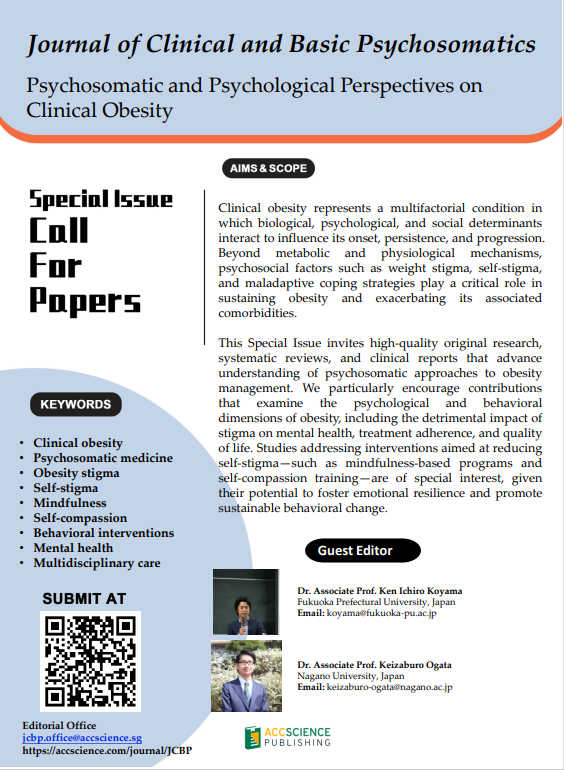
Clinical obesity represents a multifactorial condition in which biological, psychological, and social determinants interact to influence its onset, persistence, and progression. Beyond metabolic and physiological mechanisms, psychosocial factors such as weight stigma, self-stigma, and maladaptive coping strategies play a critical role in sustaining obesity and exacerbating its associated comorbidities.
This Special Issue invites high-quality original research, systematic reviews, and clinical reports that advance understanding of psychosomatic approaches to obesity management. We particularly encourage contributions that examine the psychological and behavioral dimensions of obesity, including the detrimental impact of stigma on mental health, treatment adherence, and quality of life. Studies addressing interventions aimed at reducing self-stigma—such as mindfulness-based programs and self-compassion training—are of special interest, given their potential to foster emotional resilience and promote sustainable behavioral change.
Relevant topics include, but are not limited to:
- Psychosocial determinants of obesity maintenance and progression
- Mechanisms and consequences of obesity stigma and discrimination
- Mindfulness and self-compassion as therapeutic strategies
- Integration of psychosomatic principles into multidisciplinary obesity care models
By highlighting these dimensions, this Special Issue seeks to deepen the discourse on the interplay between psychological processes and obesity, and to promote evidence-based, holistic interventions that address both physical and mental health needs.
Appetite rumination: Validation of a hierarchical structure and its cognitive–emotional pathways to maladaptive eating