

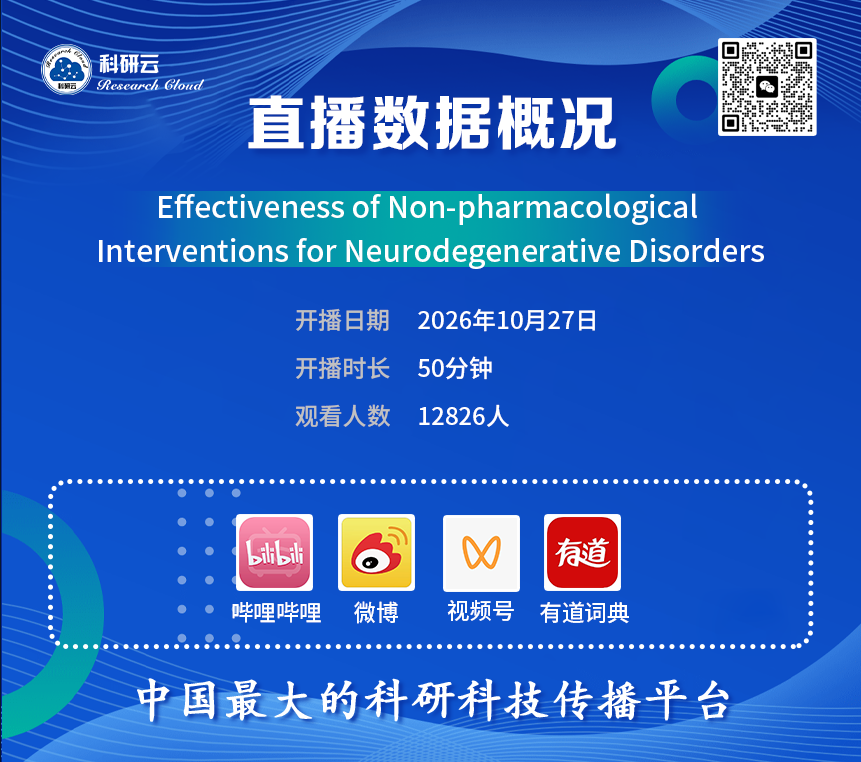
Professor Wolfgang KoehlerOn 27 October 2026, the journal’s first overseas online seminar, a special paper-sharing session themed “Efficacy of Non-Pharmacological Interventions for Neurodegenerative Diseases”, was successfully hosted by our German Editorial Board Member, Professor Wolfgang Koehler. The seminar invited the original author Fatima Mortada to provide first-hand interpretations of the paper, building a bridge for translating evidence from foundational reviews into clinical practice. The event drew strong interest and yielded fruitful outcomes, with a total of 12,826 views. At the opening of the seminar, Professor Wolfgang Koehler delivered a journal introduction. Following the presentation, online panelists and audience members engaged in lively discussions on real-world clinical challenges.
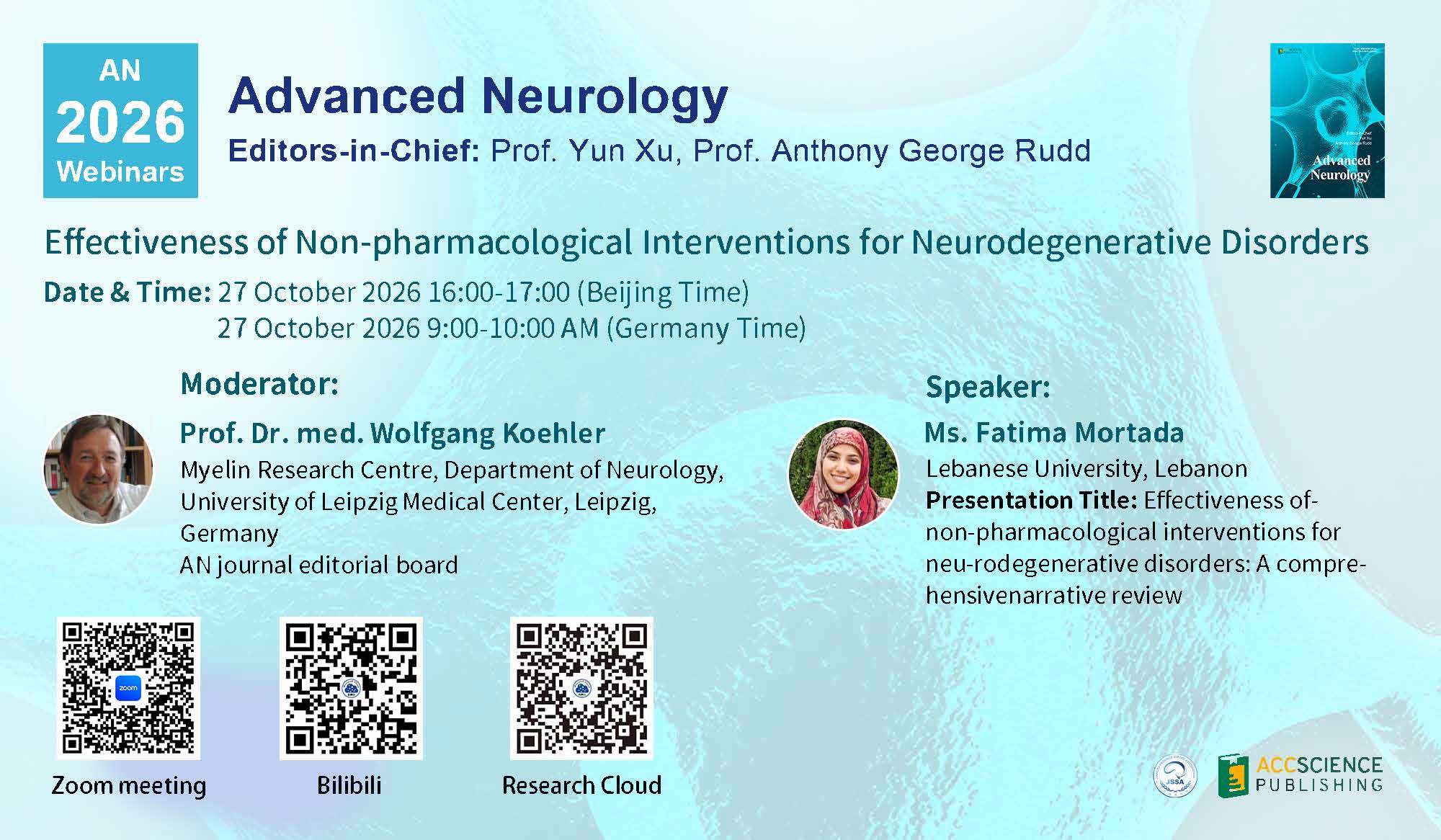
Against the backdrop of population ageing, the burden of neurodegenerative diseases such as Alzheimer’s disease and Parkinson’s disease is growing rapidly. While medications can only relieve symptoms, safe, long‑term non‑pharmacological interventions have emerged as a hot research frontier in brain health. This online webinar delivered an in‑depth interpretation of the narrative review entitled Effectiveness of non‑pharmacological interventions for neurodegenerative disorders: A comprehensive narrative review. This high‑impact review has been cited by papers published in ALZHEIMERS RESEARCH & THERAPY, a Q1 journal with an IF of 8.9, rendering it highly valuable for scientific research and clinical translation.
Key Takeaways of the Presentation
By searching four major databases — PubMed, Scopus, Web of Science and Google Scholar — Dr. Fatima Mortada’s team systematically synthesised available evidence on non‑pharmacological interventions for neurodegenerative diseases. The team clarified that non‑pharmacological approaches cannot replace pharmacotherapy but serve as an important adjunctive therapy. In the early disease stage, multimodal non‑pharmacological interventions may reduce pathological damage, slow disease progression and improve patients’ quality of life, though they cannot achieve a cure.
Core Conclusions
- Non‑pharmacological strategies including diet, physical activity, sleep optimisation, stress management, cognitive and social engagement, and non‑invasive brain stimulation show promising potential for improving cognition and quality of life in Alzheimer’s disease and Parkinson’s disease.
- Combined multi‑component interventions outperform single‑component approaches.
- Non‑pharmacological interventions are not risk‑free; possible adverse events include falls, dietary side effects and stimulation‑related complications.
- Evidence gaps remain. Large‑scale, multi‑centre interventional clinical trials are urgently needed to validate real‑world effectiveness. Such interventions should currently be regarded as an important complement rather than a full substitute for drug therapy.
Highlights from Q&A
A lively discussion followed the presentation, with online panellists and attendees addressing practical questions for clinical practice:
Q: Is the optimal window for non‑pharmacological interventions after diagnosis, or pre‑emptively for at‑risk populations? A: Current evidence indicates earlier intervention yields greater benefits. Lifestyle modification should be implemented for high‑risk older adults. Interventions initiated after diagnosis can still slow decline and improve quality of life, though the magnitude of benefit diminishes.
Q: How can multimodal interventions be implemented in routine clinical settings? What should be prioritised under limited clinical resources? A: Diet, physical activity and sleep hygiene are the three foundational, low‑threshold, scalable components. Cognitive training and social activities may be added where feasible. Non‑invasive brain stimulation is largely confined to research settings due to equipment requirements.
Q: Can non‑pharmacological interventions allow clinicians to reduce or even discontinue anti‑dementia medication? A: Existing evidence does not support replacing medication directly; combined therapy is preferred. Any medication adjustment must be assessed by the attending physician. Patients should never reduce or stop anti‑dementia drugs solely based on lifestyle interventions.
Article Information
REVIEW
Effectiveness of non-pharmacological interventions for neurodegenerative disorders: A comprehensive narrative review
doi: 10.36922/an.5812