

Identifying hub genes of Alzheimer’s and Parkinson’s diseases via h-cutoff: A new methodological approach

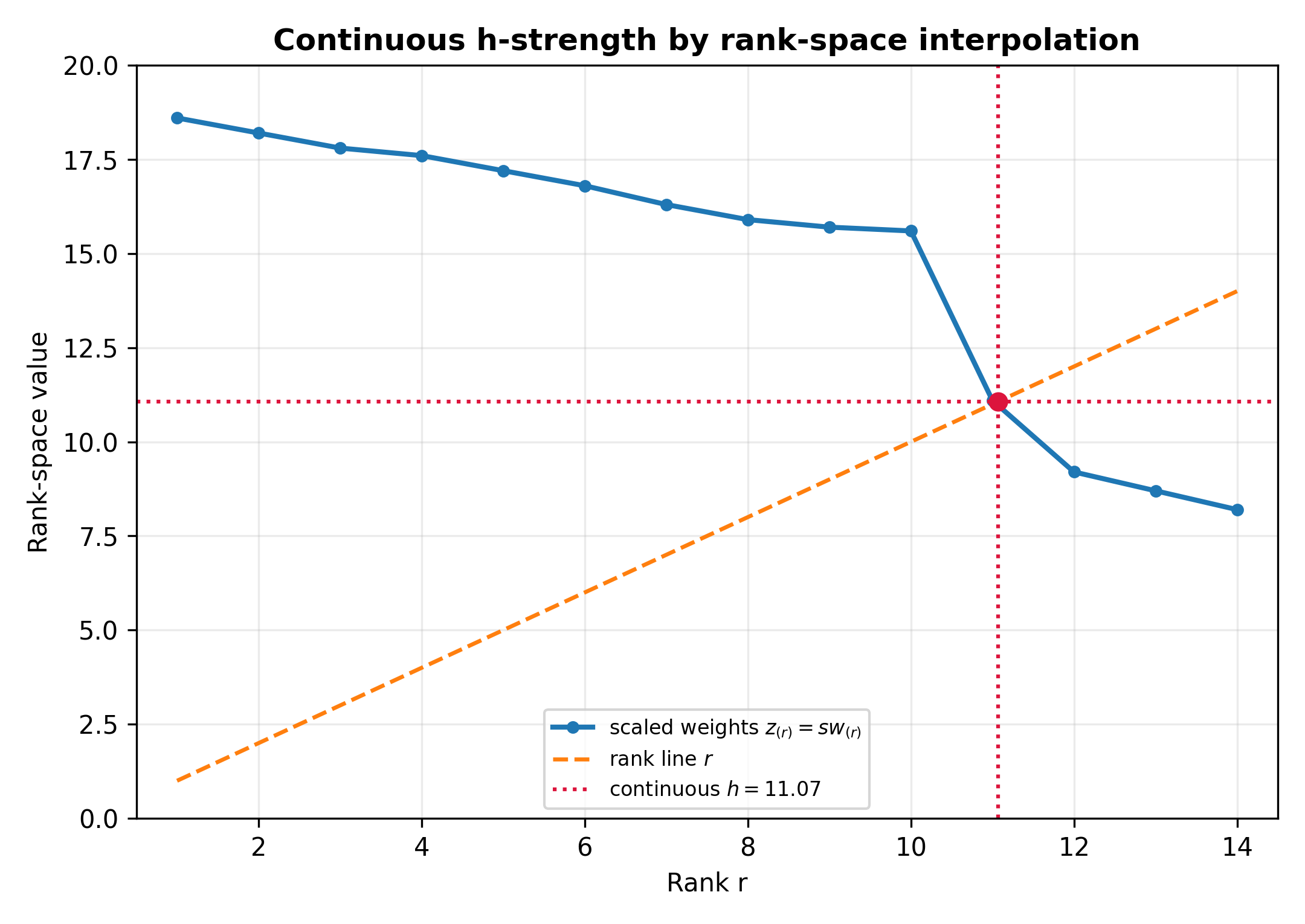
Alzheimer’s disease (AD) and Parkinson’s disease (PD) are polygenic neurodegenerative disorders in which disease genes act through immune, glial, proteostatic, metabolic, synaptic, and vascular networks rather than through isolated single-gene effects. This methodological framework introduces continuous h-cutoff as an adaptive strategy for reducing dense weighted biological networks while preserving weak but structurally important bridges. Co-expression or co-occurrence values are normalized into continuous edge weights. A first-order h-cutoff defines the functional h-subnet, after which high-betweenness weak bridges are restored to construct the h-backbone. A second-order h-cutoff is then applied within the backbone to prioritize candidate hub genes. The framework is illustrated with a compact, evidence-derived demonstration dataset organized into AD/PD-shared, AD-specific, and PD-specific layers, using public resources including GSE48350, GSE26927, GSE174367, GSE161045, and the National Institute on Aging Genetics of Alzheimer’s Disease Data Storage Site. The demonstration highlights shared neurodegenerative modules involving CXCR4, FLT1, HSPB1, HSPA1A, CALM3, CDC42, RAB3A, TREM2, and APOE, as well as AD-specific glial-lipid and mitochondrial candidates and PD-specific proteostasis, synaptic, and dopaminergic candidates. These outputs are intended as a reproducible computational proposal rather than a completed raw-matrix reanalysis. Full empirical validation will require uniformly processed expression or pseudobulk matrices to recompute edge weights and to assess robustness through sensitivity analyses, functional enrichment analyses, and replication in independent cohorts. This study explicitly highlights two key innovations: (i) continuous h-strength interpolation, which enables fractional biological edge weights, and (ii) a two-stage hierarchical cutoff strategy that first constructs an h-backbone network and subsequently identifies hub genes within that backbone.
- Bellenguez C, Kucukali F, Jansen IE, et al. New insights into the genetic etiology of Alzheimer’s disease and related dementias. Nat Genet. 2022;54(4):412-436. doi: 10.1038/s41588-022-01024-z
- Kunkle BW, Grenier-Boley B, Sims R, et al. Genetic meta-analysis of diagnosed Alzheimer’s disease identifies new risk loci and implicates Aβ, tau, immunity and lipid processing. Nat Genet. 2019;51(3):414-430. doi: 10.1038/s41588-019-0358-2
- Lambert JC, Ibrahim-Verbaas CA, Harold D, et al. Meta-analysis of 74,046 individuals identifies 11 new susceptibility loci for Alzheimer’s disease. Nat Genet. 2013;45(12):1452-1458. doi: 10.1038/ng.2802
- Jansen IE, Savage JE, Watanabe K, et al. Genome-wide meta-analysis identifies new loci and functional pathways influencing Alzheimer’s disease risk. Nat Genet. 2019;51(3):404-413. doi: 10.1038/s41588-018-0311-9
- Jonsson T, Stefansson H, Steinberg S, et al. Variant of TREM2 associated with the risk of Alzheimer’s disease. N Engl J Med. 2013;368(2):107-116. doi: 10.1056/NEJMoa1211103
- Guerreiro R, Wojtas A, Bras J, et al. TREM2 variants in Alzheimer’s disease. N Engl J Med. 2013;368(2):117-127. doi: 10.1056/NEJMoa1211851
- Nalls MA, Blauwendraat C, Vallerga CL, et al. Identification of novel risk loci, causal insights, and heritable risk for Parkinson’s disease: a meta-analysis of genome-wide association studies. Lancet Neurol. 2019;18(12):1091-1102. doi: 10.1016/S1474-4422(19)30320-5
- Kim JJ, Bandres-Ciga S, Blauwendraat C, et al. Multi-ancestry genome-wide association meta-analysis of Parkinson’s disease. Nat Genet. 2024;56(1):27-36. doi: 10.1038/s41588-023-01584-8
- Polymeropoulos MH, Lavedan C, Leroy E, et al. Mutation in the alpha-synuclein gene identified in families with Parkinson’s disease. Science. 1997;276(5321):2045-2047. doi: 10.1126/science.276.5321.2045
- Berchtold NC, Cribbs DH, Coleman PD, et al. Gene expression changes in the course of normal brain aging are sexually dimorphic. Proc Natl Acad Sci USA. 2008;105(40):15605-15610. doi: 10.1073/pnas.0806883105
- Durrenberger PF, Fernando S, Kashefi SN, et al. Common mechanisms in neurodegeneration and neuroinflammation: a BrainNet Europe gene expression microarray study. J Neural Transm. 2015;122(7):1055-1068. doi: 10.1007/s00702-014-1293-0
- Wang Q, Li WX, Dai SX, et al. Meta-analysis of Parkinson’s disease and Alzheimer’s disease revealed commonly impaired pathways and dysregulation of NRF2-dependent genes. J Alzheimers Dis. 2017;56(4):1525-1539. doi: 10.3233/JAD-161032
- Forés-Martos J, Boullosa C, Rodrigo-Domínguez D, et al. Transcriptomic and genetic associations between Alzheimer’s disease, Parkinson’s disease, and cancer. Cancers. 2021;13(12):2990. doi: 10.3390/cancers13122990
- Fan LY, Yang J, Liu RY, et al. Integrating single-nucleus sequence profiling to reveal the transcriptional dynamics of Alzheimer’s disease, Parkinson’s disease, and multiple sclerosis. J Transl Med. 2023;21(1):649. doi: 10.1186/s12967-023-04516-6
- Morabito S, Miyoshi E, Michael N, et al. Single-nucleus chromatin accessibility and transcriptomic characterization of Alzheimer’s disease. Nat Genet. 2021;53(8):1143-1155. doi: 10.1038/s41588-021-00894-z
- Xu J, Hou Y, Farsad HL, et al. Human striatal glia differentially contribute to AD-and PD-specific neurodegeneration. Nat Aging. 2023;3:346-365. doi: 10.1038/s43587-023-00363-8
- Mathys H, Davila-Velderrain J, Peng Z, et al. Single-cell transcriptomic analysis of Alzheimer’s disease. Nature. 2019;570(7761):332-337. doi: 10.1038/s41586-019-1195-2
- Grubman A, Chew G, Ouyang JF, et al. A single-cell atlas of entorhinal cortex from individuals with Alzheimer’s disease reveals cell-type-specific gene expression regulation. Nat Neurosci. 2019;22(12):2087-2097. doi: 10.1038/s41593-019-0539-4
- Kamath T, Abdulraouf A, Burris SJ, et al. Single-cell genomic profiling of human dopamine neurons identifies a population that selectively degenerates in Parkinson’s disease. Nat Neurosci. 2022;25(5):588-595. doi: 10.1038/s41593-022-01061-1
- Langfelder P, Horvath S. WGCNA: an R package for weighted correlation network analysis. BMC Bioinformatics. 2008;9(1):559. doi: 10.1186/1471-2105-9-559
- Granovetter MS. The strength of weak ties. Am J Sociol. 1973;78(6):1360-1380. doi: 10.1086/225469
- Hirsch JE. An index to quantify an individual’s scientific research output. Proc Natl Acad Sci USA. 2005;102(46):16569-16572. doi: 10.1073/pnas.0507655102
- Zhang RJ, Stanley HE, Ye FY. Extracting h-backbone as a core structure in weighted networks. Sci Rep. 2018;8(1):14356. doi: 10.1038/s41598-018-32430-1
- Wang RW, Ye FY. Simplifying weighted heterogeneous networks by extracting h-structure via s-degree. Sci Rep. 2019;9(1):18819. doi: 10.1038/s41598-019-55399-x
- Greenfest-Allen E, Valladares O, Kuksa PP, et al. NIAGADS Alzheimer’s GenomicsDB: a resource for exploring Alzheimer’s disease genetic and genomic knowledge. Alzheimers Dement. 2024;20(2):1123-1136. doi: 10.1002/alz.13509
- Corder EH, Saunders AM, Strittmatter WJ, et al. Gene dose of apolipoprotein E type 4 allele and the risk of Alzheimer’s disease in late onset families. Science. 1993;261(5123):921-923. doi: 10.1126/science.8346443
- Sidransky E, Nalls MA, Aasly JO, et al. Multicenter analysis of glucocerebrosidase mutations in Parkinson’s disease. N Engl J Med. 2009;361(17):1651-1661. doi: 10.1056/NEJMoa0901281
- Paisan-Ruiz C, Jain S, Evans EW, et al. Cloning of the gene containing mutations that cause PARK8-linked Parkinson’s disease. Neuron. 2004;44(4):595-600. doi: 10.1016/j.neuron.2004.10.023
- Newman MEJ. The structure and function of complex networks. SIAM Rev. 2003;45(2):167-256. doi: 10.1137/S003614450342480
- Serrano MA, Boguna M, Vespignani A. Extracting the multiscale backbone of complex weighted networks. Proc Natl Acad Sci USA. 2009;106(16):6483-6488. doi: 10.1073/pnas.0808904106
- Mathys H, Peng Z, Davila-Velderrain J, et al. Single-cell multiregion dissection of Alzheimer’s disease. Nature. 2024;632(8026):858-868. doi: 10.1038/s41586-024-07606-7
- Hawrylycz M, Kaplan ES, Travaglini KJ, et al. SEA-AD is a multimodal cellular atlas and resource for Alzheimer’s disease. Nat Aging. 2024;4(10):1331-1334. doi: 10.1038/s43587-024-00719-8
- Gabitto MI, Travaglini KJ, Rachleff V, et al. Integrated multimodal cell atlas of Alzheimer’s disease. Nat Neurosci. 2024;27(12):2366-2383. doi: 10.1038/s41593-024-01774-5
- Fujita M, Gao Z, Zeng L, et al. Cell subtype-specific effects of genetic variation in the Alzheimer’s disease brain. Nat Genet. 2024;56(4):605-614. doi: 10.1038/s41588-024-01685-y
- Liu Z, Zhang S, James B, et al. Single-cell multiregion epigenomic rewiring in Alzheimer’s disease progression and cognitive resilience. Cell. 2025;188(18):4980-5002.e29. doi: 10.1016/j.cell.2025.06.031
- Jeffries AM, Yu T, Ziegenfuss JS, et al. Single-cell transcriptomic and genomic changes in the human brain across the lifespan. Nature. 2025;646(8085):657-666. doi: 10.1038/s41586-025-09435-8
- Miyoshi E, Morabito S, Henningfield MC, et al. Spatial and single-nucleus transcriptomic analysis of genetic and sporadic forms of Alzheimer’s disease. Nat Genet. 2024;56(12):2704-2719. doi: 10.1038/s41588-024-01961-x
- Olah M, Menon V, Habib N, et al. Single cell RNA sequencing of human microglia uncovers a subset associated with Alzheimer’s disease. Nat Commun. 2020;11(1):6129. doi: 10.1038/s41467-020-19737-2
- Saffie-Awad P, Grant SM, Makarius MB, et al. Insights into ancestral diversity in Parkinson’s disease risk. npj Parkinsons Dis. 2025;11(1):175. doi: 10.1038/s41531-025-00967-4