

Synergistic engineering of organoids and organ-on-a-chip systems through microengineering and sensor integration for advanced biomedical research

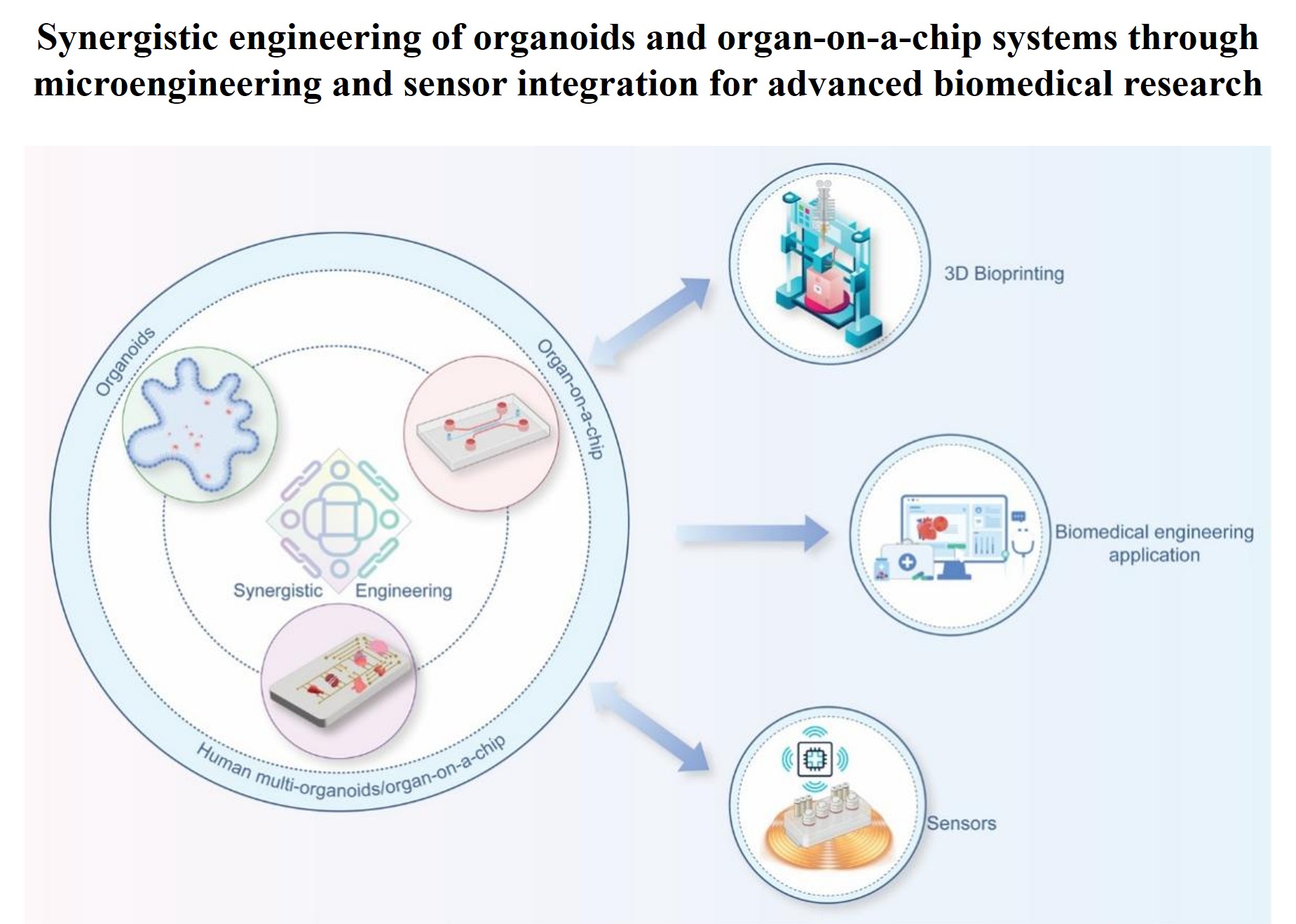
Microphysiological systems, including organoids, organ-on-a-chip (OoC) platforms, and their integrated forms, are increasingly used to model human physiology in vitro. Organoids contribute self-organized cellular diversity and tissue architecture, whereas OoC platforms provide controlled geometry, perfusion, mechanical cues, and access to real-time measurements. Their integration into organoid-on-a-chip and multi-tissue systems can improve physiological relevance for efficacy evaluation, quality control, mechanistic studies, and personalized medicine. This review examines organoid generation, organ-specific OoC models, hybrid systems, 3D bioprinting, acoustic bioassembly, and sensor integration. It also discusses the principal barriers to translation, including scalability, reproducibility, standardization, and the responsible use of artificial intelligence and multi-omics data. Together, these advances position synergistically engineered microphysiological systems as promising translational tools, provided that performance is validated against standardized, reproducible, and clinically relevant benchmarks.
- Bhatia SN, Ingber DE. Microfluidic organs-on-chips. Nat Biotechnol. 2014;32(8):760-772. doi: 10.1038/nbt.2989
- Clevers H. Modeling Development and Disease with Organoids. Cell. 2016;165(7):1586-1597. doi: 10.1016/j.cell.2016.05.082
- Fang Y, Eglen RM. Three-Dimensional Cell Cultures in Drug Discovery and Development. SLAS Discov. 2017;22(5):456-472. doi: 10.1177/1087057117696795
- Lancaster MA, Knoblich JA. Organogenesis in a dish: Modeling development and disease using organoid technologies. Science. 2014;345(6194):1247125. doi: 10.1126/science.1247125
- Sato T, Vries RG, Snippert HJ, et al. Single Lgr5 stem cells build crypt-villus structures in vitro without a mesenchymal niche. Nature. 2009;459(7244):262-265. doi: 10.1038/nature07935
- Quadrato G, Nguyen T, Macosko EZ, et al. Cell diversity and network dynamics in photosensitive human brain organoids. Nature. 2017;545(7652):48-53. doi: 10.1038/nature22047
- Kimura M, Iguchi T, Iwasawa K, et al. En masse organoid phenotyping informs metabolic-associated genetic susceptibility to NASH. Cell. 2022;185(22):4216-4232.e16. doi: 10.1016/j.cell.2022.09.031
- Gjorevski N, Nikolaev M, Brown TE, et al. Tissue geometry drives deterministic organoid patterning. Science. 2022;375(6576):eaaw9021. doi: 10.1126/science.aaw9021
- Prahl LS, Liu J, Viola JM, et al. Jamming of nephron-forming niches in the developing mouse kidney creates cyclical mechanical stresses. Nat Mater. 2024;23(11):1582-1591. doi: 10.1038/s41563-024-02019-3
- Mills RJ, Parker BL, Quaife-Ryan GA, et al. Drug Screening in Human PSC-Cardiac Organoids Identifies Pro-proliferative Compounds Acting via the Mevalonate Pathway. Cell Stem Cell. 2019;24(6):895-907.e6. doi: 10.1016/j.stem.2019.03.009
- Huh D, Matthews BD, Mammoto A, Montoya-Zavala M, Hsin HY, Ingber DE. Reconstituting Organ-Level Lung Functions on a Chip. Science. 2010;328(5986):1662-1668. doi: 10.1126/science.1188302
- McAleer CW, Long CJ, Elbrecht D, et al. Multi-organ system for the evaluation of efficacy and off-target toxicity of anticancer therapeutics. Sci Transl Med. 2019;11(497):eaav1386. doi: 10.1126/scitranslmed.aav1386
- Ingber DE. Human organs-on-chips for disease modelling, drug development and personalized medicine. Nat Rev Genet. 2022;23(8):467-491. doi: 10.1038/s41576-022-00466-9
- Hofer M, Lutolf MP. Engineering organoids. Nat Rev Mater. 2021;6(5):402-420. doi: 10.1038/s41578-021-00279-y
- Vunjak-Novakovic G, Ronaldson-Bouchard K, Radisic M. Organs-on-a-chip models for biological research. Cell. 2021;184(18):4597-4611. doi: 10.1016/j.cell.2021.08.005
- Zhao Y, Landau S, Okhovatian S, et al. Integrating organoids and organ-on-a-chip devices. Nat Rev Bioeng. 2024;2(7):588-608. doi: 10.1038/s44222-024-00207-z
- Ronaldson-Bouchard K, Teles D, Yeager K, et al. A multi-organ chip with matured tissue niches linked by vascular flow. Nat Biomed Eng. 2022;6(4):351-371. doi: 10.1038/s41551-022-00882-6
- Zheng F, Xiao Y, Liu H, Fan Y, Dao M. Patient-Specific Organoid and Organ-on-a-Chip: 3D Cell-Culture Meets 3D Printing and Numerical Simulation. Adv Biol (Weinh). 2021;5(6):e2000024. doi: 10.1002/adbi.202000024
- Post Y, Clevers H. Defining Adult Stem Cell Function at Its Simplest: The Ability to Replace Lost Cells through Mitosis. Cell Stem Cell. 2019;25(2):174-183. doi: 10.1016/j.stem.2019.07.002
- Yi SA, Zhang Y, Rathnam C, Pongkulapa T, Lee KB. Bioengineering Approaches for the Advanced Organoid Research. Adv Mater. 2021;33(45):2007949. doi: 10.1002/adma.202007949
- Xu Y, Kuppe C, Perales-Patón J, et al. Adult human kidney organoids originate from CD24+ cells and represent an advanced model for adult polycystic kidney disease. Nat Genet. 2022;54(11):1690-1701. doi: 10.1038/s41588-022-01202-z
- Guan J, Wang G, Wang J, et al. Chemical reprogramming of human somatic cells to pluripotent stem cells. Nature. 2022;605(7909):325-331. doi: 10.1038/s41586-022-04593-5
- Hou P, Li Y, Zhang X, et al. Pluripotent Stem Cells Induced from Mouse Somatic Cells by Small-Molecule Compounds. Science. 2013;341(6146):651-654. doi: 10.1126/science.1239278
- Hendriks D, Artegiani B, Hu H, Chuva de Sousa Lopes S, Clevers H. Establishment of human fetal hepatocyte organoids and CRISPR–Cas9-based gene knockin and knockout in organoid cultures from human liver. Nat Protoc. 2021;16(1):182-217. doi: 10.1038/s41596-020-00411-2
- Taguchi A, Kaku Y, Ohmori T, et al. Redefining the In Vivo Origin of Metanephric Nephron Progenitors Enables Generation of Complex Kidney Structures from Pluripotent Stem Cells. Cell Stem Cell. 2014;14(1):53-67. doi: 10.1016/j.stem.2013.11.010
- Sachs N, de Ligt J, Kopper O, et al. A Living Biobank of Breast Cancer Organoids Captures Disease Heterogeneity. Cell. 2018;172(1):373-386.e10. doi: 10.1016/j.cell.2017.11.010
- Strating E, Verhagen MP, Wensink E, et al. Co-cultures of colon cancer cells and cancer-associated fibroblasts recapitulate the aggressive features of mesenchymal-like colon cancer. Front Immunol. 2023;14:1053920. doi: 10.3389/fimmu.2023.1053920
- Schuth S, Le Blanc S, Krieger TG, et al. Patient-specific modeling of stroma-mediated chemoresistance of pancreatic cancer using a three-dimensional organoid-fibroblast co-culture system. J Exp Clin Cancer Res. 2022;41(1):312. doi: 10.1186/s13046-022-02519-7
- Liu X, Wang X, Zhang L, et al. 3D Liver Tissue Model with Branched Vascular Networks by Multimaterial Bioprinting. Adv Healthc Mater. 2021;10(23):2101405. doi: 10.1002/adhm.202101405
- Miller AJ, Dye BR, Ferrer-Torres D, et al. Generation of lung organoids from human pluripotent stem cells in vitro. Nat Protoc. 2019;14(2):518-540. doi: 10.1038/s41596-018-0104-8
- Budeus B, Kroepel C, Stasch LM, Klein D. Matrix-free human lung organoids derived from induced pluripotent stem cells to model lung injury. Stem Cell Res Ther. 2024;15(1):468. doi: 10.1186/s13287-024-04106-3
- Branco MA, Dias TP, Cabral JMS, Pinto-do-Ó P, Diogo MM. Human multilineage pro-epicardium/foregut organoids support the development of an epicardium/myocardium organoid. Nat Commun. 2022;13(1):6981. doi: 10.1038/s41467-022-34730-7
- Tadokoro T, Murata S, Kato M, et al. Human iPSC–liver organoid transplantation reduces fibrosis through immunomodulation. Sci Transl Med. 2024;16(757):eadg0338. doi: 10.1126/scitranslmed.adg0338
- Hu Y, Sui X, Song F, et al. Lung cancer organoids analyzed on microwell arrays predict drug responses of patients within a week. Nat Commun. 2021;12(1):2581. doi: 10.1038/s41467-021-22676-1
- Yang L, Wang X, Zhou X, et al. A tunable human intestinal organoid system achieves controlled balance between self-renewal and differentiation. Nat Commun. 2025;16(1):315. doi: 10.1038/s41467-024-55567-2
- Zhang R, Chen Y, Feng Z, et al. Reprogramming human urine cells into intestinal organoids with long-term expansion ability and barrier function. Heliyon. 2024;10(13):e33736. doi: 10.1016/j.heliyon.2024.e33736
- Lorenzo-Martín LF, Hübscher T, Bowler AD, et al. Spatiotemporally resolved colorectal oncogenesis in mini-colons ex vivo. Nature. 2024;629(8011):450-457. doi: 10.1038/s41586-024-07330-2
- Baghdadi MB, Houtekamer RM, Perrin L, et al. PIEZO-dependent mechanosensing is essential for intestinal stem cell fate decision and maintenance. Science. 2024;386(6725):eadj7615. doi: 10.1126/science.adj7615
- Tran T, Song CJ, Nguyen T, et al. A scalable organoid model of human autosomal dominant polycystic kidney disease for disease mechanism and drug discovery. Cell Stem Cell. 2022;29(7):1083-1101.e7. doi: 10.1016/j.stem.2022.06.005
- Vanslambrouck JM, Wilson SB, Tan KS, et al. Enhanced metanephric specification to functional proximal tubule enables toxicity screening and infectious disease modelling in kidney organoids. Nat Commun. 2022;13(1):5943. doi: 10.1038/s41467-022-33623-z
- Freedman BS, Brooks CR, Lam AQ, et al. Modelling kidney disease with CRISPR-mutant kidney organoids derived from human pluripotent epiblast spheroids. Nat Commun. 2015;6(1):8715. doi: 10.1038/ncomms9715
- Kroll KT, Homan KA, Uzel SGM, et al. A perfusable, vascularized kidney organoid-on-chip model. Biofabrication. 2024;16(4):045003. doi: 10.1088/1758-5090/ad5ac0
- Pezet MG, Torres JA, Thimraj TA, et al. Human respiratory airway progenitors derived from pluripotent cells generate alveolar epithelial cells and model pulmonary fibrosis. Nat Biotechnol. 2026;44(3):394-405. doi: 10.1038/s41587-025-02569-0
- Salahudeen AA, Choi SS, Rustagi A, et al. Progenitor identification and SARS-CoV-2 infection in human distal lung organoids. Nature. 2020;588(7839):670-675. doi: 10.1038/s41586-020-3014-1
- Leibel SL, McVicar RN, Murad R, et al. A therapy for suppressing canonical and noncanonical SARS-CoV-2 viral entry and an intrinsic intrapulmonary inflammatory response. Proc Natl Acad Sci USA. 2024;121(30):e2408109121. doi: 10.1073/pnas.2408109121
- Basil MC, Cardenas-Diaz FL, Kathiriya JJ, et al. Human distal airways contain a multipotent secretory cell that can regenerate alveoli. Nature. 2022;604(7904):120-126. doi: 10.1038/s41586-022-04552-0
- Jones DL, Morley MP, Li X, et al. An injury-induced mesenchymal-epithelial cell niche coordinates regenerative responses in the lung. Science. 2024;386(6727):eado5561. doi: 10.1126/science.ado5561
- Yang P, Zhu L, Wang S, et al. Engineered model of heart tissue repair for exploring fibrotic processes and therapeutic interventions. Nat Commun. 2024;15(1):7996. doi: 10.1038/s41467-024-52221-9
- Volmert B, Kiselev A, Juhong A, et al. A patterned human primitive heart organoid model generated by pluripotent stem cell self-organization. Nat Commun. 2023;14:8245. doi: 10.1038/s41467-023-43999-1
- Zhang Z, Zhou X, Fang Y, Xiong Z, Zhang T. AI-driven 3D bioprinting for regenerative medicine: From bench to bedside. Bioact Mater. 2025;45:201-230. doi: 10.1016/j.bioactmat.2024.11.021
- Lewis J, Yaseen B, Wu H, Saraf A. Novel 2D/3D Hybrid Organoid System for High-Throughput Drug Screening in iPSC Cardiomyocytes. Therapeutics. 2025;2(3):11. doi: 10.3390/therapeutics2030011
- Fan F, Shang J, Li J, et al. High-Throughput Formation of Pre-Vascularized hiPSC-Derived Hepatobiliary Organoids on a Chip via Nonparenchymal Cell Grafting. Adv Sci. 2025;12(8):2407945. doi: 10.1002/advs.202407945
- Leite SB, Roosens T, El Taghdouini A, et al. Novel human hepatic organoid model enables testing of drug-induced liver fibrosis in vitro. Biomaterials. 2016;78:1-10. doi: 10.1016/j.biomaterials.2015.11.026
- Wu H, Wang J, Liu S, et al. Large-Scale Production of Expandable Hepatoblast Organoids and Polarised Hepatocyte Organoids From hESCs Under 3D Static and Dynamic Suspension Conditions. Cell Prolif. 2025;58(7):e70001. doi: 10.1111/cpr.70001
- Liu J, Hanson A, Yin W, et al. Decellularized liver scaffolds for constructing drug-metabolically functional ex vivo human liver models. Bioact Mater. 2025;43:162-180. doi: 10.1016/j.bioactmat.2024.09.029
- Wang L, Koui Y, Kanegae K, et al. Establishment of human induced pluripotent stem cell-derived hepatobiliary organoid with bile duct for pharmaceutical research use. Biomaterials. 2024;310:122621. doi: 10.1016/j.biomaterials.2024.122621
- Utami T, Danoy M, Khadim RR, et al. A highly efficient cell culture method using oxygen-permeable PDMS-based honeycomb microwells produces functional liver organoids from human induced pluripotent stem cell-derived carboxypeptidase M liver progenitor cells. Biotechnol Bioeng. 2024;121(4):1177-1189. doi: 10.1002/bit.28640
- Qian X, Nguyen HN, Song MM, et al. Brain-Region-Specific Organoids Using Mini-bioreactors for Modeling ZIKV Exposure. Cell. 2016;165(5):1238-1254. doi: 10.1016/j.cell.2016.04.032
- Son J, Park SJ, Ha T, Lee SN, Cho HY, Choi JW. Electrophysiological Monitoring of Neurochemical-Based Neural Signal Transmission in a Human Brain–Spinal Cord Assembliod. ACS Sens. 2022;7(2):409-414. doi: 10.1021/acssensors.1c02279
- Xiang Y, Tanaka Y, Cakir B, et al. hESC-Derived Thalamic Organoids Form Reciprocal Projections When Fused with Cortical Organoids. Cell Stem Cell. 2019;24(3):487-497.e7. doi: 10.1016/j.stem.2018.12.015
- Yin Y, Zhou W, Zhu J, et al. Generation of self-organized neuromusculoskeletal tri-tissue organoids from human pluripotent stem cells. Cell Stem Cell. 2025;32(1):157-171.e8. doi: 10.1016/j.stem.2024.11.005
- Du Y, Wang YR, Bao QY, et al. Personalized Vascularized Tumor Organoid‐on‐a‐Chip for Tumor Metastasis and Therapeutic Targeting Assessment. Adv Mater. 2025;37(6):e2412815. doi: 10.1002/adma.202412815
- Yu J, Yin Y, Leng Y, et al. Emerging strategies of engineering retinal organoids and organoid-on-a-chip in modeling intraocular drug delivery: Current progress and future perspectives. Adv Drug Deliv Rev. 2023;197:114842. doi: 10.1016/j.addr.2023.114842
- Gabriel E, Albanna W, Pasquini G, et al. Human brain organoids assemble functionally integrated bilateral optic vesicles. Cell Stem Cell. 2021;28(10):1740-1757.e8. doi: 10.1016/j.stem.2021.07.010
- Wimmer RA, Leopoldi A, Aichinger M, Kerjaschki D, Penninger JM. Generation of blood vessel organoids from human pluripotent stem cells. Nat Protoc. 2019;14(11):3082-3100. doi: 10.1038/s41596-019-0213-z
- Sun XY, Ju XC, Li Y, et al. Generation of vascularized brain organoids to study neurovascular interactions. eLife. 2022;11:e76707. doi: 10.7554/eLife.76707
- Liu H, Zhang X, Liu J, Qin J. Vascularization of engineered organoids. BMEMat. 2023;1(3):e12031. doi: 10.1002/bmm2.12031
- Skylar-Scott MA, Huang JY, Lu A, et al. Orthogonally induced differentiation of stem cells for the programmatic patterning of vascularized organoids and bioprinted tissues. Nat Biomed Eng. 2022;6(4):449-462. doi: 10.1038/s41551-022-00856-8
- Holloway EM, Wu JH, Czerwinski M, et al. Differentiation of Human Intestinal Organoids with Endogenous Vascular Endothelial Cells. Dev Cell. 2020;54(4):516-528.e7. doi: 10.1016/j.devcel.2020.07.023
- Zhao Y, Sun M, Pan Z, et al. A novel quantitative angiogenesis assay based on visualized vascular organoid. Angiogenesis. 2025;28(1):10. doi: 10.1007/s10456-024-09967-z
- Papargyriou A, Najajreh M, Cook DP, et al. Heterogeneity-driven phenotypic plasticity and treatment response in branched-organoid models of pancreatic ductal adenocarcinoma. Nat Biomed Eng. 2024;9(6):836-864. doi: 10.1038/s41551-024-01273-9
- Peng T, Ma X, Hua W, et al. Individualized patient tumor organoids faithfully preserve human brain tumor ecosystems and predict patient response to therapy. Cell Stem Cell. 2025;32(4):652-669.e11. doi: 10.1016/j.stem.2025.01.002
- Rao J, Song C, Hao Y, et al. Leveraging Patient-Derived Organoids for Personalized Liver Cancer Treatment. Int J Biol Sci. 2024;20(13):5363-5374. doi: 10.7150/ijbs.96317
- Jia Z, Xu H, Zhang Y, et al. Distinct discrepancy in breast cancer organoids recapitulation among molecular subtypes revealed by single‐cell transcriptomes analysis. Clin Transl Med. 2024;14(9):e70023. doi: 10.1002/ctm2.70023
- Xu Z, Yang H, Zhou Y, Dzakah EE, Zhao B. Whole-process 3D ECM-encapsulated organoid-based automated high-throughput screening platform accelerates drug discovery for rare diseases. Life Med. 2025;4(5):lnaf021. doi: 10.1093/lifemedi/lnaf021
- Mo S, Tang P, Luo W, et al. Patient-Derived Organoids from Colorectal Cancer with Paired Liver Metastasis Reveal Tumor Heterogeneity and Predict Response to Chemotherapy. Adv Sci. 2022;9(31):2204097. doi: 10.1002/advs.202204097
- Liu C, Li K, Sui X, et al. Patient-Derived Tumor Organoids Combined with Function-Associated ScRNA-Seq for Dissecting the Local Immune Response of Lung Cancer. Adv Sci. 2024;11(31):2400185. doi: 10.1002/advs.202400185
- Huang Y, Liu T, Huang Q, Wang Y. From Organ-on-a-Chip to Human-on-a-Chip: A Review of Research Progress and Latest Applications. ACS Sens. 2024;9(7):3466-3488. doi: 10.1021/acssensors.4c00004
- Dhiman N, Kingshott P, Sumer H, Sharma CS, Rath SN. On-chip anticancer drug screening – Recent progress in microfluidic platforms to address challenges in chemotherapy. Biosens Bioelectron. 2019;137:236-254. doi: 10.1016/j.bios.2019.02.070
- Shinohara M, Arakawa H, Oda Y, et al. Coculture with hiPS-derived intestinal cells enhanced human hepatocyte functions in a pneumatic-pressure-driven two-organ microphysiological system. Sci Rep. 2021;11(1):5437. doi: 10.1038/s41598-021-84861-y
- Shinha K, Nihei W, Ono T, Nakazato R, Kimura H. A pharmacokinetic–pharmacodynamic model based on multi-organ-on-a-chip for drug–drug interaction studies. Biomicrofluidics. 2020;14(4):044108. doi: 10.1063/5.0011545
- Monteduro AG, Rizzato S, Caragnano G, Trapani A, Giannelli G, Maruccio G. Organs-on-chips technologies – A guide from disease models to opportunities for drug development. Biosens Bioelectron. 2023;231:115271. doi: 10.1016/j.bios.2023.115271
- van Berlo D, van de Steeg E, Amirabadi HE, Masereeuw R. The potential of multi-organ-on-chip models for assessment of drug disposition as alternative to animal testing. Curr Opin Toxicol. 2021;27:8-17. doi: 10.1016/j.cotox.2021.05.001
- Pramotton FM, Spitz S, Kamm RD. Challenges and Future Perspectives in Modeling Neurodegenerative Diseases Using Organ-on-a-Chip Technology. Adv Sci. 2024;11(32):2403892. doi: 10.1002/advs.202403892
- Rezaei NT, Kumar H, Liu H, Lee SS, Park SS, Kim K. Recent Advances in Organ-on-Chips Integrated with Bioprinting Technologies for Drug Screening. Adv Healthc Mater. 2023;12(20):2203172. doi: 10.1002/adhm.202203172
- Ballerini M, Galiè S, Tyagi P, et al. A gut-on-a-chip incorporating human faecal samples and peristalsis predicts responses to immune checkpoint inhibitors for melanoma. Nat Biomed Eng. 2025;9(6):967-984. doi: 10.1038/s41551-024-01318-z
- Kim HJ, Li H, Collins JJ, Ingber DE. Contributions of microbiome and mechanical deformation to intestinal bacterial overgrowth and inflammation in a human gut-on-a-chip. Proc Natl Acad Sci USA. 2016;113(1):E7-E15. doi: 10.1073/pnas.1522193112
- Li S, Li C, Khan MI, et al. Microneedle array facilitates hepatic sinusoid construction in a large-scale liver-acinus-chip microsystem. Microsyst Nanoeng. 2023;9(1):75. doi: 10.1038/s41378-023-00544-w
- Agarwal A, Adrian Goss J, Cho A, Laura McCain M, Kit Parker K. Microfluidic heart on a chip for higher throughput pharmacological studies. Lab Chip. 2013;13(18):3599-3608. doi: 10.1039/C3LC50350J
- Musah S, Mammoto A, Ferrante TC, et al. Mature induced-pluripotent-stem-cell-derived human podocytes reconstitute kidney glomerular-capillary-wall function on a chip. Nat Biomed Eng. 2017;1(5):0069. doi: 10.1038/s41551-017-0069
- Li Y, Xie M, Lv S, et al. A bionic controllable strain membrane for cell stretching at air–liquid interface inspired by papercutting. Int J Extrem Manuf. 2023;5(4):045502. doi: 10.1088/2631-7990/acef77
- Baptista D, Moreira Teixeira L, Barata D, et al. 3D Lung-on-Chip Model Based on Biomimetically Microcurved Culture Membranes. ACS Biomater Sci Eng. 2022;8(6):2684-2699. doi: 10.1021/acsbiomaterials.1c01463
- Jung O, Tung YT, Sim E, et al. Development of human-derived, three-dimensional respiratory epithelial tissue constructs with perfusable microvasculature on a high-throughput microfluidics screening platform. Biofabrication. 2022;14(2):025012. doi: 10.1088/1758-5090/ac32a5
- Huang D, Liu T, Liao J, et al. Reversed-engineered human alveolar lung-on-a-chip model. Proc Natl Acad Sci USA. 2021;118(19):e2016146118. doi: 10.1073/pnas.2016146118
- Cao T, Shao C, Yu X, et al. Biomimetic Alveolus-on-a-Chip for SARS-CoV-2 Infection Recapitulation. Research. 2022;2022:9819154. doi: 10.34133/2022/9819154
- Si L, Bai H, Rodas M, et al. A human-airway-on-a-chip for the rapid identification of candidate antiviral therapeutics and prophylactics. Nat Biomed Eng. 2021;5(8):815-829. doi: 10.1038/s41551-021-00718-9
- Deinhardt-Emmer S, Rennert K, Schicke E, et al. Co-infection with Staphylococcus aureus after primary influenza virus infection leads to damage of the endothelium in a human alveolus-on-a-chip model. Biofabrication. 2020;12(2):025012. doi: 10.1088/1758-5090/ab7073
- Zhang M, Wang P, Luo R, et al. Biomimetic Human Disease Model of SARS-CoV-2-Induced Lung Injury and Immune Responses on Organ Chip System. Adv Sci. 2021;8(3):2002928. doi: 10.1002/advs.202002928
- Thacker VV, Sharma K, Dhar N, Mancini G, Sordet‐Dessimoz J, McKinney JD. Rapid endotheliitis and vascular damage characterize SARS‐CoV‐2 infection in a human lung‐on‐chip model. EMBO Rep. 2021;22(6):e52744. doi: 10.15252/embr.202152744
- Dasgupta Q, Jiang A, Wen AM, et al. A human lung alveolus-on-a-chip model of acute radiation-induced lung injury. Nat Commun. 2023;14(1):6506. doi: 10.1038/s41467-023-42171-z
- Ringquist R, Bhatia E, Chatterjee P, et al. An immune-competent lung-on-a-chip for modelling the human severe influenza infection response. Nat Biomed Eng. 2026;10:897-919. doi: 10.1038/s41551-025-01491-9
- Grassart A, Malardé V, Gobaa S, et al. Bioengineered Human Organ-on-Chip Reveals Intestinal Microenvironment and Mechanical Forces Impacting Shigella Infection. Cell Host Microbe. 2019;26(3):435-444.e4. doi: 10.1016/j.chom.2019.08.007
- Guo Y, Li Z, Su W, Wang L, Zhu Y, Qin J. A Biomimetic Human Gut-on-a-Chip for Modeling Drug Metabolism in Intestine. Artif Organs. 2018;42(12):1196-1205. doi: 10.1111/aor.13163
- Shim KY, Lee D, Han J, Nguyen NT, Park S, Sung JH. Microfluidic gut-on-a-chip with three-dimensional villi structure. Biomed Microdevices. 2017;19(2):37. doi: 10.1007/s10544-017-0179-y
- Jing B, Wang ZA, Zhang C, et al. Establishment and Application of Peristaltic Human Gut-Vessel Microsystem for Studying Host–Microbial Interaction. Front Bioeng Biotechnol. 2020;8:272. doi: 10.3389/fbioe.2020.00272
- Valiei A, Aminian-Dehkordi J, Mofrad MRK. Gut-on-a-chip models for dissecting the gut microbiology and physiology. APL Bioeng. 2023;7(1):011502. doi: 10.1063/5.0126541
- Kim HJ, Huh D, Hamilton G, Ingber DE. Human gut-on-a-chip inhabited by microbial flora that experiences intestinal peristalsis-like motions and flow. Lab Chip. 2012;12(12):2165-2174. doi: 10.1039/C2LC40074J
- Wu J, Zhang B, Liu X, et al. An Intelligent Intestine-on-a-Chip for Rapid Screening of Probiotics with Relief-Enteritis Function. Adv Mater. 2024;36(47):2408485. doi: 10.1002/adma.202408485
- Shin YC, Shin W, Koh D, et al. Three-Dimensional Regeneration of Patient-Derived Intestinal Organoid Epithelium in a Physiodynamic Mucosal Interface-on-a-Chip. Micromachines. 2020;11(7):663. doi: 10.3390/mi11070663
- Donkers JM, van der Vaart JI, van de Steeg E. Gut-on-a-Chip Research for Drug Development: Implications of Chip Design on Preclinical Oral Bioavailability or Intestinal Disease Studies. Biomimetics. 2023;8(2):226. doi: 10.3390/biomimetics8020226
- Özkan A, LoGrande NT, Feitor JF, Goyal G, Ingber DE. Intestinal organ chips for disease modelling and personalized medicine. Nat Rev Gastroenterol Hepatol. 2024;21(11):751-773. doi: 10.1038/s41575-024-00968-3
- Shao C, Liu Y, Chi J, Wang J, Zhao Z, Zhao Y. Responsive Inverse Opal Scaffolds with Biomimetic Enrichment Capability for Cell Culture. Research. 2019;2019:9783793. doi: 10.34133/2019/9783793
- Bircsak KM, DeBiasio R, Miedel M, et al. A 3D microfluidic liver model for high throughput compound toxicity screening in the OrganoPlate®. Toxicology. 2021;450:152667. doi: 10.1016/j.tox.2020.152667
- Ya S, Ding W, Li S, et al. On-Chip Construction of Liver Lobules with Self-Assembled Perfusable Hepatic Sinusoid Networks. ACS Appl Mater Interfaces. 2021;13(28):32640-32652. doi: 10.1021/acsami.1c00794
- Lee JB, Park JS, Shin YM, et al. Implantable Vascularized Liver Chip for Cross-Validation of Disease Treatment with Animal Model. Adv Funct Mater. 2019;29(23):1900075. doi: 10.1002/adfm.201900075
- Özkan A, Stolley DL, Cressman ENK, et al. Vascularized hepatocellular carcinoma on a chip to control chemoresistance through cirrhosis, inflammation and metabolic activity. Small Struct. 2023;4(9):2200403. doi: 10.1002/sstr.202200403
- Matsumoto S, Safitri AR, Danoy M, et al. Investigation of the hepatic respiration and liver zonation on rat hepatocytes using an integrated oxygen biosensor in a microscale device. Biotechnol Prog. 2019;35(5):e2854. doi: 10.1002/btpr.2854
- Chhabra A, Song HHG, Grzelak KA, et al. A vascularized model of the human liver mimics regenerative responses. Proc Natl Acad Sci USA. 2022;119(28):e2115867119. doi: 10.1073/pnas.2115867119
- Nawroth JC, Petropolis DB, Manatakis DV, et al. Modeling alcohol-associated liver disease in a human Liver-Chip. Cell Rep. 2021;36(3):109393. doi: 10.1016/j.celrep.2021.109393
- Hou Y, Gao Z, Tu P, Ai X, Jiang Y. Establishment of an idiosyncratic drug-induced liver injury model on a stacked array chip for identification of CCL5-mediated paracrine dynamics. Anal Chem. 2024;96(49):19370-19377. doi: 10.1021/acs.analchem.4c03552
- Zhao Y, Rafatian N, Feric NT, et al. A Platform for Generation of Chamber-Specific Cardiac Tissues and Disease Modeling. Cell. 2019;176(4):913-927.e18. doi: 10.1016/j.cell.2018.11.042
- Veldhuizen J, Cutts J, Brafman DA, Migrino RQ, Nikkhah M. Engineering anisotropic human stem cell-derived three-dimensional cardiac tissue on-a-chip. Biomaterials. 2020;256:120195. doi: 10.1016/j.biomaterials.2020.120195
- Park SJ, Zhang D, Qi Y, et al. Insights Into the Pathogenesis of Catecholaminergic Polymorphic Ventricular Tachycardia From Engineered Human Heart Tissue. Circulation. 2019;140(5):390-404. doi: 10.1161/CIRCULATIONAHA.119.039711
- Gaballah M, Penttinen K, Kreutzer J, Mäki AJ, Kallio P, Aalto-Setälä K. Cardiac Ischemia On-a-Chip: Antiarrhythmic Effect of Levosimendan on Ischemic Human-Induced Pluripotent Stem Cell-Derived Cardiomyocytes. Cells. 2022;11(6):1045. doi: 10.3390/cells11061045
- Liu H, Bolonduro OA, Hu N, et al. Heart-on-a-Chip Model with Integrated Extra- and Intracellular Bioelectronics for Monitoring Cardiac Electrophysiology under Acute Hypoxia. Nano Lett. 2020;20(4):2585-2593. doi: 10.1021/acs.nanolett.0c00076
- Chen X, Liu S, Han M, et al. Engineering Cardiac Tissue for Advanced Heart-On-A-Chip Platforms. Adv Healthc Mater. 2024;13(1):2301338. doi: 10.1002/adhm.202301338
- Wu H, Shi S, Liu Y, et al. Recent progress of organ-on-a-chip towards cardiovascular diseases: advanced design, fabrication, and applications. Biofabrication. 2023;15(4):042001. doi: 10.1088/1758-5090/acdaf9
- Qiang Y, Sissoko A, Liu ZL, et al. Microfluidic study of retention and elimination of abnormal red blood cells by human spleen with implications for sickle cell disease. Proc Natl Acad Sci USA. 2023;120(6):e2217607120. doi: 10.1073/pnas.2217607120
- Petrosyan A, Cravedi P, Villani V, et al. A glomerulus-on-a-chip to recapitulate the human glomerular filtration barrier. Nat Commun. 2019;10:3656. doi: 10.1038/s41467-019-11577-z
- Mou X, Shah J, Roye Y, Du C, Musah S. An ultrathin membrane mediates tissue-specific morphogenesis and barrier function in a human kidney chip. Sci Adv. 2024;10(23):eadn2689. doi: 10.1126/sciadv.adn2689
- Lin NYC, Homan KA, Robinson SS, et al. Renal reabsorption in 3D vascularized proximal tubule models. Proc Natl Acad Sci USA. 2019;116(12):5399-5404. doi: 10.1073/pnas.1815208116
- Uzel SGM, Platt RJ, Subramanian V, et al. Microfluidic device for the formation of optically excitable, three-dimensional, compartmentalized motor units. Sci Adv. 2016;2(8):e1501429. doi: 10.1126/sciadv.1501429
- Lyu Z, Park J, Kim KM, et al. A neurovascular-unit-on-a-chip for the evaluation of the restorative potential of stem cell therapies for ischaemic stroke. Nat Biomed Eng. 2021;5(8):847-863. doi: 10.1038/s41551-021-00744-7
- Kim J, Lee KT, Lee JS, et al. Fungal brain infection modelled in a human-neurovascular-unit-on-a-chip with a functional blood–brain barrier. Nat Biomed Eng. 2021;5(8):830-846. doi: 10.1038/s41551-021-00743-8
- Neto E, Monteiro AC, Leite Pereira C, et al. Micropathological Chip Modeling the Neurovascular Unit Response to Inflammatory Bone Condition. Adv Healthc Mater. 2022;11(11):2102305. doi: 10.1002/adhm.202102305
- Leng Y, Li X, Zheng F, et al. Advances in In Vitro Models of Neuromuscular Junction: Focusing on Organ-on-a-Chip, Organoids, and Biohybrid Robotics. Adv Mater. 2023;35(41):2211059. doi: 10.1002/adma.202211059
- Ionescu A, Zahavi EE, Gradus T, Ben-Yaakov K, Perlson E. Compartmental microfluidic system for studying muscle–neuron communication and neuromuscular junction maintenance. Eur J Cell Biol. 2016;95(2):69-88. doi: 10.1016/j.ejcb.2015.11.004
- Vila OF, Chavez M, Ma SP, et al. Bioengineered optogenetic model of human neuromuscular junction. Biomaterials. 2021;276:121033. doi: 10.1016/j.biomaterials.2021.121033
- Yamamoto K, Yamaoka N, Imaizumi Y, et al. Development of a human neuromuscular tissue-on-a-chip model on a 24-well-plate-format compartmentalized microfluidic device. Lab Chip. 2021;21(10):1897-1907. doi: 10.1039/D1LC00048A
- Chen WLK, Edington C, Suter E, et al. Integrated gut/liver microphysiological systems elucidates inflammatory inter-tissue crosstalk. Biotechnol Bioeng. 2017;114(11):2648-2659. doi: 10.1002/bit.26370
- Schimek K, Busek M, Brincker S, et al. Integrating biological vasculature into a multi-organ-chip microsystem. Lab Chip. 2013;13(18):3588-3598. doi: 10.1039/C3LC50217A
- Jiang N, Ying G, Yin Y, et al. A closed-loop modular multiorgan-on-chips platform for self-sustaining and tightly controlled oxygenation. Proc Natl Acad Sci USA. 2024;121(47):e2413684121. doi: 10.1073/pnas.2413684121
- Herland A, Maoz BM, Das D, et al. Quantitative prediction of human pharmacokinetic responses to drugs via fluidically coupled vascularized organ chips. Nat Biomed Eng. 2020;4(4):421-436. doi: 10.1038/s41551-019-0498-9
- Saiding Q, Ma J, Ke C, Cui W. From "organs on a chip" to "patient on a chip." Innovation. 2022;3(5):100282. doi: 10.1016/j.xinn.2022.100282
- Kim JJ, Park JY, Nguyen VVT, et al. Pathophysiological Reconstruction of a Tissue‐Specific Multiple‐Organ On‐A‐Chip for Type 2 Diabetes Emulation using 3D Cell Printing. Adv Funct Mater. 2023;33(22):2213649. doi: 10.1002/adfm.202213649
- Wagner I, Materne EM, Brincker S, et al. A dynamic multi-organ-chip for long-term cultivation and substance testing proven by 3D human liver and skin tissue co-culture. Lab Chip. 2013;13(18):3538-3547. doi: 10.1039/C3LC50234A
- Milani N, Parrott N, Franyuti DO, et al. Application of a gut–liver-on-a-chip device and mechanistic modelling to the quantitative in vitro pharmacokinetic study of mycophenolate mofetil. Lab Chip. 2022;22(15):2853-2868. doi: 10.1039/D2LC00276K
- Sakai Y, Matsumura M, Yamada H, et al. Development of a Perfusing Small Intestine–Liver Microphysiological System Device. Appl Sci. 2023;13(18):10510. doi: 10.3390/app131810510
- Nguyen VVT, Ye S, Gkouzioti V, et al. A human kidney and liver organoid-based multi-organ-on-a-chip model to study the therapeutic effects and biodistribution of mesenchymal stromal cell-derived extracellular vesicles. J Extracell Vesicles. 2022;11(11):12280. doi: 10.1002/jev2.12280
- Li Z, Su W, Zhu Y, et al. Drug absorption related nephrotoxicity assessment on an intestine-kidney chip. Biomicrofluidics. 2017;11(3):034114. doi: 10.1063/1.4984768
- Kurniawan DA, Leo S, Inamatsu M, et al. Gut–liver microphysiological systems revealed potential crosstalk mechanism modulating drug metabolism. PNAS Nexus. 2024;3(2):pgae070. doi: 10.1093/pnasnexus/pgae070
- Shah P, Fritz JV, Glaab E, et al. A microfluidics-based in vitro model of the gastrointestinal human–microbe interface. Nat Commun. 2016;7(1):11535. doi: 10.1038/ncomms11535
- Wang P, Jin L, Zhang M, et al. Blood–brain barrier injury and neuroinflammation induced by SARS-CoV-2 in a lung–brain microphysiological system. Nat Biomed Eng. 2024;8(8):1053-1068. doi: 10.1038/s41551-023-01054-w
- Gao Z, Du Z, Hou Y, et al. A microfluidic coculture model for mapping signaling perturbations and precise drug screening against macrophage-mediated dynamic myocardial injury. Acta Pharm Sin B. 2024;14(12):5393-5406. doi: 10.1016/j.apsb.2024.11.004
- Zhang SY, Mahler GJ. A glomerulus and proximal tubule microphysiological system simulating renal filtration, reabsorption, secretion, and toxicity. Lab Chip. 2023;23(2):272-284. doi: 10.1039/D2LC00887D
- Doi K, Kimura H, Hyeon Kim S, et al. Enhanced podocyte differentiation and changing drug toxicity sensitivity through pressure-controlled mechanical filtration stress on a glomerulus-on-a-chip. Lab Chip. 2023;23(3):437-450. doi: 10.1039/D2LC00941B
- Mitrofanova O, Nikolaev M, Xu Q, et al. Bioengineered human colon organoids with in vivo-like cellular complexity and function. Cell Stem Cell. 2024;31(8):1175-1186.e7. doi: 10.1016/j.stem.2024.05.007
- Zhang T, Yang S, Ge Y, et al. Unveiling the Heart's Hidden Enemy: Dynamic Insights into Polystyrene Nanoplastic-Induced Cardiotoxicity Based on Cardiac Organoid-on-a-Chip. ACS Nano. 2024;18(45):31569-31585. doi: 10.1021/acsnano.4c13262
- Wang Y, Wang L, Guo Y, Zhu Y, Qin J. Engineering stem cell-derived 3D brain organoids in a perfusable organ-on-a-chip system. RSC Adv. 2018;8(3):1677-1685. doi: 10.1039/C7RA11714K
- Wang Y, Wang H, Deng P, et al. In situ differentiation and generation of functional liver organoids from human iPSCs in a 3D perfusable chip system. Lab Chip. 2018;18(23):3606-3616. doi: 10.1039/C8LC00869H
- Kasendra M, Tovaglieri A, Sontheimer-Phelps A, et al. Development of a primary human Small Intestine-on-a-Chip using biopsy-derived organoids. Sci Rep. 2018;8:2871. doi: 10.1038/s41598-018-21201-7
- Workman MJ, Gleeson JP, Troisi EJ, et al. Enhanced Utilization of Induced Pluripotent Stem Cell–Derived Human Intestinal Organoids Using Microengineered Chips. Cell Mol Gastroenterol Hepatol. 2018;5(4):669-677.e2. doi: 10.1016/j.jcmgh.2017.12.008
- Nikolaev M, Mitrofanova O, Broguiere N, et al. Homeostatic mini-intestines through scaffold-guided organoid morphogenesis. Nature. 2020;585(7826):574-578. doi: 10.1038/s41586-020-2724-8
- Rajasekar S, Lin DSY, Abdul L, et al. IFlowPlate—A Customized 384-Well Plate for the Culture of Perfusable Vascularized Colon Organoids. Adv Mater. 2020;32(46):2002974. doi: 10.1002/adma.202002974
- Sontheimer-Phelps A, Chou DB, Tovaglieri A, et al. Human Colon-on-a-Chip Enables Continuous In Vitro Analysis of Colon Mucus Layer Accumulation and Physiology. Cell Mol Gastroenterol Hepatol. 2020;9(3):507-526. doi: 10.1016/j.jcmgh.2019.11.008
- Trujillo-de Santiago G, Lobo-Zegers MJ, Montes-Fonseca SL, Zhang YS, Alvarez MM. Gut-microbiota-on-a-chip: an enabling field for physiological research. Microphysiol Syst. 2018;2:7. doi: 10.21037/mps.2018.09.01
- Mills RJ, Humphrey SJ, Fortuna PRJ, et al. BET inhibition blocks inflammation-induced cardiac dysfunction and SARS-CoV-2 infection. Cell. 2021;184(8):2167-2182.e22. doi: 10.1016/j.cell.2021.03.026
- Hoang P, Kowalczewski A, Sun S, et al. Engineering spatial-organized cardiac organoids for developmental toxicity testing. Stem Cell Reports. 2021;16(5):1228-1244. doi: 10.1016/j.stemcr.2021.03.013
- Shirure VS, Hughes CCW, George SC. Engineering Vascularized Organoid-on-a-Chip Models. Annu Rev Biomed Eng. 2021;23(1):141-167. doi: 10.1146/annurev-bioeng-090120-094330
- Min S, Kim S, Sim WS, et al. Versatile human cardiac tissues engineered with perfusable heart extracellular microenvironment for biomedical applications. Nat Commun. 2024;15(1):2564. doi: 10.1038/s41467-024-46928-y
- Kupfer ME, Lin WH, Ravikumar V, et al. In Situ Expansion, Differentiation, and Electromechanical Coupling of Human Cardiac Muscle in a 3D Bioprinted, Chambered Organoid. Circ Res. 2020;127(2):207-224. doi: 10.1161/CIRCRESAHA.119.316155
- Mathur A, Loskill P, Shao K, et al. Human iPSC-based Cardiac Microphysiological System For Drug Screening Applications. Sci Rep. 2015;5(1):8883. doi: 10.1038/srep08883
- Cui K, Chen W, Cao R, et al. Brain organoid-on-chip system to study the effects of breast cancer derived exosomes on the neurodevelopment of brain. Cell Regen. 2022;11(1):7. doi: 10.1186/s13619-021-00102-7
- Tsai YC, Ozaki H, Morikawa A, et al. Proof of concept for brain organoid-on-a-chip to create multiple domains in forebrain organoids. RSC Adv. 2025;15(5):3749-3755. doi: 10.1039/D4RA04194A
- Wang Y, Wang L, Zhu Y, Qin J. Human brain organoid-on-a-chip to model prenatal nicotine exposure. Lab Chip. 2018;18(6):851-860. doi: 10.1039/C7LC01084B
- Cui K, Wang Y, Zhu Y, et al. Neurodevelopmental impairment induced by prenatal valproic acid exposure shown with the human cortical organoid-on-a-chip model. Microsyst Nanoeng. 2020;6(1):49. doi: 10.1038/s41378-020-0165-z
- Karzbrun E, Kshirsagar A, Cohen SR, Hanna JH, Reiner O. Human brain organoids on a chip reveal the physics of folding. Nat Phys. 2018;14(5):515-522. doi: 10.1038/s41567-018-0046-7
- Ao Z, Song S, Tian C, et al. Understanding Immune-Driven Brain Aging by Human Brain Organoid Microphysiological Analysis Platform. Adv Sci. 2022;9(27):2200475. doi: 10.1002/advs.202200475
- Ma LD, Wang YT, Wang JR, et al. Design and fabrication of a liver-on-a-chip platform for convenient, highly efficient, and safe in situ perfusion culture of 3D hepatic spheroids. Lab Chip. 2018;18(17):2547-2562. doi: 10.1039/C8LC00333E
- Wang Y, Wang H, Deng P, et al. Modeling Human Nonalcoholic Fatty Liver Disease (NAFLD) with an Organoids-on-a-Chip System. ACS Biomater Sci Eng. 2020;6(10):5734-5743. doi: 10.1021/acsbiomaterials.0c00682
- Zhang Y, Huang C, Sun L, et al. hESCs-derived organoids achieve liver zonation by LSEC modulation. Preprint. Posted online May 5, 2024. bioRxiv. 592562. doi: 10.1101/2024.05.05.592562
- Messelmani T. Development and Characterisation of a Biomimetic Liver on Chip Featuring 3D Hepatic Coculture with an Endothelial Barrier [PhD thesis]. Compiègne, France: Université de Technologie de Compiègne; 2023. Accessed February 19, 2025. https://theses.hal.science/tel-04582454
- Kumari K, Sanyal A, Rawat P, et al. Current landscape and opportunities in the development of bioengineered in-vitro vascularized liver tissue models. Bioprinting. 2024;41:e00350. doi: 10.1016/j.bprint.2024.e00350
- Tao T, Deng P, Wang Y, et al. Microengineered Multi-Organoid System from hiPSCs to Recapitulate Human Liver-Islet Axis in Normal and Type 2 Diabetes. Adv Sci. 2022;9(5):2103495. doi: 10.1002/advs.202103495
- Ramme AP, Koenig L, Hasenberg T, et al. Autologous Induced Pluripotent Stem Cell-Derived Four-Organ-Chip. Future Sci OA. 2019;5(8):FSO413. doi: 10.2144/fsoa-2019-0065
- Jin Y, Kim J, Lee JS, et al. Vascularized Liver Organoids Generated Using Induced Hepatic Tissue and Dynamic Liver-Specific Microenvironment as a Drug Testing Platform. Adv Funct Mater. 2018;28(37):1801954. doi: 10.1002/adfm.201801954
- Edington CD, Chen WLK, Geishecker E, et al. Interconnected Microphysiological Systems for Quantitative Biology and Pharmacology Studies. Sci Rep. 2018;8(1):4530. doi: 10.1038/s41598-018-22749-0
- Wikswo JP, Curtis EL, Eagleton ZE, et al. Scaling and systems biology for integrating multiple organs-on-a-chip. Lab Chip. 2013;13(18):3496-3511. doi: 10.1039/C3LC50243K
- Schutgens F, Rookmaaker MB, Margaritis T, et al. Tubuloids derived from human adult kidney and urine for personalized disease modeling. Nat Biotechnol. 2019;37(3):303-313. doi: 10.1038/s41587-019-0048-8
- Aizenshtadt A, Wang C, Abadpour S, et al. Pump-Less, Recirculating Organ-on-Chip (rOoC) Platform to Model the Metabolic Crosstalk between Islets and Liver. Adv Healthc Mater. 2024;13(13):2303785. doi: 10.1002/adhm.202303785
- Trapecar M, Wogram E, Svoboda D, et al. Human physiomimetic model integrating microphysiological systems of the gut, liver, and brain for studies of neurodegenerative diseases. Sci Adv. 2021;7(5):eabd1707. doi: 10.1126/sciadv.abd1707
- Trapecar M, Communal C, Velazquez J, et al. Gut-Liver Physiomimetics Reveal Paradoxical Modulation of IBD-Related Inflammation by Short-Chain Fatty Acids. Cell Syst. 2020;10(3):223-239.e9. doi: 10.1016/j.cels.2020.02.008
- Koenig L, Ramme AP, Faust D, et al. A Human Stem Cell-Derived Brain-Liver Chip for Assessing Blood-Brain-Barrier Permeation of Pharmaceutical Drugs. Cells. 2022;11(20):3295. doi: 10.3390/cells11203295
- Yin F, Zhang X, Wang L, et al. HiPSC-derived multi-organoids-on-chip system for safety assessment of antidepressant drugs. Lab Chip. 2021;21(3):571-581. doi: 10.1039/D0LC00921K
- Brassard JA, Nikolaev M, Hübscher T, Hofer M, Lutolf MP. Recapitulating macro-scale tissue self-organization through organoid bioprinting. Nat Mater. 2021;20(1):22-29. doi: 10.1038/s41563-020-00803-5
- Grigoryan B, Paulsen SJ, Corbett DC, et al. Multivascular networks and functional intravascular topologies within biocompatible hydrogels. Science. 2019;364(6439):458-464. doi: 10.1126/science.aav9750
- Wang X, Liu X, Li K, et al. A Microgel–Hydrogel Hybrid for Functional Compensation and Mechanical Stability in 3D Printed Cell-Dense Vascularized Liver Tissue. Adv Mater. 2025;37(28):2413940. doi: 10.1002/adma.202413940
- Lind JU, Busbee TA, Valentine AD, et al. Instrumented cardiac microphysiological devices via multimaterial three-dimensional printing. Nat Mater. 2017;16(3):303-308. doi: 10.1038/nmat4782
- Cai S, Li H, Zheng F, et al. Artificial intelligence velocimetry and microaneurysm-on-a-chip for three-dimensional analysis of blood flow in physiology and disease. Proc Natl Acad Sci USA. 2021;118(13):e2100697118. doi: 10.1073/pnas.2100697118
- Bożek J, Kurchakova O, Michel J, et al. Pneumatic conveying inkjet bioprinting for the processing of living cells. Biofabrication. 2025;17(2):025003. doi: 10.1088/1758-5090/ada8e2
- Liu J, Xu C. Improving Uniformity of Cell Distribution in Post-Inkjet-Based Bioprinting. J Manuf Sci Eng. 2023;146(1):014501. doi: 10.1115/1.4063134
- Kang R, Wu J, Cheng R, et al. 3D bioprinting technology and equipment based on microvalve control. Biotechnol Bioeng. 2024;121(12):3768-3781. doi: 10.1002/bit.28850
- Guo R, Tang W. Optimizing Printhead Design for Enhanced Temperature Control in Extrusion-Based Bioprinting. Micromachines. 2024;15(8):943. doi: 10.3390/mi15080943
- Sun J, Gong Y, He Y, et al. Process optimization for coaxial extrusion-based bioprinting: A comprehensive analysis of material behavior, structural precision, and cell viability. Addit Manuf. 2025;100:104682. doi: 10.1016/j.addma.2025.104682
- Lombardi L, Scalzone A, Ausilio C, Gentile P, Tammaro D. Optimizing nozzle design in extrusion-based 3D bioprinting to minimize mechanical stress and enhance cell viability. Int J Bioprint. 2025;11(4):315-327. doi: 10.36922/IJB025190182
- Lee SY, Phuc HD, Um SH, Mongrain R, Yoon JK, Bhang SH. Photocuring 3D printing technology as an advanced tool for promoting angiogenesis in hypoxia-related diseases. J Tissue Eng. 2024;15:20417314241282476. doi: 10.1177/20417314241282476
- Shen J, Song W, Liu J, et al. 3D bioprinting by reinforced bioink based on photocurable interpenetrating networks for cartilage tissue engineering. Int J Biol Macromol. 2024;254:127671. doi: 10.1016/j.ijbiomac.2023.127671
- He CF, Qiao TH, Wang GH, Sun Y, He Y. High-resolution projection-based 3D bioprinting. Nat Rev Bioeng. 2025;3(2):143-158. doi: 10.1038/s44222-024-00218-w
- Lian L, Xie M, Luo Z, et al. Rapid Volumetric Bioprinting of Decellularized Extracellular Matrix Bioinks. Adv Mater. 2024;36(34):2304846. doi: 10.1002/adma.202304846
- Ribezzi D, Zegwaart JP, Van Gansbeke T, et al. Multi-material Volumetric Bioprinting and Plug-and-play Suspension Bath Biofabrication via Bioresin Molecular Weight Tuning and via Multiwavelength Alignment Optics. Adv Mater. 2025;37(13):2409355. doi: 10.1002/adma.202409355
- Aizarna-Lopetegui U, Größbacher G, Herrero-Ruiz A, et al. Hybrid Plasmonic Bioresins and dECM-Based Materials for Volumetric Bioprinting of Vascular-Inspired Architectures. ACS Appl Mater Interfaces. 2025;17(25):36982-36991. doi: 10.1021/acsami.5c03880
- Pramanick A, Hayes T, Sergis V, McEvoy E, Pandit A, Daly AC. 4D Bioprinting Shape-Morphing Tissues in Granular Support Hydrogels: Sculpting Structure and Guiding Maturation. Adv Funct Mater. 2025;35(5):2414559. doi: 10.1002/adfm.202414559
- Wu G, Wang L, Cao Y, Wang M, Yang C, Zhang J. 4D bioprinting of transformable living constructs with sustained local growth factor presentation for advanced tissue engineering applications. Colloids Surf B Biointerfaces. 2025;248:114484. doi: 10.1016/j.colsurfb.2024.114484
- Lai J, Xiong T, Chen S, et al. Facile Single-Nanocomposite 4D Bioprinting of Dynamic Hydrogel Constructs with Thickness-Controlled Gradient. Adv Sci. 2025;12(39):e09449. doi: 10.1002/advs.202509449
- Zhang C, Hua W, Mitchell K, et al. Multiscale embedded printing of engineered human tissue and organ equivalents. Proc Natl Acad Sci USA. 2024;121(9):e2313464121. doi: 10.1073/pnas.2313464121
- Li S, Li J, Xu J, et al. Removal-Free and Multicellular Suspension Bath-Based 3D Bioprinting. Adv Mater. 2024;36(48):2406891. doi: 10.1002/adma.202406891
- Wang X, Luo Y, Ma Y, Wang P, Yao R. Converging bioprinting and organoids to better recapitulate the tumor microenvironment. Trends Biotechnol. 2024;42(5):648-663. doi: 10.1016/j.tibtech.2023.11.006
- Tian Y, Zhang Z, Wu B, et al. Integrating periosteum derived organoids and 3D printed scaffolds for enhanced craniofacial bone regeneration. Mater Today Commun. 2025;49:113931. doi: 10.1016/j.mtcomm.2025.113931
- Xu L, Ding H, Wu S, et al. Artificial Meshed Vessel-Induced Dimensional Breaking Growth of Human Brain Organoids and Multiregional Assembloids. ACS Nano. 2024;18(38):26201-26214. doi: 10.1021/acsnano.4c07844
- Liu Y, Liu X, Guo H, et al. 3D bioprinting bioglass to construct vascularized full-thickness skin substitutes for wound healing. Mater Today Bio. 2024;24:100899. doi: 10.1016/j.mtbio.2023.100899
- Lu TY, Ji Y, Lyu C, et al. Bioprinted high cell density liver model with improved hepatic metabolic functions. Biomaterials. 2025;320:123256. doi: 10.1016/j.biomaterials.2025.123256
- Liu Q, Dong X, Qi H, et al. 3D printable strong and tough composite organo-hydrogels inspired by natural hierarchical composite design principles. Nat Commun. 2024;15(1):3237. doi: 10.1038/s41467-024-47597-7
- Wang X, Liu X, Liu W, et al. 3D bioprinting microgels to construct implantable vascular tissue. Cell Prolif. 2023;56(5):e13456. doi: 10.1111/cpr.13456
- Xu R, Dou B, Yu S, et al. Enabling 3D printability and vascular morphogenesis with double network dynamic hydrogels. Mater Today. 2025;84:10-27. doi: 10.1016/j.mattod.2025.01.019
- Duan J, Fang Y, Tian Y, Wang Z, Yang B, Xiong Z. 3D Bioprinting of Prevascularized Bone Organoids for Rapid In Situ Cranial Bone Reconstruction. Adv Healthc Mater. 2025;14(16):2501376. doi: 10.1002/adhm.202501376
- Li G, He J, Shi J, et al. Bioprinting functional hepatocyte organoids derived from human chemically induced pluripotent stem cells to treat liver failure. Gut. 2025;74(7):1150-1164. doi: 10.1136/gutjnl-2024-333885
- Kong W, Chen H, Yuan X, et al. A biohydrogel battery. Cell Biomater. 2026;2(1):100189. doi: 10.1016/j.celbio.2025.100189
- Li X, Zheng F, Wang X, et al. Biomaterial inks for extrusion-based 3D bioprinting: Property, classification, modification, and selection. Int J Bioprint. 2022;9(2):649. doi: 10.18063/ijb.v9i2.649
- Wang J, Qiao H, Wang Z, et al. Rational Design and Acoustic Assembly of Human Cerebral Cortex-Like Microtissues from hiPSC-Derived Neural Progenitors and Neurons. Adv Mater. 2023;35(32):2210631. doi: 10.1002/adma.202210631
- Gu L, Jiang S, Xu X, et al. Size- and density-dependent acoustic differential bioassembly of spatially-defined heterocellular architecture. Biofabrication. 2023;15(1):015019. doi: 10.1088/1758-5090/aca79c
- Wang Y, Huang S, Wang S, et al. Acoustically tunable intra-droplet assembly of organoids towards high-throughput tumor model construction. Chem Eng J. 2024;500:157425. doi: 10.1016/j.cej.2024.157425
- Kim J, Kim J, Jin Y, Cho SW. In situ biosensing technologies for an organ-on-a-chip. Biofabrication. 2023;15(4):042002. doi: 10.1088/1758-5090/aceaae
- Yang W, Li T, Liao S, Zhou J, Huang L. Organ-on-a-chip platforms integrated with biosensors for precise monitoring of the cells and cellular microenvironment. TrAC Trends Anal Chem. 2024;172:117569. doi: 10.1016/j.trac.2024.117569
- Zhang YS, Aleman J, Shin SR, et al. Multisensor-integrated organs-on-chips platform for automated and continual in situ monitoring of organoid behaviors. Proc Natl Acad Sci USA. 2017;114(12):E2293-E2302. doi: 10.1073/pnas.1612906114
- Su H, Ma T, Liu X, et al. Microfluidic organ chip of fluid–solid dynamic curved interface. Appl Phys Rev. 2024;11(1):011404. doi: 10.1063/5.0177386
- Pavesi A, Adriani G, Rasponi M, Zervantonakis IK, Fiore GB, Kamm RD. Controlled electromechanical cell stimulation on-a-chip. Sci Rep. 2015;5(1):11800. doi: 10.1038/srep11800
- Dornhof J, Kieninger J, Muralidharan H, Maurer J, Urban GA, Weltin A. Microfluidic organ-on-chip system for multi-analyte monitoring of metabolites in 3D cell cultures. Lab Chip. 2022;22(2):225-239. doi: 10.1039/D1LC00689D
- Duc P, Vignes M, Hugon G, et al. Human neuromuscular junction on micro-structured microfluidic devices implemented with a custom micro electrode array (MEA). Lab Chip. 2021;21(21):4223-4236. doi: 10.1039/D1LC00497B
- Cai H, Ao Z, Tian C, et al. Brain organoid reservoir computing for artificial intelligence. Nat Electron. 2023;6(12):1032-1039. doi: 10.1038/s41928-023-01069-w
- Liu K, Ding H, Li S, et al. 3D printing colloidal crystal microstructures via sacrificial-scaffold-mediated two-photon lithography. Nat Commun. 2022;13(1):4563. doi: 10.1038/s41467-022-32317-w
- Fu F, Shang L, Chen Z, Yu Y, Zhao Y. Bioinspired living structural color hydrogels. Sci Robot. 2018;3(16):eaar8580. doi: 10.1126/scirobotics.aar8580
- Chen J. Incorporating biomechanics as a key evaluation metric for organoids. Biofabrication. 2025;17(2):023001. doi: 10.1088/1758-5090/adb802
- Shin W, Kim HJ. 3D in vitro morphogenesis of human intestinal epithelium in a gut-on-a-chip or a hybrid chip with a cell culture insert. Nat Protoc. 2022;17(3):910-939. doi: 10.1038/s41596-021-00674-3
- Tang J, Wang Z, Khutsishvili D, et al. Converging neural-centric and mechano-regulation in organoid modeling for system biology and medicine. TIME. 2024;2(3):100076. doi: 10.59717/j.xinn-med.2024.100076
- Aung A, Bhullar IS, Theprungsirikul J, et al. 3D cardiac μtissues within a microfluidic device with real-time contractile stress readout. Lab Chip. 2016;16(1):153-162. doi: 10.1039/C5LC00820D
- Lyu Q, Gong S, Lees JG, et al. A soft and ultrasensitive force sensing diaphragm for probing cardiac organoids instantaneously and wirelessly. Nat Commun. 2022;13(1):7259. doi: 10.1038/s41467-022-34860-y
- Morimoto Y, Mori S, Sakai F, Takeuchi S. Human induced pluripotent stem cell-derived fiber-shaped cardiac tissue on a chip. Lab Chip. 2016;16(12):2295-2301. doi: 10.1039/C6LC00422A
- Michas C, Karakan MÇ, Nautiyal P, et al. Engineering a living cardiac pump on a chip using high-precision fabrication. Sci Adv. 2022;8(16):eabm3791. doi: 10.1126/sciadv.abm3791
- Fang G, Chen YC, Lu H, Jin D. Advances in Spheroids and Organoids on a Chip. Adv Funct Mater. 2023;33(19):2215043. doi: 10.1002/adfm.202215043
- Shin SR, Kilic T, Zhang YS, et al. Label-Free and Regenerative Electrochemical Microfluidic Biosensors for Continual Monitoring of Cell Secretomes. Adv Sci. 2017;4(5):1600522. doi: 10.1002/advs.201600522
- Cho S, Lee S, Ahn SI. Design and engineering of organ-on-a-chip. Biomed Eng Lett. 2023;13(2):97-109. doi: 10.1007/s13534-022-00258-4
- Wang L, Han J, Su W, et al. Gut-on-a-chip for exploring the transport mechanism of Hg(II). Microsyst Nanoeng. 2023;9(1):2. doi: 10.1038/s41378-022-00447-2
- Nicolas A, Schavemaker F, Kosim K, et al. High throughput transepithelial electrical resistance (TEER) measurements on perfused membrane-free epithelia. Lab Chip. 2021;21(9):1676-1685. doi: 10.1039/D0LC00770F
- Shinde A, Illath K, Kasiviswanathan U, et al. Recent Advances of Biosensor-Integrated Organ-on-a-Chip Technologies for Diagnostics and Therapeutics. Anal Chem. 2023;95(6):3121-3146. doi: 10.1021/acs.analchem.2c05036
- Li H, Shi W, Song J, et al. Chemical and Biomolecule Sensing with Organic Field-Effect Transistors. Chem Rev. 2019;119(1):3-35. doi: 10.1021/acs.chemrev.8b00016
- Huang Z, Xu K, Zhao L, et al. AND-Gated Nanosensor for Imaging of Glutathione and Apyrimidinic Endonuclease 1 in Cells, Animals, and Organoids. ACS Appl Mater Interfaces. 2023;15(22):26316-26327. doi: 10.1021/acsami.3c02236
- Zhu L, Shao C, Chen H, Chen Z, Zhao Y. Hierarchical Hydrogels with Ordered Micro-Nano Structures for Cancer-on-a-Chip Construction. Research. 2021;2021:9845679. doi: 10.34133/2021/9845679
- Tolabi H, Davari N, Khajehmohammadi M, et al. Progress of Microfluidic Hydrogel-Based Scaffolds and Organ-on-Chips for the Cartilage Tissue Engineering. Adv Mater. 2023;35(26):2208852. doi: 10.1002/adma.202208852
- Ortega MA, Rodríguez-Comas J, Yavas O, et al. In Situ LSPR Sensing of Secreted Insulin in Organ-on-Chip. Biosensors. 2021;11(5):138. doi: 10.3390/bios11050138
- Rothbauer M, Höll G, Eilenberger C, et al. Monitoring tissue-level remodelling during inflammatory arthritis using a three-dimensional synovium-on-a-chip with non-invasive light scattering biosensing. Lab Chip. 2020;20(8):1461-1471. doi: 10.1039/C9LC01097A
- Carvalho DJ, Kip AM, Romitti M, et al. Thyroid-on-a-Chip: An Organoid Platform for In Vitro Assessment of Endocrine Disruption. Adv Healthc Mater. 2023;12(8):2201555. doi: 10.1002/adhm.202201555
- Liu P, Mu Z, Ji M, et al. Robust Carbonated Structural Color Barcodes with Ultralow Ontology Fluorescence as Biomimic Culture Platform. Research. 2021;2021:9851609. doi: 10.34133/2021/9851609
- Shang Y, Chen Z, Fu F, et al. Cardiomyocyte-Driven Structural Color Actuation in Anisotropic Inverse Opals. ACS Nano. 2019;13(1):796-802. doi: 10.1021/acsnano.8b08230
- Li Q, Chen Z, Zhang Y, et al. Imaging cellular forces with photonic crystals. Nat Commun. 2023;14(1):7369. doi: 10.1038/s41467-023-43090-9
- Martinelli E, Akouissi O, Liebi L, et al. The e-Flower: A hydrogel-actuated 3D MEA for brain spheroid electrophysiology. Sci Adv. 2024;10(42):eadp8054. doi: 10.1126/sciadv.adp8054
- Choi SJ, Liu Z, Yang F, et al. 3D Spatiotemporal Electrophysiology of Cardiac Organoids Using Shell Microelectrode Arrays. Adv Mater. 2026;38(2):e06793. doi: 10.1002/adma.202506793
- Lee J, Liu J. Flexible and stretchable bioelectronics for organoids. Med-X. 2025;3(1):5. doi: 10.1007/s44258-024-00046-y
- Yang X, Forró C, Li TL, et al. Kirigami electronics for long-term electrophysiological recording of human neural organoids and assembloids. Nat Biotechnol. 2024;42(12):1836-1843. doi: 10.1038/s41587-023-02081-3
- Park Y, Franz CK, Ryu H, et al. Three-dimensional, multifunctional neural interfaces for cortical spheroids and engineered assembloids. Sci Adv. 2021;7(12):eabf9153. doi: 10.1126/sciadv.abf9153
- Kong L, Li W, Zhang T, et al. Wireless Technologies in Flexible and Wearable Sensing: From Materials Design, System Integration to Applications. Adv Mater. 2024;36(27):2400333. doi: 10.1002/adma.202400333
- Lu P, Liao X, Guo X, et al. Gel-Based Triboelectric Nanogenerators for Flexible Sensing: Principles, Properties, and Applications. Nano-Micro Lett. 2024;16(1):206. doi: 10.1007/s40820-024-01432-2
- Liu Z, Cai M, Hong S, et al. Data-driven inverse design of flexible pressure sensors. Proc Natl Acad Sci USA. 2024;121(28):e2320222121. doi: 10.1073/pnas.2320222121
- Cheng X, Fan Z, Yao S, et al. Programming 3D curved mesosurfaces using microlattice designs. Science. 2023;379(6638):1225-1232. doi: 10.1126/science.adf3824
- Huang Q, Tang B, Romero JC, et al. Shell microelectrode arrays (MEAs) for brain organoids. Sci Adv. 2022;8(33):eabq5031. doi: 10.1126/sciadv.abq5031
- Takebe T, Zhang B, Radisic M. Synergistic Engineering: Organoids Meet Organs-on-a-Chip. Cell Stem Cell. 2017;21(3):297-300. doi: 10.1016/j.stem.2017.08.016
- Li Z, Chen L, Wu J, et al. A review of 3D bioprinting for organoids. Med Rev. 2025;5(4):318-338. doi: 10.1515/mr-2024-0089
- Azizgolshani H, Coppeta JR, Vedula EM, et al. High-throughput organ-on-chip platform with integrated programmable fluid flow and real-time sensing for complex tissue models in drug development workflows. Lab Chip. 2021;21(8):1454-1474. doi: 10.1039/D1LC00067E
- Li X, Zhu H, Gu B, et al. Advancing Intelligent Organ-on-a-Chip Systems with Comprehensive In Situ Bioanalysis. Adv Mater. 2024;36(18):2305268. doi: 10.1002/adma.202305268
- Guo L, Li C, Gong W. Toward reproducible tumor organoid culture: focusing on primary liver cancer. Front Immunol. 2024;15:1290504. doi: 10.3389/fimmu.2024.1290504
- Gjorevski N, Sachs N, Manfrin A, et al. Designer matrices for intestinal stem cell and organoid culture. Nature. 2016;539(7630):560-564. doi: 10.1038/nature20168
- Barnhart AJ, Dierickx K. The Many Moral Matters of Organoid Models: A systematic review of reasons. Med Health Care Philos. 2022;25(3):545-560. doi: 10.1007/s11019-022-10082-3
- Boers SN, van Delden JJ, Clevers H, Bredenoord AL. Organoid biobanking: identifying the ethics. EMBO Rep. 2016;17(7):938-941. doi: 10.15252/embr.201642613
- Lensink MA, Jongsma KR, Boers SN, Noordhoek JJ, Beekman JM, Bredenoord AL. Responsible use of organoids in precision medicine: the need for active participant involvement. Development. 2020;147(7):dev177972. doi: 10.1242/dev.177972
- de Jongh D, Massey EK, Berishvili E, et al. Organoids: a systematic review of ethical issues. Stem Cell Res Ther. 2022;13(1):337. doi: 10.1186/s13287-022-02950-9
- S. Congress. Public Law 117-328: Consolidated Appropriations Act, 2023. GovInfo. December 29, 2022. Accessed August 29, 2026. https://www.govinfo.gov/app/details/PLAW-117publ328
- S. Food and Drug Administration. Animal Welfare, Testing and Research of FDA-Regulated Products. U.S. Food and Drug Administration. 2025. Accessed August 29, 2026. https://www.fda.gov/consumers/consumer-updates/animal-welfare-testing-and-research-fda-regulated-products
- S. Congress. S. 5046 (ES)-FDA Modernization Act 3.0, 118th Congress. GovInfo. December 12, 2024. Accessed August 29, 2026. https://www.govinfo.gov/app/details/BILLS-118s5046es
- S. Food and Drug Administration. Roadmap to Reducing Animal Testing in Preclinical Safety Studies. U.S. Food and Drug Administration; 2025. Accessed August 29, 2026. https://www.fda.gov/files/newsroom/published/roadmap_to_reducing_animal_testing_in_preclinical_safety_studies.pdf