

The bifurcating singularity: A mathematical theory of AI-driven economic transition under financialized capitalism

We develop a mathematical theory of the Economic Singularity—the finite-time threshold transition at which AI-driven growth destabilizes classical economic structures. Extending the hyperbolic-growth framework of Yaremenko (2026), we introduce a four-variable dynamical system: AI capability A(t), governed by 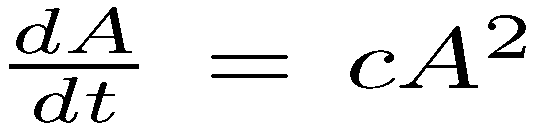 ; AI capital Kai(t); financial capital Kf(t) governed by a stochastic differential equation with AI-enhanced returns; and productive labor Lp(t), subject to hyperbolic displacement. We derive a dimensionless threshold parameter Λ(t) = ϕλA(t)/ξ, defined as the ratio of disruption to stabilization forces, together with the crossing time tΛ at which Λ reaches unity. Under baseline parameters the threshold is crossed at tΛ ≈ 10.45 years (2036), with a labor half-life of 3.87 years and 99% displacement at 14.82 years. Because A(t) → ∞ as t → ts, no finite friction can prevent the eventual transition; the policy problem is therefore to delay it and manage its distributional consequences. The elasticity of tΛ with respect to ξ is approximately +0.82, confirming ξ as the dominant single policy lever within the model. We emphasize that all quantitative dates are scenario outcomes conditional on rough parameter estimates, not predictions, and we report global sensitivity analysis and stochastic first-passage distributions to quantify this uncertainty.
- Ulam S. Tribute to John von Neumann. Bull Am Math Soc. 1958;64(3, Part 2):1-49. Accessed October 26, 2026. https://www.ams.org/journals/bull/1958-64-03/S0002-9904-1958-10189-5/
- Good IJ. Speculations concerning the first ultraintelligent machine. In: Advances in Computers. Vol 6. Elsevier; 1966:31-88. https://doi.org/10.1016/S0065-2458(08)60418-0
- Vinge V. The coming technological singularity: how to survive in the post-human era. Whole Earth Rev. 1993;81:88-95.
- Kurzweil R. The Singularity Is Near: When Humans Transcend Biology. The Viking Press; 2005.
- Hanson R. The Age of Em: Work, Love, and Life When Robots Rule the Earth. Oxford University Press; 2016. https://doi.org/10.1093/oso/9780198754626.001.0001
- Tegmark M. Life 3.0: Being Human in the Age of Artificial Intelligence. Alfred A. Knopf; 2017.
- Bostrom N. Superintelligence: Paths, Dangers, Strategies. Oxford University Press; 2014.
- Ord T. The Precipice: Existential Risk and the Future of Humanity. Bloomsbury Publishing; 2020.
- Acemoglu D, Restrepo P. The race between man and machine: implications of technology for growth, factor shares, and employment. Am Econ Rev. 2018;108(6):1488-1542. https://doi.org/10.1257/aer.20160696
- Autor DH. Why are there still so many jobs? The history and future of workplace automation. J Econ Perspect. 2015;29(3):3-30. https://doi.org/10.1257/jep.29.3.3
- Frey CB, Osborne MA. The future of employment: how susceptible are jobs to computerisation? Technol Forecast Soc Change. 2017;114:254-280. https://doi.org/10.1016/j.techfore.2016.08.019
- Arntz M, Gregory T, Zierahn U. The risk of automation for jobs in OECD countries: a comparative analysis. OECD Soc Employ Migr Work Pap. 2016;No. 189. https://doi.org/10.1787/5jlz9h56dvq7-en
- Acemoglu D, Restrepo P. Automation and new tasks: how technology displaces and reinstates labor. J Econ Perspect. 2019;33(2):3-30. https://doi.org/10.1257/jep.33.2.3
- Autor D, Salomons A. Is automation labor share-displacing? Productivity growth, employment, and the labor share. Brookings Pap Econ Act. 2018;2018(Spring):1-87. https://doi.org/10.1353/eca.2018.0000
- Brynjolfsson E, McAfee A. The Second Machine Age: Work, Progress, and Prosperity in a Time of Brilliant Technologies. W. W. Norton; 2014.
- Krippner GR. Capitalizing on Crisis: The Political Origins of the Rise of Finance. Harvard University Press; 2011.
- Piketty T. Capital in the Twenty-First Century. Harvard University Press; 2014. https://doi.org/10.4159/9780674369542
- Lazonick W. Profits without prosperity. Harv Bus Rev. 2014;92(9):46-55.
- Stockhammer E. Financialisation and the slowdown of accumulation. Camb J Econ. 2004;28(5):719-741. https://doi.org/10.1093/cje/beh032
- Sornette D. Critical Phenomena in Natural Sciences: Chaos, Fractals, Selforganization and Disorder: Concepts and Tools. 2nd ed. Springer; 2003.
- Taagepera R. A world population growth model: interaction with Earth's carrying capacity and technology in limited space. Technol Forecast Soc Change. 2014;82:34-41. https://doi.org/10.1016/j.techfore.2013.07.009
- Modis T. The singularity myth. Technol Forecast Soc Change. 2006;73(2):104-112.
- Strogatz SH. Nonlinear Dynamics and Chaos: With Applications to Physics, Biology, Chemistry, and Engineering. 2nd ed. CRC Press; 2018. https://doi.org/10.1201/9780429492563
- Scheffer M, Carpenter S, Foley JA, Folke C, Walker B. Catastrophic shifts in ecosystems. Nature. 2001;413(6856):591-596. https://doi.org/10.1038/35098000
- Ditlevsen PD, Johnsen SJ. Tipping points: early warning and wishful thinking. Geophys Res Lett. 2010;37(19):L19703. https://doi.org/10.1029/2010GL044486
- May RM. Simple mathematical models with very complicated dynamics. Nature. 1976;261(5560):459-467. https://doi.org/10.1038/261459a0
- Day RH, Shafer W. Keynesian chaos. J Macroecon. 1985;7(3):277-295. https://doi.org/10.1016/0164-0704(85)90072-2
- Yaremenko MI. The economic singularity: core mathematical model. ICCK J Appl Math. 2026;2(3):195-203. https://doi.org/10.62762/JAM.2026.366725
- Sevilla J, Heim L, Ho A, Besiroglu T, Hobbhahn M, Villalobos P. Compute trends across three eras of machine learning. In: 2022 International Joint Conference on Neural Networks (IJCNN). IEEE; 2022:1-8. https://doi.org/10.1109/IJCNN55064.2022.9891914
- Epoch AI. Announcing Epoch AI's dashboard of key trends and figures in machine learning. Epoch AI; April 12, 2023. Accessed October 26, 2026. https://epoch.ai/blog/announcing-epoch-ais-dashboard-of-key-trends-and-figures-in-machine-learning
- Cont R. Empirical properties of asset returns: stylized facts and statistical issues. Quant Finance. 2001;1(2):223-236. https://doi.org/10.1088/1469-7688/1/2/304
- Merton RC. Optimum consumption and portfolio rules in a continuous-time model. J Econ Theory. 1971;3(4):373-413. https://doi.org/10.1016/0022-0531(71)90038-X
- Black F, Scholes M. The pricing of options and corporate liabilities. J Polit Econ. 1973;81(3):637-654. https://doi.org/10.1086/260062
- Oberfield E, Raval D. Micro data and macro technology. Econometrica. 2021;89(2):703-732. https://doi.org/10.3982/ECTA12807
- Ljungqvist L, Sargent TJ. Recursive Macroeconomic Theory. 4th ed. MIT Press; 2018.