

Variational analysis and numerical methods for modified fractional optimal control problems with applications

This study presents a new modified fractional optimal control framework for dynamical systems governed by the left-sided Modified Atangana-Baleanu-Caputo (MABC) state equation  , 0 < α < 1, including theoretical foundations, optimality conditions, a numerical solution approach, and two practical applications. This formulation explicitly incorporates nonlocal memory and hereditary effects that are important in epidemiological and biomedical systems. We begin by developing the core analytical properties of the α-th-order fractional derivatives and integrals with a generalized Mittag-Leffler kernel, including a fractional integration-by-parts formula that is fundamental to the variational analysis. Using these tools, we formulate our fractional optimal control problem and rigorously prove the existence of an optimal control under standard convexity and regularity assumptions. The integration-by-parts identity then enables the derivation of the necessary optimality conditions, yielding the left-sided state system, the right-sided adjoint system, and a pointwise characterization of the optimal control, which naturally reduces to the classical Pontryagin Maximum Principle as α → 1−. To solve the resulting coupled left-right fractional optimality system, we combine a forward-backward sweep method with a high-order predictor-corrector numerical algorithm based on fractional Adams-Bashforth and Adams-Moulton steps, supported by a global error convergence rate of
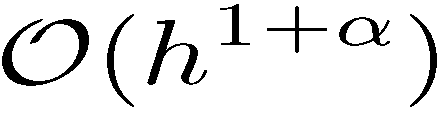 , where h is the time step size. The practical relevance and advantages of the extended framework are demonstrated through two detailed case studies: (i) an SEIR model of human Respiratory Syncytial Virus (RSV) transmission with seasonal forcing and treatment control, and (ii) a three-component cancer-immune interaction model with multiple therapeutic controls. Numerical experiments for fractional orders α ∈ {0.995, 0.997, 0.999} demonstrate that the new formulation more effectively captures memory effects compared with the classical Caputo approach, resulting in a greater reduction in infection peaks for the RSV system and a consistently lower tumor burden in the cancer model. These results show that the modified Mittag-Leffler-kernel-based fractional derivative is an effective tool for modeling and optimally controlling complex systems that exhibit hereditary dynamics.
- Podlubny I. Fractional Differential Equations: An Introduction to Fractional Derivatives, Fractional Differential Equations, to Methods of Their Solution and Some of Their Applications. San Diego: Academic Press; 1999.
- Khan MA, Zafar ZU, Ahmad I, Mat Isa N, Alzahrani E. Numerical modeling and simulation of stochastic fractional order model for COVID-19 infection in Mittag-Leffler kernel. Sci Rep. 2025;15:33031. https://doi.org/10.1038/s41598-025-18513-w
- Baleanu D, Jajarmi A, Defterli O, Wannan R, Sajjadi SS, Asad JH. Fractional investigation of time-dependent mass pendulum. J Low Freq Noise Vib Act Control. 2024;43(1):196-207. https://doi.org/10.1177/14613484231187439
- Sahebi Fard H, Dastranj E, Hejazi R, Jajarmi A. Analytical and numerical solutions for a special nonlinear equation. Int J Financ Eng. 2024;11(1):2350057. https://doi.org/10.1142/S2424786323500573
- Ebrahimzadeh A, Jajarmi A, Baleanu D. Enhancing water pollution management through a comprehensive fractional modeling framework and optimal control techniques. J Nonlinear Math Phys. 2024;31:48. https://doi.org/10.1007/s44198-024-00215-y
- Gnanaprakasam AJ, Ramalingam B, Mani G, Ege O, George R. A numerical scheme and application to the fractional integro-differential equation using fixed-point techniques. Fractal Fract. 2024;8(1):34. https://doi.org/10.3390/fractalfract8010034
- Mani G, Ganesh P, Chidhambaram K, Aljohani S, Mlaiki N. Existence and uniqueness solutions of multi-term delay Caputo fractional differential equations. Int J Anal Appl. 2024;22:171. https://doi.org/10.28924/2291-8639-22-2024-171
- Khan MA, DarAssi MH, Ahmad I, Seyam NM, Alzahrani E. The transmission dynamics of an infectious disease model in fractional derivative with vaccination under real data. Comput Biol Med. 2024;181:109069. https://doi.org/10.1016/j.compbiomed.2024.109069
- Mani G, Gnanaprakasam AJ, Ramalingam S, Omer ASA, Khan I. Mathematical model of the lumpy skin disease using Caputo fractional-order derivative via invariant point technique. Sci Rep. 2025;15(1):9112. https://doi.org/10.1038/s41598-025-92884-y
- Khan MA, DarAssi MH, Ahmad I, Alzahrani E, Mat Isa N. Existence, stability, and data-driven analysis of a fractional-order avian influenza model in poultry farms. Eng Rep. 2026;8(3):e70711. https://doi.org/10.1002/eng2.70711
- Jajarmi A, Akbarian M, Baleanu D. Analysis and backstepping control of a novel 4D fractional chaotic oscillator. Math Methods Appl Sci. 2025;48(16):14750-14762. https://doi.org/10.1002/mma.11211
- Amin MR, Akter R, Helal KM, Ullah MS. Analytical and numerical investigations, data-driven modeling via an analytical-machine learning approach, and chaotic analysis of a nonlinear fractional soliton neuron model. Sci Prog. 2026;109(3):00368504261487286. https://doi.org/10.1177/00368504261487286
- Mohiuddin M, Karim ME, Amin MR, et al. Detecting dynamical behaviors of solitary waves in the M-fractional Konopelchenko-Dubrovsky system with stability and sensitivity analysis. Phys Open. 2026;28:100454. https://doi.org/10.1016/j.physo.2026.100454
- Sahebi Fard H, Dastranj E, Jajarmi A. A novel fractional stochastic model equipped with ψ-Caputo fractional derivative in a financial market. Math Methods Appl Sci. 2025;48(9):9653-9661. https://doi.org/10.1002/mma.10832
- Baleanu D, Jajarmi A, Defterli O, AlShaikh Mohammad NF, Asad J. On generalized asymmetric harmonic oscillator with quadratic nonlinearity within fractional variational principles. J Low Freq Noise Vib Act Control. 2025;44(2):959-968. https://doi.org/10.1177/14613484241309058
- Ebrahimzadeh A, Jajarmi A. Fractional dynamics and cost-effective control strategies for measles transmission. Int J Optim Control Theor Appl. 2026;16(1):205-231. https://doi.org/10.36922/IJOCTA025390160
- Baleanu D, Jajarmi A, Sajjadi SS, Mozyrska D. A new fractional model and optimal control of a tumor-immune surveillance with non-singular derivative operator. Chaos. 2019;29(8):083127. https://doi.org/10.1063/1.5096159
- Hoseini T, Ordokhani Y, Rahimkhani P. Numerical solution of two-dimensional fractional optimal control problems using fractional Vieta-Fibonacci wavelets. Int J Syst Sci. 2026;57(1):259-283. https://doi.org/10.1080/00207721.2025.2490623
- Liu C, Yi X, Gong Z, Han M. The control parametrization technique for numerically solving fractal-fractional optimal control problems involving Caputo-Fabrizio derivatives. J Comput Appl Math. 2026;472:116814. https://doi.org/10.1016/j.cam.2025.116814
- Dehestani H, Ordokhani Y, Razzaghi M. Piecewise numerical approach for solving piecewise fractional optimal control and variational problems. Numer Algorithms. 2026;101:823-846. https://doi.org/10.1007/s11075-025-02024-w
- Lakestani M, Tuntaş R, Dehghan M. Constructing efficient bases from B-spline functions and solving fractional optimal control problems. J Appl Math Comput. 2026;72:120. https://doi.org/10.1007/s12190-025-02756-x
- Mamehrashi K. A novel numerical approach for 3D fractional optimal control problems using Legendre polynomials. Mediterr J Math. 2026;23:15. https://doi.org/10.1007/s00009-025-03011-0
- Butt AIK, Ahmad W, Rafiq M, Mukhtar AH, Al Mukahal FHH, Al Elaiw AS. Fractional bi-susceptible approach to COVID-19 dynamics with sensitivity and optimal control analysis. Fractal Fract. 2026;10(1):35. https://doi.org/10.3390/fractalfract10010035
- Choe H, Han S, Pak S, Kim G, Kim G, U D. On the optimal control existence for multi-term multi-order fractional differential equations with impulsive conditions. J Optim Theory Appl. 2026;208:4. https://doi.org/10.1007/s10957-025-02830-1
- Srivastava A, Nilam. Analysis of a fractional order SIR model for infectious diseases spread by household waste with optimal control strategies. Optim Control Appl Methods. 2026;47(1):116-133. https://doi.org/10.1002/oca.70046
- Ounamane S, Sadek L, Abouzaid B, Sadek EM. Truncated exponential method for Caputo-Fabrizio optimal control problems. Asian J Control. 2026;28(1):343-351. https://doi.org/10.1002/asjc.3716
- Al-Refai M, Baleanu D. On an extension of the operator with Mittag-Leffler kernel. Fractals. 2022;30(5):2240129. https://doi.org/10.1142/S0218348X22401296
- Al-Hdaibat B, DarAssi MH, Ahmad I, Khan MA, Algethamie R, Alzahrani E. Numerical investigation of an SIR fractional order delay epidemic model in the framework of Mittag-Leffler kernel. Nonlinear Dyn. 2025;113:17289-17309. https://doi.org/10.1007/s11071-025-11006-5
- Al-Refai M. Proper inverse operators of fractional derivatives with nonsingular kernels. Rend Circ Mat Palermo. 2022;71:525-535. https://doi.org/10.1007/s12215-021-00638-2
- Diethelm K, Ford NJ, Freed AD. A predictor-corrector approach for the numerical solution of fractional differential equations. Nonlinear Dyn. 2002;29:3-22. https://doi.org/10.1023/A:1016592219341
- Hackbusch W. A numerical method for solving parabolic equations with opposite orientations. Computing. 1978;20(3):229-240. https://doi.org/10.1007/BF02251947
- Zhang T, Liu J, Teng Z. Existence of positive periodic solutions of an SEIR model with periodic coefficients. Appl Math (Prague). 2012;57:601-616. https://doi.org/10.1007/s10492-012-0036-5
- Diethelm K. A fractional calculus based model for the simulation of an outbreak of dengue fever. Nonlinear Dyn. 2013;71:613-619. https://doi.org/10.1007/s11071-012-0475-2
- Rosa S, Torres DFM. Numerical fractional optimal control of respiratory syncytial virus infection in Octave/MATLAB. Mathematics. 2023;11(6):1511. https://doi.org/10.3390/math11061511
- Rosa S, Torres DFM. Parameter estimation, sensitivity analysis and optimal control of a periodic epidemic model with application to HRSV in Florida. Stat Optim Inf Comput. 2018;6(1):139-149. https://doi.org/10.19139/soic.v6i1.472
- Rosa S, Torres DFM. Optimal control of a fractional order epidemic model with application to human respiratory syncytial virus infection. Chaos Solitons Fractals. 2018;117:142-149. https://doi.org/10.1016/j.chaos.2018.10.021
- Weber A, Weber M, Milligan P. Modeling epidemics caused by respiratory syncytial virus (RSV). Math Biosci. 2001;172(2):95-113. https://doi.org/10.1016/S0025-5564(01)00066-9
- FLHealthCHARTS. 2015. https://www.flhealthcharts.gov/ChartsDashboards/rdPage.aspx?rdReport=Birth.TenYrsRpt&cid=25
- Itik M, Banks SP. Chaos in a three-dimensional cancer model. Int J Bifurc Chaos. 2010;20(1):71-79. https://doi.org/10.1142/S0218127410025417
- Naik PA, Zu J, Naik M. Stability analysis of a fractional-order cancer model with chaotic dynamics. Int J Biomath. 2021;14(6):2150046. https://doi.org/10.1142/S1793524521500467