
Oxidative stress in leukemogenesis: Mechanistic insights and chemotherapeutic approaches

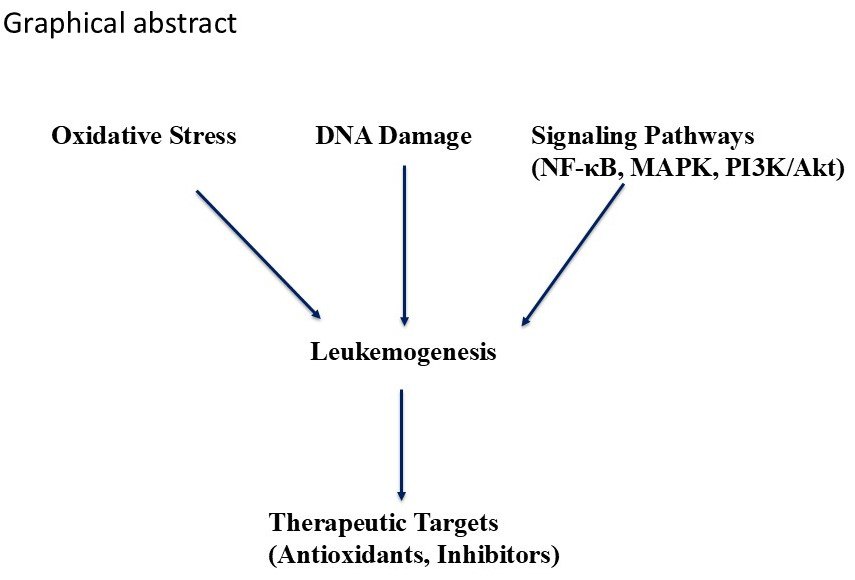
There is compelling evidence that reactive oxygen species (ROS) generation regulates a network of intracellular signals that may have negative consequences, such as cellular damage and aberrant physiological processes. Commonly, the term “oxidative stress” relates to a shift in redox status, for instance, an instability in the proportions of antioxidant enzymes. A thorough literature review was conducted across PubMed, Scopus, Web of Science, and Google Scholar, focusing on oxidative stress, leukemia biology, and ROS-targeted therapies. Data from studies published from 2006 to 2026 were prioritized, and important landmark studies were included for scientific context. Acute and chronic leukemogenesis, among other hematological cancers, have been linked to oxidative stress. High rates of hematopoietic blast cell proliferation and aberrant differentiation are characteristic of leukemogenesis in acute myeloid leukemia. Hyperleukocytosis, medullary illness, and aberrant thrombosis are all linked to this aberrant expansion and differentiation of blast cells. It is necessary to examine the molecular pathways underlying the onset, progression, and evolution of leukemogenesis driven by oxidative stress. Therefore, a thorough understanding of ROS production in leukemia can open new avenues for efficient therapeutic interventions, such as chemical, radiation, immunological, and targeted therapies targeting oncogenes and tumor suppressor genes. These diverse potential treatments aim to prevent leukemia recurrence and progression by targeting signal transduction pathways. This article discusses current research on the putative role in leukemia etiology, prospective treatments, and clinical trials that specifically target redox status in cancer.
- Siegel RL, Kratzer TB, Wagle NS, Sung H, Jemal A. Cancer statistics, 2026. CA Cancer J Clin. 2026;76(1):e70043. doi: 10.3322/caac.70043
- de Beauchamp L, Himonas E, Helgason GV. Mitochondrial metabolism as a potential therapeutic target in myeloid leukaemia. Leukemia. 2022;36:1-12. doi: 10.1038/s41375-021-01416-w
- Akter S, Madhuvilakku R, Kar AK, et al. Reactive oxygen species (ROS) in cancer: from mechanism to therapeutic implications. Sig Transduct Target Ther. 2026;11(1):111. doi: 10.1038/s41392-026-02583-x
- Perillo B, Di Donato M, Pezone A, et al. ROS in cancer therapy: the bright side of the moon. Exp Mol Med. 2020;52(2):192-203. doi: 10.1038/s12276-020-0384-2
- Santibáñez-Andrade M, Quezada-Maldonado EM, Rivera- Pineda A, Chirino YI, García-Cuellar CM, Sánchez-Pérez Y. The Road to Malignant Cell Transformation after Particulate Matter Exposure: From Oxidative Stress to Genotoxicity. Int J Mol Sci. 2023;24(2):1782. doi: 10.3390/ijms24021782
- Takahashi K, Wang F, Kantarjian H, et al. Preleukaemic clonal haemopoiesis and risk of therapy-related myeloid neoplasms: a case-control study. The Lancet Oncology. 2016;18(1):100-111. doi: 10.1016/S1470-2045(16)30626-X
- Czubak-Prowizor K, Trelinski J, Stelmach P, Stelmach P, Madon A, Zbikowska HM. Increased Oxidative Stress in Acute Myeloid Leukemia Patients after Red Blood Cell Transfusion, but Not Platelet Transfusion, Results Mainly from the Oxidative/Nitrative Protein Damage: An Exploratory Study. J Clin Med. 2021;10(7):1349. doi: 10.3390/jcm10071349
- Khodakarami A, Adibfar S, Karpisheh V, et al. The molecular biology and therapeutic potential of Nrf2 in leukemia. Cancer Cell Int. 2022;22(1):241. doi: 10.1186/s12935-022-02660-5
- Abohassan M, Khaleel AQ, Pallathadka H, et al. Circular RNA as a Biomarker for Diagnosis, Prognosis and Therapeutic Target in Acute and Chronic Lymphoid Leukemia. Cell Biochem Biophys. 2024;82(3):1979-1991. doi: 10.1007/s12013-024-01404-8
- Dong C, Zhang N-J, Zhang L-J. Oxidative stress in leukemia and antioxidant treatment. Chin Med J. 2021;134(16):1897- 1907. doi: 10.1097/CM9.0000000000001628
- Wigner P, Grębowski R, Bijak M, Saluk-Bijak J, Szemraj J. The Interplay between Oxidative Stress, Inflammation and Angiogenesis in Bladder Cancer Development. Int J Mol Sci. 2021;22(9):4483. doi: 10.3390/ijms22094483
- Visconti R, Grieco D. New insights on oxidative stress in cancer. Curr Opin Drug Discov Devel. 2009;12(2):240-5.
- Popp HD, Bohlander SK. Genetic instability in inherited and sporadic leukemias. Genes Chromosomes Cancer. 2010;49(12):1071-1081. doi: 10.1002/gcc.20823
- Khwaja A, Bjorkholm M, Gale RE, et al. Acute myeloid leukaemia. Nat Rev Dis Primers. 2016;2(1):16010. doi: 10.1038/nrdp.2016.10
- Wiese W, Barczuk J, Racinska O, et al. PI3K/Akt/mTOR Signaling Pathway in Blood Malignancies—New Therapeutic Possibilities. Cancers. 2023;15(21):5297. doi: 10.3390/cancers15215297
- Kosik P, Durdik M, Skorvaga M, et al. Induction of AML Preleukemic Fusion Genes in HSPCs and DNA Damage Response in Preleukemic Fusion Gene Positive Samples. Antioxidants (Basel). 2021;10(3):481. doi: 10.3390/antiox10030481
- Somsedikova A, Markova E, Kolenova A, Puskacova J, Kubes M, Belyaev I. Constitutive 53BP1/γH2AX foci are increased in cells of ALL patients dependent on BCR-ABL and TEL-AML1 preleukemic gene fusions. Neoplasma. 2014;62(05):617-625. doi: 10.4149/neo_2014_076
- Sallmyr A, Fan J, Datta K, et al. Internal tandem duplication of FLT3 (FLT3/ITD) induces increased ROS production, DNA damage, and misrepair: implications for poor prognosis in AML. Blood. 2008;111(6):3173-3182. doi: 10.1182/blood-2007-05-092510
- Rani V, Deep G, Singh RK, Palle K, Yadav UCS. Oxidative stress and metabolic disorders: Pathogenesis and therapeutic strategies. Life Sci. 2016;148:183-193. doi: 10.1016/j.lfs.2016.02.002
- Piperigkou Z, Mangani S, Kremmydas S, Koletsis NE, Karamanos NK. A guide to the types, structures, and multifaceted functions of matrix metalloproteinases in cancer. FEBS J. 2025. doi: 10.1111/febs.70296
- Perwez Hussain S, Harris CC. Inflammation and cancer: An ancient link with novel potentials. Int J Cancer. 2007;121(11):2373-2380. doi: 10.1002/ijc.23173
- Federico A, Morgillo F, Tuccillo C, Ciardiello F, Loguercio C. Chronic inflammation and oxidative stress in human carcinogenesis. Int J Cancer. 2007;121(11):2381-2386. doi: 10.1002/ijc.23192
- Qin X, Wang X, Yang C, et al. A potent dual inhibitor targeting COX-2 and HDAC of acute myeloid leukemia cells. Mol Divers. 2025;29(3):2433-2444. doi: 10.1007/s11030-024-11000-w
- Iachininoto M, Nuzzolo E, Bonanno G, et al. Cyclooxygenase-2 (COX-2) Inhibition Constrains Indoleamine 2,3-Dioxygenase 1 (IDO1) Activity in Acute Myeloid Leukaemia Cells. Molecules. 2013;18(9):10132- 10145. doi: 10.3390/molecules180910132
- Zhang J, Lei W, Chen X, Wang S, Qian W. Oxidative stress response induced by chemotherapy in leukemia treatment (Review). Mol Clin Oncol. 2018. doi: 10.3892/mco.2018.1549
- Bahar ME, Kim HJ, Kim DR. Targeting the RAS/RAF/ MAPK pathway for cancer therapy: from mechanism to clinical studies. Sig Transduct Target Ther. 2023;8(1):455. doi: 10.1038/s41392-023-01705-z
- Kornblau SM, Womble M, Qiu YH, et al. Simultaneous activation of multiple signal transduction pathways confers poor prognosis in acute myelogenous leukemia. Blood. 2006;108(7):2358-2365. doi: 10.1182/blood-2006-02-003475
- Steelman LS, Abrams SL, Whelan J, et al. Contributions of the Raf/MEK/ERK, PI3K/PTEN/Akt/mTOR and Jak/STAT pathways to leukemia. Leukemia. 2008;22(4):686-707. doi: 10.1038/leu.2008.26
- Derwich A, Sykutera M, Bromińska B, Rubiś B, Ruchała M, Sawicka-Gutaj N. The Role of Activation of PI3K/AKT/ mTOR and RAF/MEK/ERK Pathways in Aggressive Pituitary Adenomas—New Potential Therapeutic Approach—A Systematic Review. Int J Mol Sci. 2023;24(13):10952. doi: 10.3390/ijms241310952
- Samad MA, Ahmad I, Hasan A, et al. STAT3 Signaling Pathway in Health and Disease. MedComm. 2025;6(4):e70152. doi: 10.1002/mco2.70152
- Sarapultsev A, Gusev E, Komelkova M, Utepova I, Luo S, Hu D. JAK-STAT signaling in inflammation and stress-related diseases: implications for therapeutic interventions. Mol Biomed. 2023;4(1):40. doi: 10.1186/s43556-023-00151-1
- Voisset E, Brenet F, Lopez S, de Sepulveda P. SRC-Family Kinases in Acute Myeloid Leukaemia and Mastocytosis. Cancers. 2020;12(7):1996. doi: 10.3390/cancers12071996
- Higuchi M, Ishiyama K, Maruoka M, Kanamori R, Takaori- Kondo A, Watanabe N. Paradoxical activation of c-Src as a drug-resistant mechanism. Cell Rep. 2021;34(12):108876. doi: 10.1016/j.celrep.2021.108876
- Zhang L, Guo W, Lu N, Tian Y, Yang J, Wang L. Advances in research on unphosphorylated STAT3: A review. Medicine. 2025;104(30):e43476. doi: 10.1097/MD.0000000000043476
- Hallal R, Nehme R, Brachet‐Botineau M, et al. Acriflavine targets oncogenic STAT5 signaling in myeloid leukemia cells. J Cell Mol Med. 2020;24(17):10052-10062. doi: 10.1111/jcmm.15612
- Trinh VH, Nguyen Huu T, Sah DK, et al. Redox Regulation of PTEN by Reactive Oxygen Species: Its Role in Physiological Processes. Antioxidants. 2024;13(2):199. doi: 10.3390/antiox13020199
- Buitenhuis M, Verhagen LP, van Deutekom HWM, et al. Protein kinase B (c-akt) regulates hematopoietic lineage choice decisions during myelopoiesis. Blood. 2008;111(1):112-121. doi: 10.1182/blood-2006-07-037572
- Deng C, Lipstein MR, Scotto L, et al. Silencing c-Myc translation as a therapeutic strategy through targeting PI3Kδ and CK1ε in hematological malignancies. Blood. 2017;129(1):88-99. doi: 10.1182/blood-2016-08-731240
- Jasek-Gajda E, Jurkowska H, Jasińska M, Lis GJ. Targeting the MAPK/ERK and PI3K/AKT Signaling Pathways Affects NRF2, Trx and GSH Antioxidant Systems in Leukemia Cells. Antioxidants. 2020;9(7):633. doi: 10.3390/antiox9070633
- Zhan X, Li J, Zhou T. Targeting Nrf2-Mediated Oxidative Stress Response Signaling Pathways as New Therapeutic Strategy for Pituitary Adenomas. Front Pharmacol. 2021;12. doi: 10.3389/fphar.2021.565748
- Sajadimajd S, Khazaei M. Oxidative Stress and Cancer: The Role of Nrf2. Curr Cancer Drug Targets. 2018;18(6):538-557. doi: 10.2174/1568009617666171002144228
- Farge T, Saland E, de Toni F, et al. Chemotherapy-Resistant Human Acute Myeloid Leukemia Cells Are Not Enriched for Leukemic Stem Cells but Require Oxidative Metabolism. Cancer Discov. 2017;7(7):716-735. doi: 10.1158/2159-8290.CD-16-0441
- Harifi-Mood MS, Daroudi M, Darroudi M, Naseri K, Samarghandian S, Farkhondeh T. Targeting the NF-E2- related factor 2 pathway for overcoming leukemia. Int J Biol Macromol. 2023;253(Pt 8):127594. doi: 10.1016/j.ijbiomac.2023.127594
- Keating GM. Dasatinib: A Review in Chronic Myeloid Leukaemia and Ph+ Acute Lymphoblastic Leukaemia. Drugs. 2017;77(1):85-96. doi: 10.1007/s40265-016-0677-x
- Ishaqi MK, Afzal S, Dupuis A, Doyle J, Gassas A. Early lymphocyte recovery post-allogeneic hematopoietic stem cell transplantation is associated with significant graft-versus-leukemia effect without increase in graft-versus-host disease in pediatric acute lymphoblastic leukemia. Bone Marrow Transplant. 2008;41(3):245-252. doi: 10.1038/sj.bmt.1705891
- Minculescu L, Reekie J, Petersen SL, et al. Donor Lymphocyte Infusion Is a Feasible Way to Improve Survival in Patients with Acute Myeloid Leukemia and Myelodysplastic Syndromes Who Relapse after Allogeneic Stem Cell Transplantation. Acta Haematol. 2024;147(3):325-332. doi: 10.1159/000534315
- Menne T, Slade D, Savage J, et al. Selumetinib in combination with dexamethasone for the treatment of relapsed/ refractory RAS-pathway mutated paediatric and adult acute lymphoblastic leukaemia (SeluDex): study protocol for an international, parallel-group, dose-finding with expansion phase I/II trial. BMJ Open. 2022;12(3):e059872. doi: 10.1136/bmjopen-2021-059872
- Gong L, Giacomini MM, Giacomini C, Maitland ML, Altman RB, Klein TE. PharmGKB summary: sorafenib pathways. Pharmacogenet Genomics. 2017;27(6):240-246. doi: 10.1097/FPC.0000000000000279
- Lohmeyer J, Nerreter T, Dotterweich J, Einsele H, Seggewiss-Bernhardt R. Sorafenib paradoxically activates the RAS/RAF/ERK pathway in polyclonal human NK cells during expansion and thereby enhances effector functions in a dose- and time-dependent manner. Clin Exp Immunol. 2018;193(1):64-72. doi: 10.1111/cei.13128
- Tambe M, Karjalainen E, Vähä-Koskela M, et al. Pan-RAF inhibition induces apoptosis in acute myeloid leukemia cells and synergizes with BCL2 inhibition. Leukemia. 2020;34(12):3186-3196. doi: 10.1038/s41375-020-0972-0
- Karoulia Z, Gavathiotis E, Poulikakos PI. New perspectives for targeting RAF kinase in human cancer. Nat Rev Cancer. 2017;17(11):676-691. doi: 10.1038/nrc.2017.79
- Levitzki A, Klein S. My journey from tyrosine phosphorylation inhibitors to targeted immune therapy as strategies to combat cancer. Proc Natl Acad Sci USA. 2019;116(24):11579-11586. doi: 10.1073/pnas.1816012116
- Tomita M, Kawakami H, Uchihara J, et al. Inhibition of constitutively active Jak-Stat pathway suppresses cell growth of human T-cell leukemia virus type 1-infected T-cell lines and primary adult T-cell leukemia cells. Retrovirology. 2006;3(1):22. doi: 10.1186/1742-4690-3-22
- Zhang M, Mathews Griner LA, Ju W, et al. Selective targeting of JAK/STAT signaling is potentiated by Bcl-xL blockade in IL-2–dependent adult T-cell leukemia. Proc Natl Acad Sci USA. 2015;112(40):12480-12485. doi: 10.1073/pnas.1516208112
- Pardanani A. JAK2 inhibitor therapy in myeloproliferative disorders: rationale, preclinical studies and ongoing clinical trials. Leukemia. 2008;22(1):23-30. doi: 10.1038/sj.leu.2404948
- Cohen P, Cross D, Jänne PA. Kinase drug discovery 20 years after imatinib: progress and future directions. Nat Rev Drug Discov. 2021;20(7):551-569. doi: 10.1038/s41573-021-00195-4
- Lee S, Yang W, Kim DK, et al. Inhibition of MEK-ERK pathway enhances oncolytic vaccinia virus replication in doxorubicin-resistant ovarian cancer. Mol Ther Oncolytics. 2022;25:211-224. doi: 10.1016/j.omto.2022.04.006
- Richly H, Henning BF, Kupsch P, et al. Results of a Phase I trial of sorafenib (BAY 43-9006) in combination with doxorubicin in patients with refractory solid tumors. Ann Oncol. 2006;17(5):866-73. doi: 10.1093/annonc/mdl017
- Gandelman M, Dansithong W, Kales SC, et al. The AKT modulator A-443654 reduces α-synuclein expression and normalizes ER stress and autophagy. J Biol Chem. 2021;297(4):101191. doi: 10.1016/j.jbc.2021.101191
- Fasouli ES, Katsantoni E. Age-associated myeloid malignancies - the role of STAT3 and STAT5 in myelodysplastic syndrome and acute myeloid leukemia. FEBS Lett. 2024;598(22):2809-2828. doi: 10.1002/1873-3468.14985
- Shi Y, Zhang Z, Qu X, et al. Roles of STAT3 in leukemia (Review). Int J Oncol. 2018. doi: 10.3892/ijo.2018.4386
- Al-Amrani S, Al-Zadjali F, Jeelani Y, et al. Expression of JAK/STAT Signaling Proteins at Diagnosis and Remission in Patients with Acute Myeloid Leukemia. Oman Med J. 2024;39(3):e633-e633. doi: 10.5001/omj.2024.80
- Schwartz DM, Kanno Y, Villarino A, Ward M, Gadina M, O’Shea JJ. JAK inhibition as a therapeutic strategy for immune and inflammatory diseases. Nat Rev Drug Discov. 2017;16(12):843-862. doi: 10.1038/nrd.2017.201
- Li Z, Xu M, Xing S, et al. Erlotinib effectively inhibits JAK2V617F activity and polycythemia vera cell growth. J Biol Chem. 2007;282(6):3428-32. doi: 10.1074/jbc.C600277200