

Prostate and breast cancers in Africa: Prevalence, risk factors, and molecular overview against the background of the world population

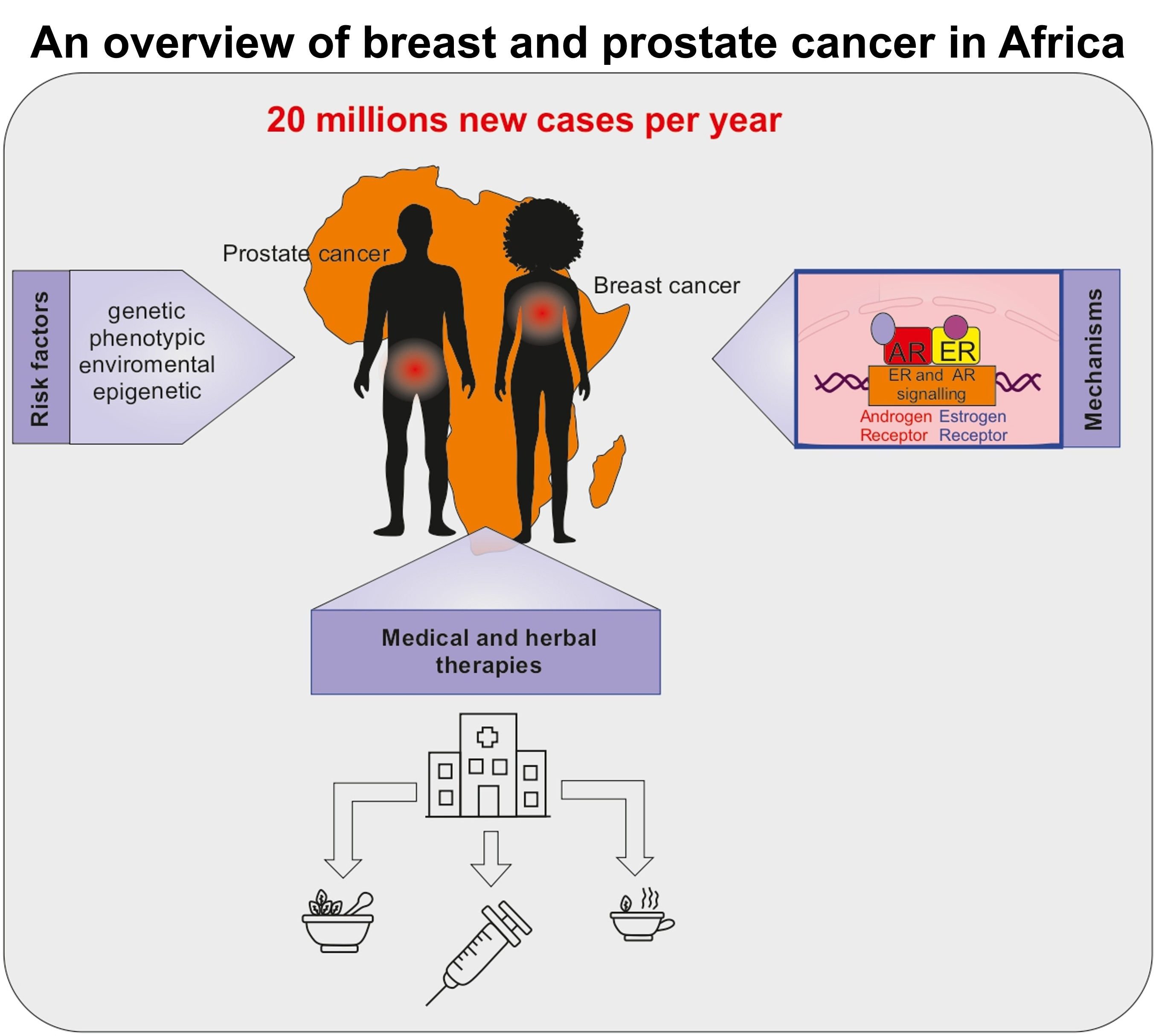
Currently, cancer represents an escalating public health crisis in Africa, ranking as the continent’s fifth leading cause of mortality. According to recent GLOBOCAN 2022 estimates, approximately 1.15 million new cancer cases and 754,500 deaths occurred across Africa in that year alone. On a global scale, there were an estimated 20 million new cases and 9.7 million deaths in 2022, with a disproportionate burden falling on underserved regions. Low- and middle-income countries are projected to account for nearly 75% of global cancer deaths, highlighting a stark geographical inequity in access to timely diagnosis and comprehensive care. This review provides an inclusive presentation of the two most prevalent reproductive malignancies in Africa: prostate cancer in men and breast cancer in women. Set against the backdrop of the continent’s unique socioeconomic landscape, the article explores the complex interplay of prevalence and risk factors, ranging from genetic and phenotypic predispositions to environmental and epigenetic influences. Recognizing the diverse healthcare landscape in Africa, this work addresses the accessibility of conventional medicine while evaluating the supervised integration of potential herbal agents as complementary therapies. This review identifies barriers to effective disease management and discusses the current and future cancer burden across the African continent for non-specialist readers and those seeking to understand oncological care in Africa. Ultimately, the findings underscore an urgent need for targeted policy-making and strategic investment in prevention. Prioritizing timely screening and strengthening treatment infrastructure are essential steps for authorities to mitigate the surging cancer burden and maintain the health of African populations.
- Omoto Y, Iwase H. Clinical significance of estrogen receptor β in breast and prostate cancer from biological aspects. Cancer Sci. 2015;106(4):337-343. doi: 10.1111/cas.12613
- Sung H, Ferlay J, Siegel RL, et al. Global Cancer Statistics 2020: GLOBOCAN Estimates of Incidence and Mortality Worldwide for 36 Cancers in 185 Countries. CA Cancer J Clin. 2021;71(3):209-249. doi: 10.3322/caac.21660
- Ferlay J, Colombet M, Soerjomataram I, et al. Cancer statistics for the year 2020: An overview. Int J Cancer. 2021;149:778-789. doi: 10.1002/ijc.33588
- Torre LA, Islami F, Siegel RL, et al. Global Cancer in Women: Burden and Trends. Cancer Epidemiol Biomarkers Prev. 2017;26(4):444-457. doi: 10.1158/1055-9965.EPI-16-0858
- Culp MB, Soerjomataram I, Efstathiou JA, Bray F, Jemal A. Recent Global Patterns in Prostate Cancer Incidence and Mortality Rates. Eur Urol. 2020;77(1):38-52. doi: 10.1016/j.eururo.2019.08.005
- Gore M, Puranik A, Indurkar A, et al. Cancer of Reproductive System: Receptors and Targeting Strategies. In: Targeted Intracellular Drug Delivery by Receptor Mediated Endocytosis. Vol. 39. Springer; 2019:109-140. doi: 10.1007/978-3-030-29168-6_4
- Del Pup L, Mantovani A, Cavaliere C, et al. Carcinogenetic mechanisms of endocrine disruptors in female cancers (Review). Oncol Rep. 2016;36(2):603-612. doi: 10.3892/or.2016.4886
- Anorlu RI, Amaeshi LC, Okunade KS, et al. Cancer: a looming public health crisis in Africa-a call to accelerate equitable access to medicines. Oncologist. 2026;31(5):oyag089. doi: 10.1093/oncolo/oyag089
- Mahase E. Cancer overtakes CVD to become leading cause of death in high income countries. BMJ. 2019;366:l5368. doi: 10.1136/bmj.l5368
- Bray F, Laversanne M, Weiderpass E, Soerjomataram I. The ever-increasing importance of cancer as a leading cause of premature death worldwide. Cancer. 2021;127(16):3029-3030. doi: 10.1002/cncr.33587
- Bray F, Laversanne M, Sung H, et al. Global Cancer Statistics 2022: GLOBOCAN estimates of incidence and mortality worldwide for 36 cancers in 185 countries. CA Cancer J Clin. 2024;74(3):229-263. doi: 10.3322/caac.21834
- Cook MB, McGlynn KA, Devesa SS, Freedman ND, Anderson WF. Sex disparities in cancer mortality and survival. Cancer Epidemiol Biomarkers Prev. 2011;20(8):1629-1637. doi: 10.1158/1055-9965.EPI-11-0246
- He Y, Su Y, Zeng J, et al. Cancer-specific survival after diagnosis in men versus women: A pan-cancer analysis. MedComm (2020). 2022;3(3):e145. doi: 10.1002/mco2.145
- Freihat O, Sipos D, Kovacs A. Global burden and projections of breast cancer incidence and mortality to 2050: a comprehensive analysis of GLOBOCAN data. Front Public Health. 2025;13:1622954. doi: 10.3389/fpubh.2025.1622954
- Torre LA, Bray F, Siegel RL, Ferlay J, Lortet-Tieulent J, Jemal A. Global cancer statistics, 2012. CA Cancer J Clin. 2015;65(2):87-108. doi: 10.3322/caac.21262
- Althuis MD, Dozier JM, Anderson WF, Devesa SS, Brinton LA. Global trends in breast cancer incidence and mortality 1973–1997. Int J Epidemiol. 2005;34(2):405-412. doi: 10.1093/ije/dyh414
- Chlebowski RT, Manson JE, Anderson GL, et al. Estrogen plus progestin and breast cancer incidence and mortality in the Women’s Health Initiative Observational Study. J Natl Cancer Inst. 2013;105(8):526-535. doi: 10.1093/jnci/djt043
- Colditz GA, Sellers TA, Trapido E. Epidemiology -identifying the causes and preventability of cancer? Nat Rev Cancer. 2006;6(1):75-83. doi: 10.1038/nrc1784
- Michou V, Zervoudis S, Eskitzis P, et al. Exercise Interventions in Breast Cancer: Molecular Mechanisms, Physical Benefits, and Practical Recommendations. Medicina. 2025;61(7):1167. doi: 10.3390/medicina61071167
- Pace LE, Keating NL. A systematic assessment of benefits and risks to guide breast cancer screening decisions. JAMA. 2014;311(13):1327-1335. doi: 10.1001/jama.2014.1398
- Anderson BO, Cazap E, El Saghir NS, et al. Optimisation of breast cancer management in low-resource and middle-resource countries: executive summary of the Breast Health Global Initiative consensus, 2010. Lancet Oncol. 2011;12(4):387-398. doi: 10.1016/S1470-2045(11)70031-6
- Bray F, Jemal A, Grey N, Ferlay J, Forman D. Global cancer transitions according to the Human Development Index (2008–2030): a population-based study. Lancet Oncol. 2012;13(8):790-801. doi: 10.1016/S1470-2045(12)70211-5
- Murray CJ, Vos T, Lozano R, et al. Disability-adjusted life years (DALYs) for 291 diseases and injuries in 21 regions, 1990–2010: a systematic analysis for the Global Burden of Disease Study 2010. Lancet. 2012;380(9859):2197-2223. doi: 10.1016/S0140-6736(12)61689-4
- Lozano R, Naghavi M, Foreman K, et al. Global and regional mortality from 235 causes of death for 20 age groups in 1990 and 2010: A systematic analysis for the Global Burden of Disease Study 2010. Lancet. 2012;380(9859):2095-2128. doi: 10.1016/S0140-6736(12)61728-0
- Center MM, Jemal A, Lortet-Tieulent J, et al. International variation in prostate cancer incidence and mortality rates. Eur Urol. 2012;61(6):1079-1092. doi: 10.1016/j.eururo.2012.02.054
- Rebbeck TR, Jaffe JM, Walker AH, Wein AJ, Malkowicz SB. Modification of clinical presentation of prostate tumors by a novel genetic variant in CYP3A4. J Natl Cancer Inst. 1998;90(16):1225-1229. doi: 10.1093/jnci/90.16.1225
- Zhang J, Dhakal IB, Zhao Z, Li L. Trends in mortality from cancers of the breast, colon, prostate, esophagus, and stomach in East Asia: role of nutrition transition. Eur J Cancer Prev. 2012;21(5):480-489. doi: 10.1097/CEJ.0b013e328351c732
- Draisma G, Etzioni R, Tsodikov A, et al. Lead time and overdiagnosis in prostate-specific antigen screening: importance of methods and context. J Natl Cancer Inst. 2009;101(6):374-383. doi: 10.1093/jnci/djp001
- Farmer P, Frenk J, Knaul FM, et al. Expansion of cancer care and control in countries of low and middle income: a call to action. Lancet. 2010;376(9747):1186-1193. doi: 10.1016/s0140-6736(10)61152-x
- Sasco AJ. Cancer and globalization. Biomed Pharmacother. 2008;62(6):110-121. doi: 10.1016/j.biopha.2007.10.015
- Franceschi S, Wild CP. Meeting the global demands of epidemiologic transition -The indispensable role of cancer prevention. Mol Oncol. 2013;7(1):1-13. doi: 10.1016/j.molonc.2012.10.010
- Boyle P, Levin B, eds. World Cancer Report 2008. Accessed March, 31 2009. https://publications.iarc.who.int/Non-Series-Publications/World-Cancer-Reports/World-Cancer-Report-2008.
- Ofori B, Fosu K, Aikins A, et al. The intersection of culture and prostate cancer care in Sub-Saharan Africa: a systematic review. Afr J Urol. 2025;31:41. doi: 10.1186/s12301-025-00512-y
- World Health Organization. Cancer: Fact Sheets. Geneva: WHO; 2026. Accessed July 3, 2026. https://www.who.int/ news-room/fact-sheets/detail/cancer.
- Baade PD, Youlden DR, Krnjacki LJ. International epidemiology of prostate cancer: Geographical distribution and secular trends. Mol Nutr Food Res. 2009;53(2):171-184. doi: 10.1002/mnfr.200700511
- Adebamowo CA, Akarolo-Anthony S. Cancer in Africa: opportunities for collaborative research and training. Afr J Med Med Sci. 2009;38(Suppl 2):5-13.
- Bray F, Ferlay J, Soerjomataram I, Siegel RL, Torre LA, Jemal A. Global cancer statistics 2018: GLOBOCAN estimates of incidence and mortality worldwide for 36 cancers in 185 countries. CA Cancer J Clin. 2018;68(6):394-424. doi: 10.3322/caac.21492
- Morhason-Bello IO, Odedina F, Rebbeck TR, et al. Challenges and opportunities in cancer control in Africa: a perspective from the African Organisation for Research and Training in Cancer. Lancet Oncol. 2013;14:e142-e151. doi: 10.1016/S1470-2045(12)70482-5
- Parenté A, Gnangnon FHR, Kinsou D, et al. Prognostic factors of breast cancer and survival in Sub-Saharan Africa: A systematic review and meta-analysis. Bull Cancer. 2025;112(9):1024-1034. doi: 10.1016/j.bulcan.2025.05.009
- Ly M, Antoine M, Dembélé AK, et al. High incidence of triple-negative tumors in sub-saharan Africa: a prospective study of breast cancer characteristics and risk factors in Malian women seen in a Bamako university hospital. Oncology. 2012;83(5):257-263. doi: 10.1159/000341541
- Gakwaya A, Kigula-Mugambe JB, Kavuma A, et al. Cancer of the breast: 5-year survival in a tertiary hospital in Uganda. Br J Cancer. 2008;99(1):63-67. doi: 10.1038/sj.bjc.6604435
- Vanderpuye V, Grover S, Hammad N, et al. An update on the management of breast cancer in Africa. Infect Agent Cancer. 2017;12:13. doi: 10.1186/s13027-017-0124-y
- Kizub DA, Naik S, Abogan AA, et al. Access to and affordability of World Health Organization essential Medicines for Cancer in Sub-Saharan Africa: examples from Kenya, Rwanda, and Uganda. Oncologist. 2022;27(11):958-970. doi: 10.1093/oncolo/oyac143
- Sharma R, Aashima, Nanda M, et al. Mapping Cancer in Africa: A Comprehensive and Comparable Characterization of 34 Cancer Types Using Estimates from GLOBOCAN 2020. Front Public Health. 2022;10:839835. doi: 10.3389/fpubh.2022.839835
- Marais B, Klopper G, John J. Prostate cancer perspective: Africa versus the world. S Afr Med J. 2024;114(4):e1950. doi: 10.7196/SAMJ.2024.v114i4.1950
- Awuah WA, Ng JC, Mehta A, et al. The African cancer burden: what is the potential role of modern oncology innovation in reducing the continent’s rapidly rising mortality? Postgrad Med J. 2023;99(1175):941-945. doi: 10.1093/postmj/qgad043
- Cortesi L, Rugo HS, Jackisch C. An Overview of PARP Inhibitors for the Treatment of Breast Cancer. Target Oncol. 2021;16(3):255-282. doi: 10.1007/s11523-021-00796-4
- McCormack VA, dos Santos Silva I. Breast density and parenchymal patterns as markers of breast cancer risk: a meta-analysis. Cancer Epidemiol Biomarkers Prev. 2006;15(6):1159-1169. doi: 10.1158/1055-9965.EPI-06-0034
- Fackenthal JD, Zhang J, Zhang B, et al. High prevalence of BRCA1 and BRCA2 mutations in unselected Nigerian breast cancer patients. Int J Cancer. 2012;131(5):1114-1123. doi: 10.1002/ijc.27326
- Pitt JJ, Riester M, Zheng Y, et al. Characterization of Nigerian breast cancer reveals prevalent homologous recombination deficiency and aggressive molecular features. Nat Commun. 2018;9(1):4181. doi: 10.1038/s41467-018-06616-0
- Pegoraro RJ, Moodley M, Rom L, Chetty R, Moodley J. P53 codon 72 polymorphism and BRCA 1 and 2 mutations in ovarian epithelial malignancies in black South Africans. Int J Gynecol Cancer. 2003;13(4):444-449. doi: 10.1046/j.1525-1438.2003.13333.x
- Mahfoudh W, Bettaieb I, Ghedira R, et al. Contribution of BRCA1 5382insC mutation in triple negative breast cancer in Tunisia. J Transl Med. 2019;17(1):123. doi: 10.1186/s12967-019-1873-8
- Reeves MD, Yawitch TM, van der Merwe NC, van den Berg HJ, Dreyer G, van Rensburg EJ. BRCA1 mutations in South African breast and/or ovarian cancer families: evidence of a novel founder mutation in Afrikaner families. Int J Cancer. 2004;110(5):677-682. doi: 10.1002/ijc.20186
- van der Merwe NC, Hamel N, Schneider SR, Apffelstaedt JP, Wijnen JT, Foulkes WD. A founder BRCA2 mutation in non-Afrikaner breast cancer patients of the Western Cape of South Africa. Clin Genet. 2012;81(2):179-184. doi: 10.1111/j.1399-0004.2010.01617.x
- Rotimi SO, Rotimi OA, Salhia B. A Review of Cancer Genetics and Genomics Studies in Africa. Front Oncol. 2021;10:606400. doi: 10.3389/fonc.2020.606400
- Novillo A, Romero-Lorca A, Gaibar M, et al. Genetic diversity of CYP3A4 and CYP3A5 polymorphisms in North African populations from Morocco and Tunisia. Int J Biol Markers. 2012;27(1):e148-e151. doi: 10.5301/jbm.5000118
- Fernandez P, Zeigler-Johnson CM, Spangler E, et al. Androgen metabolism gene polymorphisms, associations with prostate cancer risk and pathological characteristics: a comparative analysis between South African and Senegalese men. Prostate Cancer. 2012;2012:798634. doi: 10.1155/2012/798634
- Souiden Y, Mahdouani M, Chaieb K, Bakhrouf A, Mahdouani K. Lack of association of CYP1A1 polymorphism with prostate cancer susceptibility of Tunisian men. Genet Test Mol Biomarkers. 2012;16(6):661-666. doi: 10.1089/gtmb.2011.0212
- Souiden Y, Mahdouani M, Chaieb K, Elkamel R, Mahdouani K. CYP17 gene polymorphism and prostate cancer susceptibility in a Tunisian population. Cancer Epidemiol. 2011;35(7):480-484. doi: 10.1016/j.canep.2010.11.008
- Fernandez P, De Beer PM, Van der Merwe L, Heyns CF. Genetic variations in androgen metabolism genes and associations with prostate cancer in South African men. S Afr Med J. 2010;100(11):741-745. doi: 10.7196/SAMJ.4104
- Chen F, Sheng X, Wang A, et al. Integrating Pathogenic Variants, Polygenic Risk Score, and Family History for Prostate Cancer Risk Estimation in Men of African Ancestry. Eur Urol. 2026;89(5):416-425. doi: 10.1016/j.eururo.2025.09.4161
- Akinloye O, Gromoll J, Simoni M. Variation in CAG and GGN repeat lengths and CAG/GGN haplotype in androgen receptor gene polymorphism and prostate carcinoma in Nigerians. Br J Biomed Sci. 2011;68(3):138-142. doi: 10.1080/09674845.2011.11730341
- Esteban E, Rodon N, Via M, et al. Androgen receptor CAG and GGC polymorphisms in Mediterraneans: repeat dynamics and population relationships. J Hum Genet. 2006;51(2):129-136. doi: 10.1007/s10038-005-0336-7
- Novillo A, Gaibar M, Romero-Lorca A, et al. UDP-glucuronosyltransferase genetic variation in North African populations: a comparison with African and European data. Ann Hum Biol. 2018;45(6-8):516-523. doi: 10.1080/03014460.2018.1559354
- Benabdelkrim M, Djeffal O, Berredjem H. GSTM1 and GSTT1 polymorphisms and susceptibility to prostate cancer: a case-control study of the Algerian population. Asian Pac J Cancer Prev. 2018;19(10):2853-2858. doi: 10.22034/APJCP.2018.19.10.2853
- Fernandez-Santander A, Novillo A, Gaibar M, et al. Cytochrome and sulfotransferase gene variation in north African populations. Pharmacogenomics. 2016;17(13):1415-1423. doi: 10.2217/pgs-2016-0016
- Souiden Y, Mahdouani M, Chaieb K, Elkamel R, Mahdouani K. Polymorphisms of glutathione-S-transferase M1 and T1 and prostate cancer risk in a Tunisian population. Cancer Epidemiol. 2010;34(5):598-603. doi: 10.1016/j.canep.2010.06.002
- Feng Y, Spezia M, Huang S, et al. Breast cancer development and progression: Risk factors, cancer stem cells, signaling pathways, genomics, and molecular pathogenesis. Genes Dis. 2018;5(2):77-106. doi: 10.1016/j.gendis.2018.05.001
- Brinton LA, Figueroa JD, Awuah B, et al. Breast cancer in Sub-Saharan Africa: opportunities for prevention. Breast Cancer Res Treat. 2014;144(3):467-478. doi: 10.1007/s10549-014-2868-z
- Bird PA, Hill AG, Houssami N. Poor Hormone Receptor Expression in East African Breast Cancer: Evidence of a Biologically Different Disease? Ann Surg Oncol. 2008;15(7):1983-1988. doi: 10.1245/s10434-008-9900-7
- Newman LA, Jenkins B, Chen Y, et al. Hereditary Susceptibility for Triple Negative Breast Cancer Associated with Western Sub-Saharan African Ancestry: Results From an International Surgical Breast Cancer Collaborative. Ann Surg. 2019;270(3):484-492. doi: 10.1097/SLA.0000000000003459
- Onyia AF, Nana TA, Adewale EA, et al. Breast Cancer Phenotypes in Africa: A Scoping Review and Meta-Analysis. JCO Glob Oncol. 2023;9:e2300135. doi: 10.1200/GO.23.00135
- Haffner MC, Zwart W, Roudier MP, et al. Genomic and phenotypic heterogeneity in prostate cancer. Nat Rev Urol. 2021;18(2):79-92. doi: 10.1038/s41585-020-00400-w
- Jemal A, Bray F, Center MM, Ferlay J, Ward E, Forman D. Global cancer statistics. CA Cancer J Clin. 2011;61(2):69-90. doi: 10.3322/caac.20107
- NCD Alliance. Tackling Non-communicable Diseases to Enhance Sustainable Development. NCD Alliance Briefing Paper. Geneva: The NCD Alliance; 2012. Accessed May 2, 2013. https://ncdalliance.org/sites/default/files/NCD%20 Alliance%20-%20NCDs%20and%20Sustainable%20 Development%20Brief_0.pdf
- Morgan M, Deoraj A, Felty Q, Roy D. Environmental estrogen-like endocrine disrupting chemicals and breast cancer. Mol Cell Endocrinol. 2017;457:89-102. doi: 10.1016/j.mce.2016.10.003
- Anaduaka EG, Uchendu NO, Asomadu RO, Ezugwu AL, Okeke ES, Chidike Ezeorba TP. Widespread use of toxic agrochemicals and pesticides for agricultural products storage in Africa and developing countries: Possible panacea for ecotoxicology and health implications. Heliyon. 2023;9(4):e15173. doi: 10.1016/j.heliyon.2023.e15173
- Liang Y, Lu Q, Li W, et al. Reactivation of tumour suppressor in breast cancer by enhancer switching through NamiRNA network. Nucleic Acids Res. 2021;49(15):8556-8572. doi: 10.1093/nar/gkab626
- Esteve-Puig R, Bueno-Costa A, Esteller M. Writers, Readers and Erasers of RNA Modifications in Cancer. Cancer Lett. 2020;474:127-137. doi: 10.1016/j.canlet.2020.01.021
- Griess B, Klinkebiel D, Kueh A, et al. Association of SOD3 promoter DNA methylation with its down-regulation in breast carcinomas. Epigenetics. 2020;15(12):1325-1335. doi: 10.1080/15592294.2020.1777666
- Hahn MA, Hahn T, Lee DH, et al. Methylation of polycomb target genes in intestinal cancer is mediated by inflammation. Cancer Res. 2008;68(24):10280-10289. doi: 10.1158/0008-5472.CAN-08-1957
- Craddock J, Jiang J, Patrick SM, et al. Alterations in the Epigenetic Machinery Associated with Prostate Cancer Health Disparities. Cancers (Basel). 2023;15(13):3462. doi: 10.3390/cancers15133462
- Cupertino SES, Gonçalves ACA, Gusmão Lopes CV, Gradia DF, Beltrame MH. The Current State of Breast Cancer Genetics in Populations of African Ancestry. Genes. 2025;16(2):199. doi: 10.3390/genes16020199
- Rosenfield RL. Hirsutism and the variable response of the pilosebaceous unit to androgen. J Investig Dermatol Symp Proc. 2005;10(3):205-208. doi: 10.1111/j.1087-0024.2005.10106.x
- Huang P, Chandra V, Rastinejad F. Structural overview of the nuclear receptor superfamily: insights into physiology and therapeutics. Annu Rev Physiol. 2010;72:247-272. doi: 10.1146/annurev-physiol-021909-135917
- Edwards DM, Speers C, Wahl DR. Targeting Noncanonical Regulators of the DNA Damage Response to Selectively Overcome Cancer Radiation Resistance. Semin Radiat Oncol. 2022;32(1):64-75. doi: 10.1016/j.semradonc.2021.09.006
- Bader DA, Chakraborty B, McDonnell DP, Hirschey MD. Targeting androgen receptor signaling to enhance cancer immunotherapy. Trends Pharmacol Sci. Published online December 3, 2025. doi: 10.1016/j.tips.2025.11.003
- Liu Y, Wang J, Horton C, et al. Stromal AR inhibits prostate tumor progression by restraining secretory luminal epithelial cells. Cell Rep. 2022;39:110848. doi: 10.1016/j.celrep.2022.110848
- Lonergan PE, Tindall DJ. Androgen receptor signaling in prostate cancer development and progression. J Carcinog. 2011;10:20. doi: 10.4103/1477-3163.83937
- Jernberg E, Bergh A, Wikström P. Clinical relevance of androgen receptor alterations in prostate cancer. Endocr Connect. 2017;6(8):R146-R161. doi: 10.1530/EC-17-0118
- Bennett CL, Price DK, Kim S, et al. Racial variation in CAG repeat lengths within the androgen receptor gene among prostate cancer patients of lower socioeconomic status. J Clin Oncol. 2002;20(17):3599-3604. doi: 10.1200/JCO.2002.11.085
- Hickey TE, Robinson JL, Carroll JS, Tilley WD. Minireview: The androgen receptor in breast tissues: growth inhibitor, tumor suppressor, oncogene? Mol Endocrinol. 2012;26(8):1252-1267. doi: 10.1210/me.2012-1107
- Dai C, Ellisen LW. Revisiting Androgen Receptor Signaling in Breast Cancer. Oncologist. 2023;28(5):383-391. doi: 10.1093/oncolo/oyad049
- Ghidini A, Bukovec R, Roncari L, Garassino I, Cribiù FM, Petrelli F. The Role of Androgen Receptor and Antiandrogen Therapy in Breast Cancer: A Scoping Review. Curr Oncol. 2026;33(1):41. doi: 10.3390/curroncol33010041
- Anestis A, Zoi I, Papavassiliou AG, Karamouzis MV. Androgen Receptor in Breast Cancer-Clinical and Preclinical Research Insights. Molecules. 2020;25(2):358. doi: 10.3390/molecules25020358
- Thomas P, Pang Y, Dong J. Membrane androgen receptor characteristics of human ZIP9 (SLC39A) zinc transporter in prostate cancer cells: Androgen-specific activation and involvement of an inhibitory G protein in zinc and MAP kinase signaling. Mol Cell Endocrinol. 2017;447:23-34. doi: 10.1016/j.mce.2017.02.025
- Christoforou P, Christopoulos PF, Koutsilieris M. The role of estrogen receptor β in prostate cancer. Mol Med. 2014;20:427. doi: 10.2119/molmed.2014.00105
- Cheng G, Weihua Z, Warner M, Gustafsson JA. Estrogen receptors ER alpha and ER beta in proliferation in the rodent mammary gland. Proc Natl Acad Sci U S A. 2004;101(11):3739-3746. doi: 10.1073/pnas.0307864100
- Speirs V, Skliris GP, Burdall SE, Carder PJ. Distinct expression patterns of ER alpha and ER beta in normal human mammary gland. J Clin Pathol. 2002;55(5):371-374. doi: 10.1136/jcp.55.5.371
- Paruthiyil S, Parmar H, Kerekatte V, Cunha GR, Firestone GL, Leitman DC. Estrogen receptor beta inhibits human breast cancer cell proliferation and tumor formation by causing a G2 cell cycle arrest. Cancer Res. 2004;64(1):423-428. doi: 10.1158/0008-5472.CAN-03-2446
- Njale E, Mahugija JAM, Shilla DJ, Dharsee N, Mbare NS. Association between exposure to heavy metals and the risk of breast cancer: A case-control study in Tanzania. Environ Toxicol Pharmacol. 2024;110:104498. doi: 10.1016/j.etap.2024.104498
- Matuszczak M, Kiljańczyk A, Marciniak W, et al. Blood molybdenum level as a marker of cancer risk on BRCA1 carriers. Hered Cancer Clin Pract. 2024;22(1):19. doi: 10.1186/s13053-024-00291-7
- Clarke M, Collins R, Darby S, et al. Effects of radiotherapy and of differences in the extent of surgery for early breast cancer on local recurrence and 15-year survival: an overview of the randomised trials. Lancet. 2005;366(9503):2087-2106. doi: 10.1016/S0140-6736(05)67887-7
- Bhatla N, Denny L. FIGO cancer report 2018. Int J Gynecol Obstet. 2018;143 Suppl 2:2-3. doi: 10.1002/ijgo.12608
- Wilt TJ, Brawer MK, Jones KM, et al. Radical prostatectomy versus observation for localized prostate cancer. N Engl J Med. 2012;367(3):203-213. doi: 10.1056/NEJMoa1113162
- Dearnaley D, Syndikus I, Mossop H, et al. Conventional versus hypofractionated high-dose intensity-modulated radiotherapy for prostate cancer: 5-year outcomes of the randomised, non-inferiority, phase 3 CHHiP trial. Lancet Oncol. 2016;17(8):1047-1060. doi: 10.1016/S1470-2045(16)30102-4
- Hortobagyi GN. Treatment of breast cancer. N Engl J Med. 1998;339(14):974-984. doi: 10.1056/NEJM199810013391407
- Tannock IF, de Wit R, Berry WR, et al. Docetaxel plus prednisone or mitoxantrone plus prednisone for advanced prostate cancer. N Engl J Med. 2004;351(15):1502-1512. doi: 10.1056/NEJMoa040720
- de Bono J, Mateo J, Fizazi K, et al. Olaparib for Metastatic Castration-Resistant Prostate Cancer. N Engl J Med. 2020;382(22):2091-2102. doi: 10.1056/NEJMoa1911440
- Fizazi K, Tran N, Fein L, et al. Abiraterone acetate plus prednisone in patients with newly diagnosed high-risk metastatic castration-sensitive prostate cancer (LATITUDE): final overall survival analysis of a randomised, double-blind, phase 3 trial. Lancet Oncol. 2019;20(5):686-700. doi: 10.1016/S1470-2045(19)30082-8
- Morales J, Li L, Fattah FJ, et al. Review of poly (ADP-ribose) polymerase (PARP) mechanisms of action and rationale for targeting in cancer and other diseases. Crit Rev Eukaryot Gene Expr. 2014;24(1):15-28. doi: 10.1615/CritRevEukaryotGeneExpr.2013006875
- Bourlon MT, Valdez P, Castro E. Development of PARP inhibitors in advanced prostate cancer. Ther Adv Med Oncol. 2024;16:17588359231221337. doi: 10.1177/17588359231221337
- Slamon DJ, Leyland-Jones B, Shak S, et al. Use of chemotherapy plus a monoclonal antibody against HER2 for metastatic breast cancer that overexpresses HER2. N Engl J Med. 2001;344(2001):783-792. doi: 10.1056/NEJM200103153441101
- Kantoff PW, Higano CS, Shore ND, et al. Sipuleucel-T immunotherapy for castration-resistant prostate cancer. N Engl J Med. 2010;363(5):411-422. doi: 10.1056/NEJMoa1001294
- Degu A, Mekonnen AN, Njogu PM. A Systematic Review of the Treatment Outcomes among Prostate Cancer Patients in Africa. Cancer Invest. 2022;40(8):722-732. doi: 10.1080/07357907.2022.2091777
- Cassell A, Yunusa B, Jalloh M, et al. A Review of Localized Prostate Cancer: An African Perspective. World J Oncol. 2019;10(4-5):162-171. doi: 10.14740/wjon1221
- Sharma K, Mayer T, Li S, et al. Advancing oncology drug therapies for sub-Saharan Africa. PLOS Glob Public Health. 2023;3:e0001653. doi: 10.1371/journal.pgph.0001653
- Cassell A, Yunusa B, Jalloh M, et al. Management of Advanced and Metastatic Prostate Cancer: A Need for a Sub-Saharan Guideline. J Oncol. 2019;2019:1785428. doi: 10.1155/2019/1785428
- Bosland MC, Shittu OB, Ikpi EE, Akinloye O. Potential New Approaches for Prostate Cancer Management in Resource-Limited Countries in Africa. Ann Glob Health. 2023;89(1):14. doi: 10.5334/aogh.3994
- Wireko AA, Wellington J, Adebusoye FT, Tenkorang PO, Ahmad AO, Abdul-Rahman T. Breast cancer in Africa: an extensive surgical burden of paramount importance -letter to the editor. Int J Surg. 2023;109(3):651-652. doi: 10.1097/JS9.0000000000000253
- Cameron D, Piccart-Gebhart MJ, Gelber RD, et al. 11 years’ follow-up of trastuzumab after adjuvant chemotherapy in HER2-positive early breast cancer: final analysis of the HERceptin Adjuvant (HERA) trial. Lancet. 2017;389(10176):1195-1205. doi: 10.1016/S0140-6736(16)32616-2
- Piccart-Gebhart MJ, Procter M, Leyland-Jones B, et al. Trastuzumab after adjuvant chemotherapy in HER2-positive breast cancer. N Engl J Med. 2005;353(16):1659-1672. doi: 10.1056/NEJMoa052306
- Sayed S, Moloo Z, Wasike R, et al. Is breast cancer from Sub Saharan Africa truly receptor poor? Prevalence of ER/PR/ HER2 in breast cancer from Kenya. Breast. 2014;23(5):591-596. doi: 10.1016/j.breast.2014.06.006
- Mohammed SI, Harford JB. Sorting reality from what we think we know about breast cancer in Africa. PLoS Med. 2014;11:e1001721. doi: 10.1371/journal.pmed.1001721
- Galukande M, Wabinga H, Mirembe F, Karamagi C, Asea A. Molecular breast cancer subtypes prevalence in an Indigenous Sub-Saharan African population. Pan Afr Med J. 2014;17:249. doi: 10.11604/pamj.2014.17.249.330
- Ssentongo P, Lewcun JA, Candela X, et al. Regional, racial, gender, and tumor biology disparities in breast cancer survival rates in Africa: A systematic review and meta-analysis. PLoS ONE. 2019;14:e0225039. doi: 10.1371/journal.pone.0225039
- Yang T, Li W, Huang T, Zhou J. Immunotherapy Targeting PD-1/PD-L1 in Early-Stage Triple-Negative Breast Cancer. J Pers Med. 2023;13(3):526. doi: 10.3390/jpm13030526
- WHO Traditional Medicine Strategy: 2014-2023. World Health Organization. 2013. Accessed May 15, 2013. https:// www.who.int/publications/i/item/9789241506096
- Tai J, Cheung S, Chan E, Hasman D. In vitro culture studies of Sutherlandia frutescens on human tumor cell lines. J Ethnopharmacol. 2004;93(1):9-19. doi: 10.1016/j.jep.2004.02.028
- Greenwell M, Rahman PK. Medicinal Plants: Their Use in Anticancer Treatment. Int J Pharm Sci Res. 2015;6(10):4103-4112. doi: 10.13040/IJPSR.0975-8232.6(10).4103-12
- Hlengwa N, Masilela C, Mtambo TR, et al. In Vitro Hepatic Models to Assess Herb–Drug Interactions: Approaches and Challenges. Pharmaceuticals. 2023;16(3):409. doi: 10.3390/ph16030409
- Ochwang’i DO, Kimwele CN, Oduma JA, Gathumbi PK, Mbaria JM, Kiama SG. Medicinal plants used in treatment and management of cancer in Kakamega County, Kenya. J Ethnopharmacol. 2014;151(3):1040-1055. doi: 10.1016/j.jep.2013.11.051
- Albrecht CF, Theron EJ, Kruger PB. Morphological characterisation of the cell-growth inhibitory activity of rooperol and pharmacokinetic aspects of hypoxoside as an oral prodrug for cancer therapy. S Afr Med J. 1995;85(9):853-860.
- Efferth T. Molecular pharmacology and pharmacogenomics of artemisinin and its derivatives in cancer cells. Curr Drug Targets. 2006;7(4):407-421. doi: 10.2174/138945006776359412
- Ochwang’i DO, Kimwele CN, Oduma JA, Gathumbi PK, Kiama SG, Efferth T. Cytotoxic activity of medicinal plants of the Kakamega County (Kenya) against drug-sensitive and multidrug-resistant cancer cells. J Ethnopharmacol. 2018;215:233-240. doi: 10.1016/j.jep.2018.01.004
- Augustin Y, Staines HM, Krishna S. Artemisinins as a novel anti-cancer therapy: Targeting a global cancer pandemic through drug repurposing. Pharmacol Ther. 2020;216:107706. doi: 10.1016/j.pharmthera.2020.107706
- Izevbigie EB. Discovery of water-soluble anticancer agents (edotides) from a vegetable found in Benin City, Nigeria. Exp Biol Med (Maywood). 2003;228(3):293-298. doi: 10.1177/153537020322800308
- Mahfuz AMUB, Khan AM, Biswas S, et al. In search of novel inhibitors of anti-cancer drug target fibroblast growth factor receptors: Insights from virtual screening, molecular docking, and molecular dynamics. Arab J Chem. 2022;15:103882. doi: 10.1016/j.arabjc.2022.103882
- Challand S, Willcox M. A clinical trial of the traditional medicine Vernonia amygdalina in the treatment of uncomplicated malaria. J Altern Complement Med. 2009;15(11):1231-1237. doi: 10.1089/acm.2009.0098
- Shahab M, Ziyu P, Waqas M, et al. Targeting human progesterone receptor (PR), through pharmacophore-based screening and molecular simulation revealed potent inhibitors against breast cancer. Sci Rep. 2024;14:6768. doi: 10.1038/s41598-024-55321-0
- Wu J, Liu Y, Fang C, Zhao L, Lin L, Lu L. Traditional Chinese Medicine Preparation Combined Therapy May Improve Chemotherapy Efficacy: A Systematic Review and Meta-Analysis. Evid Based Complement Alternat Med. 2019;2019:5015824. doi: 10.1155/2019/5015824
- Komakech R, Kang Y, Lee JH, Omujal F. A Review of the Potential of Phytochemicals from Prunus africana (Hook f.) Kalkman Stem Bark for Chemoprevention and Chemotherapy of Prostate Cancer. Evid Based Complement Alternat Med. 2017;2017:3014019. doi: 10.1155/2017/3014019
- Kudamba A, Kasolo JN, Bbosa GS, et al. Review of Herbal Medicinal Plants Used in the Management of Cancers in the East Africa Region from 2019 to 2023. Integr Cancer Ther. 2024;23:15347354241235583. doi: 10.1177/15347354241235583
- Gaobotse G, Venkataraman S, Brown PD, et al. The use of African medicinal plants in cancer management. Front Pharmacol. 2023;14:1122388. doi: 10.3389/fphar.2023.1122388
- Badal K, Maniam A, Otis SU, Esserman LJ. Translating risk-based breast cancer screening to limited-resource settings. BMC Glob Public Health. 2025;3(1):59. doi: 10.1186/s44263-025-00176-4
- Lingwood RJ, Boyle P, Milburn A, et al. The challenge of cancer control in Africa. Nat Rev Cancer. 2008;8:398-403. doi: 10.1038/nrc2372
- Manson EN, Achel DG. Fighting breast cancer in low-and-middle-income countries – What must we do to get every woman screened on regular basis? Sci Afr. 2023;21:e01848. doi: 10.1016/j.sciaf.2023.e01848
- Black E, Richmond R. Improving early detection of breast cancer in sub-Saharan Africa: why mammography may not be the way forward. Global Health. 2019;8:3. doi: 10.1186/s12992-018-0446-6
- Jemal A, Bray F, Forman D, et al. Cancer burden in Africa and opportunities for prevention. Cancer. 2012;118(18):4372-4384. doi: 10.1002/cncr.27410
- Parkin DM. The role of cancer registries in cancer control. Int J Clin Oncol. 2008;13(2):102-111. doi: 10.1007/s10147-008-0762-6
- Gutnik LA, Matanje-Mwagomba B, Msosa V, et al. Breast Cancer Screening in Low-and Middle-Income Countries: A Perspective from Malawi. J Glob Oncol. 2015;1(1):4-8. doi: 10.1200/JGO.2015.000430
- Rawla P. Epidemiology of Prostate Cancer. World J Oncol. 2019;10(2):63-89. doi: 10.14740/wjon1191
- Strother RM, Gopal S, Wirth M, et al. Challenges of HIV Lymphoma Clinical Trials in Africa: Lessons from the AIDS Malignancy Consortium 068 Study. JCO Glob Oncol. 2020;6:1034-1040. doi: 10.1200/GO.20.00152
- Asiimwe JB, Nagendrappa PB, Atukunda EC, et al. Prevalence of the Use of Herbal Medicines among Patients with Cancer: A Systematic Review and Meta-Analysis. Evid Based Complement Alternat Med. 2021;2021:9963038. doi: 10.1155/2021/9963038